This week, a colleague and I travelled to Samos to monitor the trials of eleven defendants charged under smuggling laws. This systematic prosecution of people who have tried to reach safety – and give their families a chance at a better life – has been documented by many, and our own monitoring report last year examined it in depth.
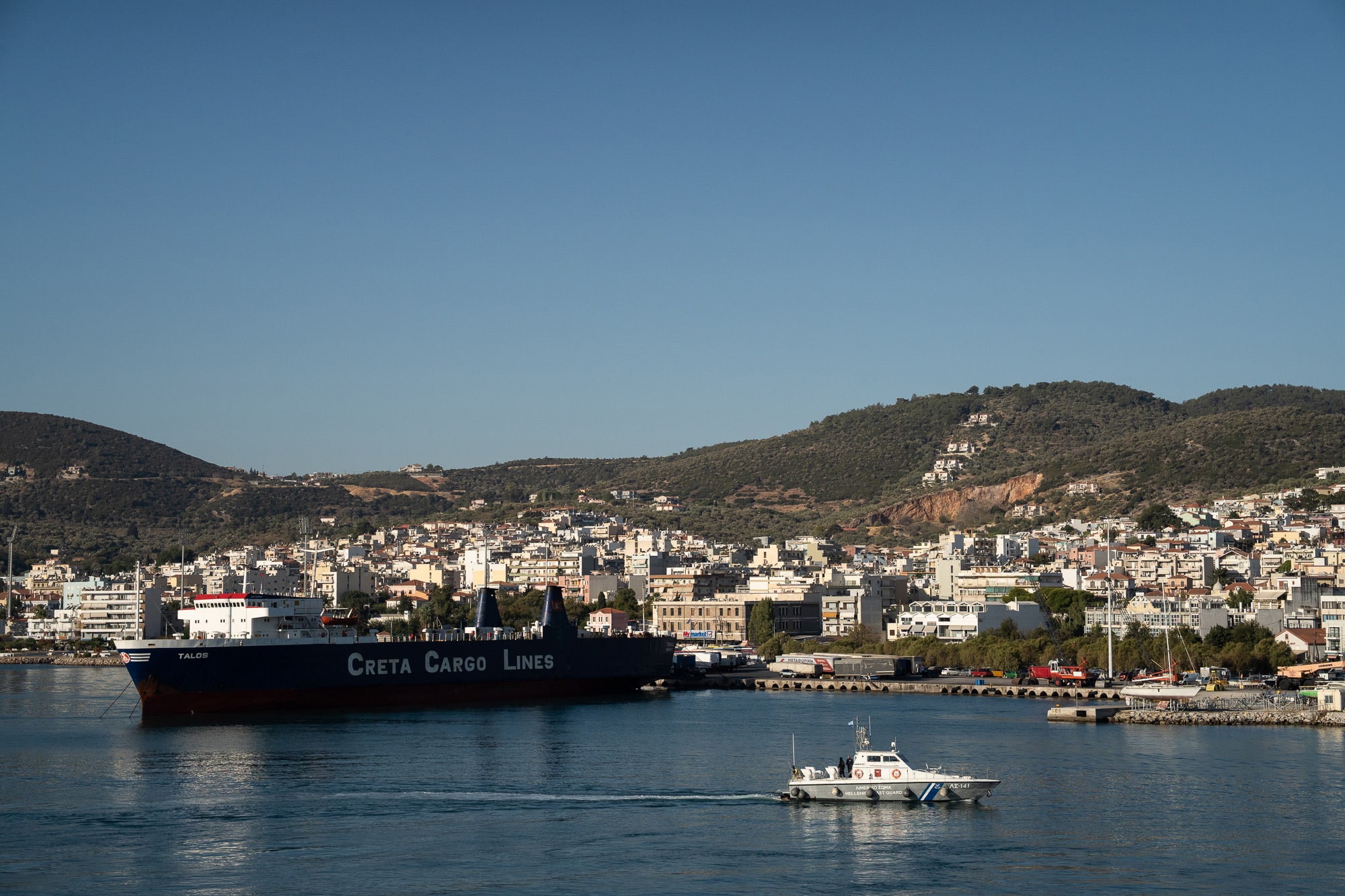
After a six-hour trip we took our seats in the courtroom, ready to watch the same poorly-staged play in which so many lives are ruined. But the day had worse in store. While we waited, news reached us from home: in Mytilene, a boat carrying migrants had “collided” with a Hellenic Coast Guard (HCG) speedboat. Six people were dead (four men, a woman and a child), and eight more lay seriously injured in hospital. The story was painfully familiar. According to the HCG, a small, overcrowded boat had tried to ram a far larger and heavier military-style vessel: in effect a suicide mission. It is the same account we heard after last year’s shipwreck in Chios, which claimed fifteen lives. Once again, there was no footage from the HCG’s cameras and no radio recordings from the Coordination Centre to confirm it.
Guilt grew as we sat there, far from the survivors and from the investigation into what really happened. Then a fellow lawyer found us in the courtroom with more news. Another boat had capsized off the north of Samos, leaving six dead, fifteen survivors and three missing. Despair settled over us. How can this be happening? How can so many lives be lost in so short a time? How can we have so many deaths when we are not in a war zone? Or are we? This time the HCG said it never approached the boat, only watched from a distance and fired warning shots from a “safe” range to make it stop. The driver, they claim, then tried to flee and made a dangerous manoeuvre that capsized the boat. But something does not add up. How can the shots be safe and the manoeuvre dangerous?
Now we are back in Lesvos, physically exhausted from the journey, and even more drained by the darkness we are forced to confront. We feel small and powerless against this border violence, because none of it is isolated. The killings at sea, the long imprisonment of young migrants, the inhuman conditions in detention centres and the rightless existence in Europe’s cities all belong to one regime, a border regime built on dehumanising people and devaluing their lives.
And yet we have nothing to do but keep fighting: for a world of peace, dignity and solidarity. From the streets of Paris, Tirana and Athens to the borders of Europe, we are all struggling for the same thing: a life with dignity.