Having dreams and hopes for the future can be very difficult in Palestine. This is not by accident. The occupation creates a situation so unbearable that those subjected to this oppression risk losing hope for a better tomorrow. They accomplish this not only through immense physical violence, ethnic cleansing of areas, and continuous administrative detention, but also through psychological terror. When soldiers and settlers talk to Palestinians, they unload a flurry of insults, swearing, and threats. They go through cities and villages spray-painting stars over Palestinian flags, writing words like “Nakba” and “Jews only”, and putting up stickers with pictures of nooses and other threatening imagery. They march and chant with such gusto, one might think the first commandment is: Terrorize Thy Neighbour.
But even when Palestinians are unable to prevent arson attacks, building takeovers, or arrests, they work hard to prevent the occupation from colonizing their minds and spirits.
In Hebron, CPT Palestine holds a program for youth every summer. They bring a group of teens from the H2 area of Hebron and provide cameras for them to capture their everyday realities through pictures. For eight weeks, the youth gather and discuss how they can use their cameras to tell their stories, and share their artistry with one another. They discuss how to hold on to dreams under occupation and the reality of what it will take to achieve them.
This week, I had the great privilege to join the final session of the program, which wraps up before the school year begins. This program has run for six years. Each year brings a new cohort of future photographers and storytellers. While boys and girls are both invited to join, this year the group consisted of a group of nine wonderful young women.
Like most things in Palestine, getting somewhere is not an easy task. The staff of the program are in frequent contact with the parents, arranging where the program will meet and how the girls will get there. As the taxis dropped them off at the checkpoint gate, we met to safely walk them the 200 meters to the office. Though just a 3 minute walk, the likelihood of encountering soldiers seeking to harass people is very high. For this reason, many do not even set foot into the Old City anymore. The municipality is always finding creative ways to encourage people to visit, such as public events and discounts on utility bills paid at the Old City offices.
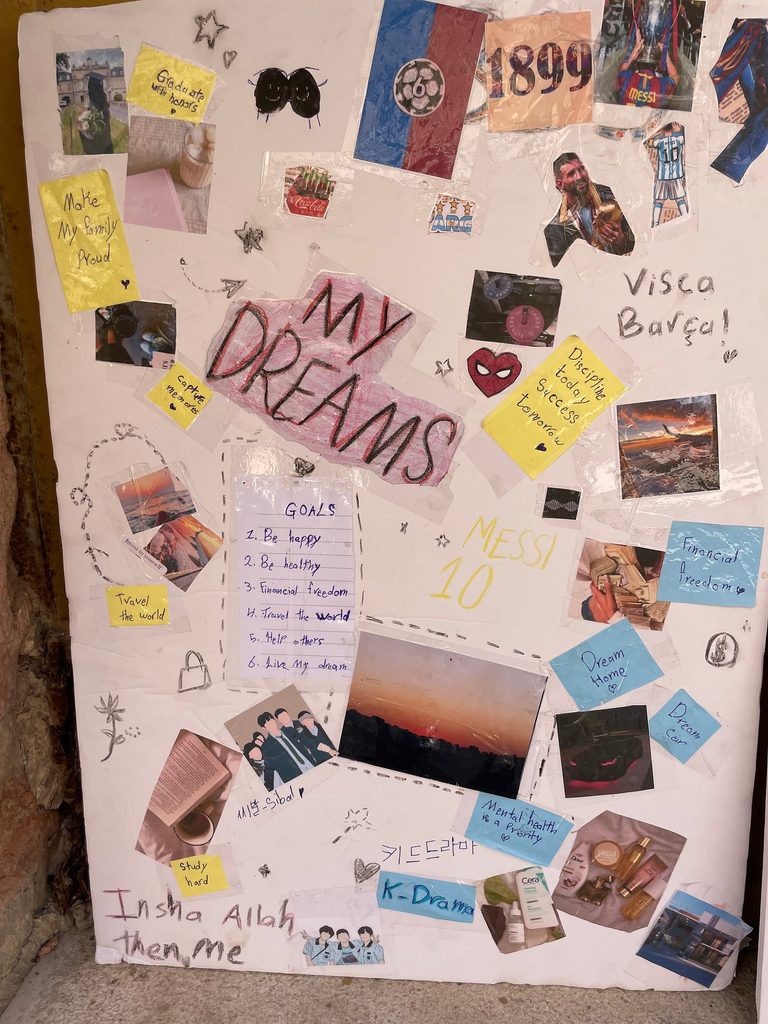
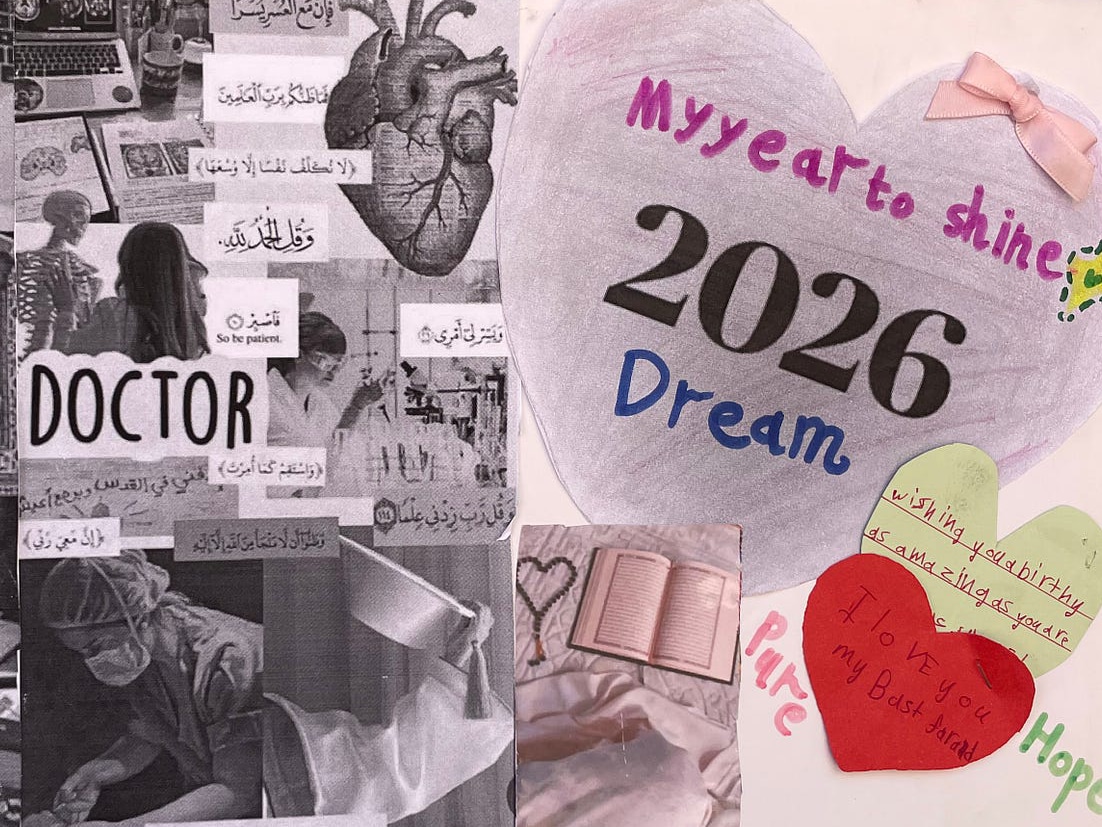
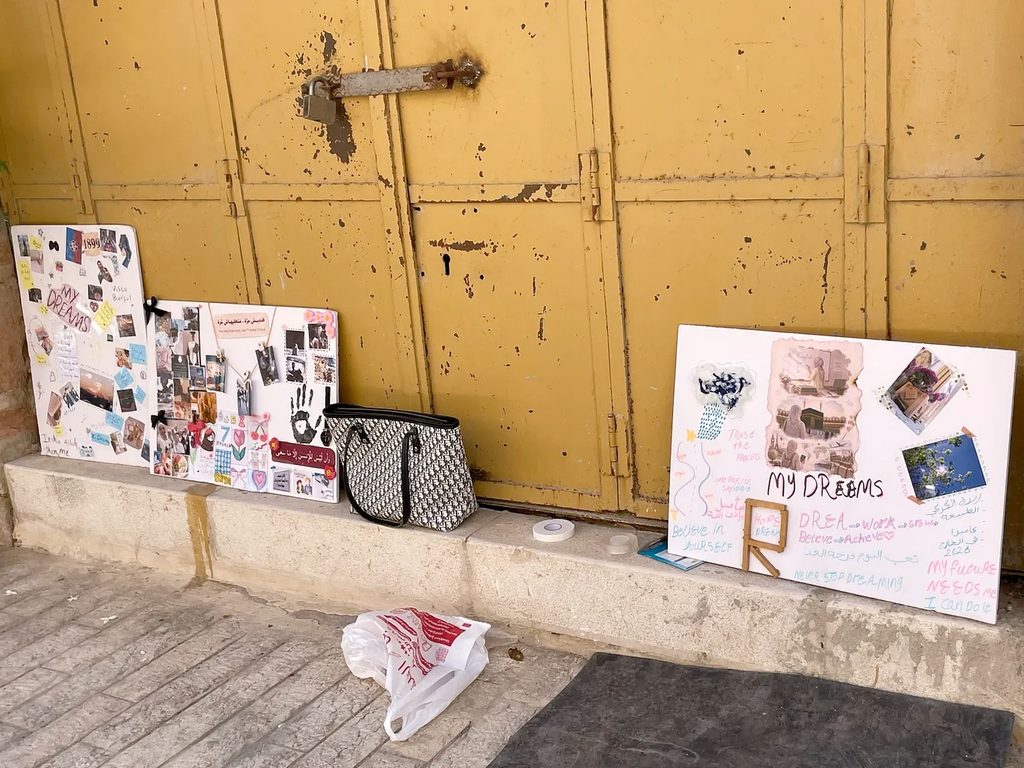
At the start of the session, after the chatter and laughter from the girls abated, we went around and did a check in. Thankfully, I know the Arabic words for four different emotions, so I got to hear a bit about how everyone felt that morning. Lucky for me, there were only two emotions shared by all the girls, and the staff as well. The girls said how happy they were to have experienced the program, not just for the wonderful friendships they had made or the fun and inspiring staff they had met, but also for the things they had learned during the program. After a few more icebreakers, we went down into the street for the girls to present their photographs and their vision boards for the future. The vision boards represented the dreams and aspirations of these young women, and the pathways that will help them to achieve them.
Growing up in the US, it was often difficult for me and my friends to conceive of a world outside of our immediate surroundings. Most people I know never traveled outside of their state until adulthood. My understanding of the world was filtered through The Simpsons and other popular television shows. Yet even as the US worked hard to ensure we never questioned our place in the world, we were never physically barred from leaving. No one ever prevented us from driving or flying across a border.
For these girls, borders and barriers dictate their lives. Most cannot attend school – or even this program – without crossing a checkpoint. And yet all of them had dreams and desires that stretched far beyond the checkpoints at the entrance of their neighbourhoods. While each had different occupational aspirations, each board highlighted the importance of education to the girls. This was not the only similarity between the girls. All of the boards displayed the dream of traveling and seeing the world.
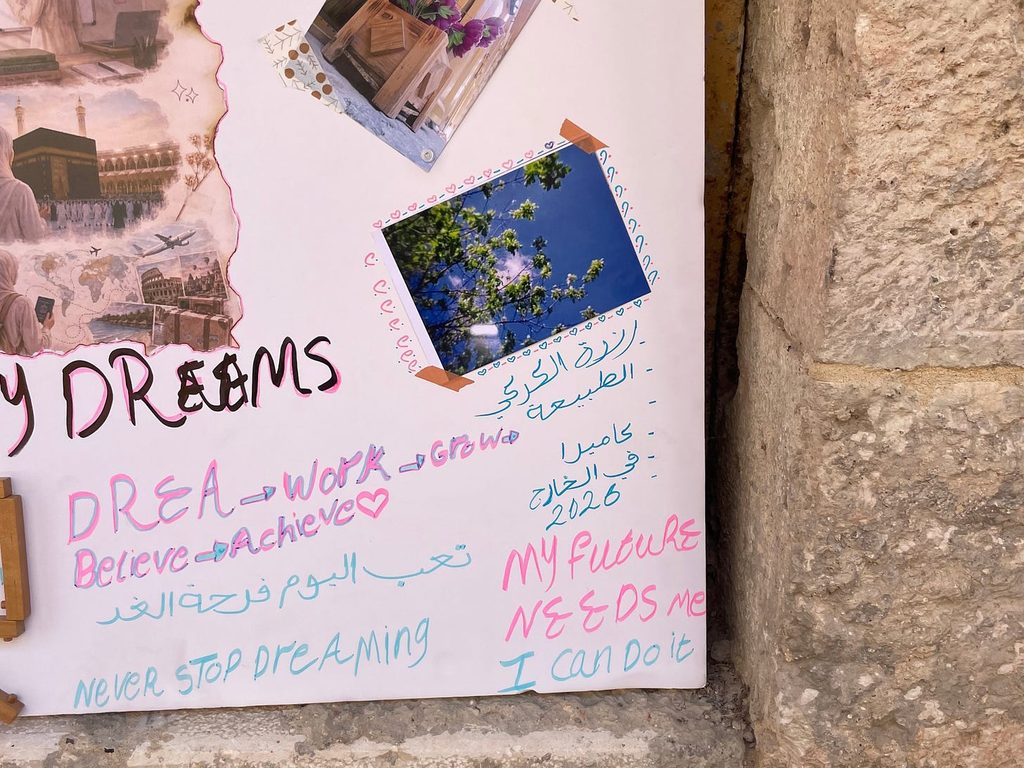
For Palestinians, the travel I undertake – and the aloofness I express in undertaking it – is literally unimaginable. Even in their own city, I can walk on Shuhada street and they might be shot for doing so. To simply see beyond the West Bank is a luxury not afforded to everyone. Even as I fly into Jaffa to arrive here, many people I meet only know the area through stories their grandparents tell of the time before the Nakba. Another common theme on the boards is money. One of the staff tells me this is the consequence of capitalism. I too know of capitalism and the desire for money quite well.
Yet unlike in Canada, where we are facing a cost of living crisis and people must work two to three jobs to pay their bills, the economic situation in the area is dire. Many in the West Bank would give up everything to work three jobs. Indeed, many give up their freedom or their lives to sneak over the apartheid wall and work illegally. Those who own shops in the Old City – at least those that Israel has not yet forced to close – are being gutted by a lack of tourism. Those who work in the public sector are oftentimes left waiting and wondering when their salary will arrive. When your parents are not sure if they can buy you school supplies for the start of the year, money becomes the top of your mind.
In her song, “We Have to Change”, Shadia Mansour raps that Palestinians are between two occupations: one of their land and one of their minds. To fight against one of these occupations requires fighting against the other. This is not the type of volunteering that I usually do in Palestine. But giggling with a gaggle of girls and listening to them describe their life plans is no less important than staring down a settler.
In North America, we often laud after school programs for kids. We talk about how important it is to give kids something to do: to connect them with kind and responsible adults that can support them, and to provide them with the tools and critical thinking that allows for them to make good decisions and stay on the path. But why don’t we ever talk about such things when we talk about Palestinian children? Yes, clean water and shelters are vital parts of childhood, but aren’t joy and hobbies also vital? Would you want your children to grow up without these?
Even when those in solidarity with Palestine discuss Palestinian children, we often play into the occupation’s adultification of children.
During the regular settler incursions in the city, the young boys often play a game together. They see who can get closest to the soldier before he turns around and points his gun while they run back. This game lasts until an older boy scolds the kids, telling them that they are inviting anger and harm on everyone. This to me seems like the ultimate expression of childhood under occupation. Yes, children in Palestine play and laugh just like other children. Yet their games involve soldiers with M4 machine guns instead of playgrounds. Their photography showcases happen under the shadow of the apartheid wall. When Palestinian children make the news across the world, it is often because Israel has murdered them, imprisoned them, starved them, or made them orphans.
We never hear about the children who aced their Tawjihi exam, studying through settler violence and army raids. We never hear of the children so in love with football (soccer, not the American version) that they play every day and dream of one day being drafted by their favourite team. These too are the realities of life under occupation. This too is resistance. Perhaps it’s not the kind of resistance that gains likes across social media, but maybe it should be. Perhaps those of us seeking to support Palestine ought to celebrate these moments just as we celebrate the prevention of demolitions and the release of prisoners. And certainly, those who continue to dream and hope and achieve under occupation are worth celebrating.