After a very intense week the team is getting back to normal. Next week is a trial week in Mytilene. Who will attend, what are the charges, how many are accused, do they already have a lawyer: those are the questions on the table again.
Last week we hosted a delegation. We were immersed in the story of the island: the situation now, the criminalisation of people on the move, the living conditions in the detention camps, pushbacks and border violence in the Aegean. These topics are definitely not very encouraging. For years, we have seen how migration legislation, together with the border management policies, has become ever more restrictive, violent and dehumanising. For years, we have stood in solidarity with People on the Move, supporting them in different ways and advocating for human rights. Despite the fact that Lesvos does not make the headlines anymore, we are still here.
We had the chance to share and exchange experiences with those from different countries: how the new EU Migration Pact looks in other European countries, returns under Dublin regulation, detention and deportation, as well as the new return Hubs that have been suggested in Greece, Netherlands, Germany, Denmark and Austria.
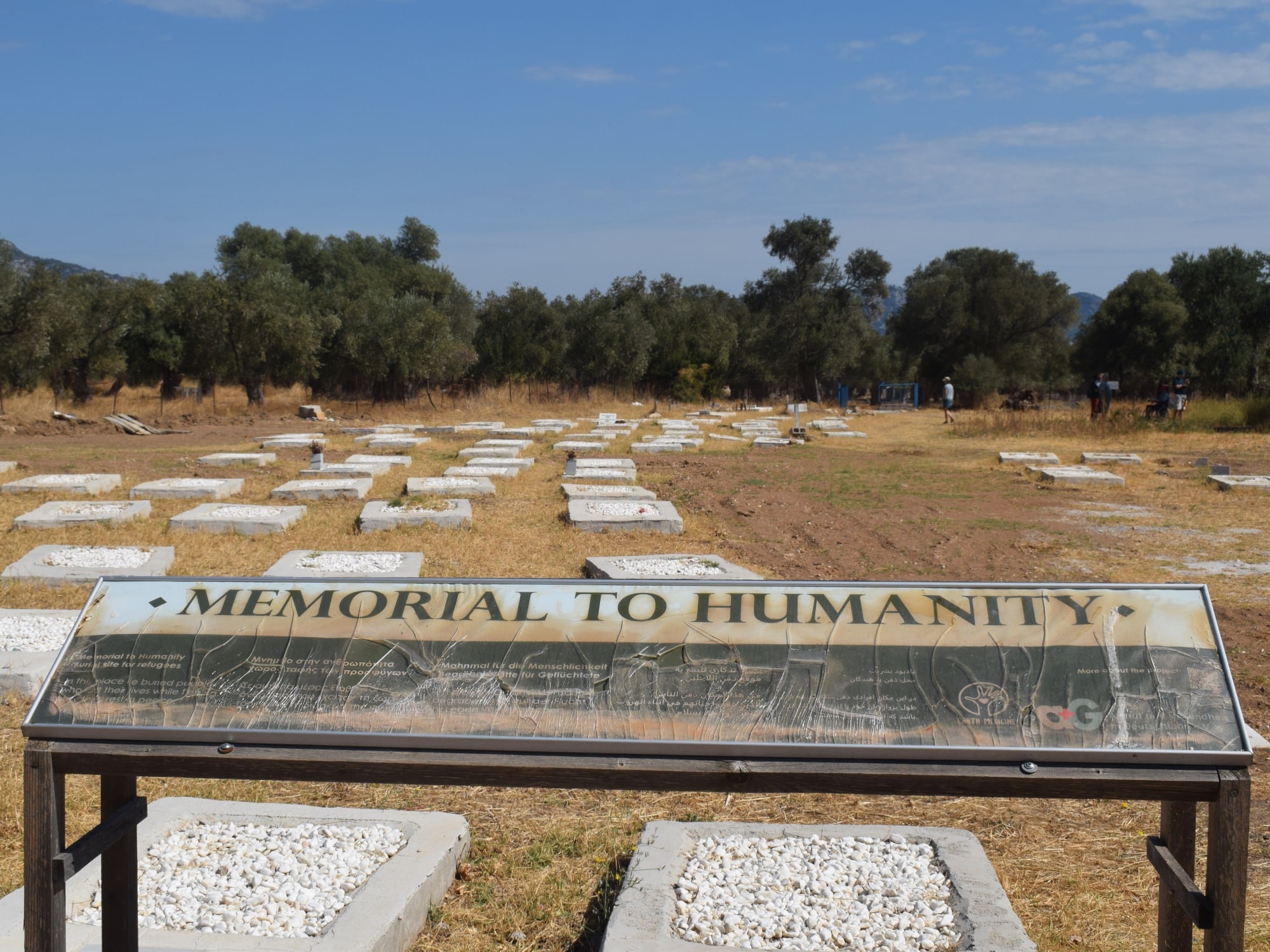
At the same time, we found ourselves standing in front of empty spaces explaining how they used to be: Moria camp, with all its surrounding extensions and improvised shelters; the detention centres in Pagani and Lagada, which have kept no sign of what they were, memory erased. And then we arrive at the “migrant cemetery”, a graveyard in the middle of olive groves where more than 200 people have been buried over the last ten years. There is a sign there: “memorial to humanity”. What humanity? The one that kills at sea? The one that detains and tortures people in the “Closed Controlled Access Centres”? While the state works hard to erase the memory of past detention spaces, the only memories remaining of the recent history of migration in Lesvos are the graves.
During the week we spoke about how People on the Move are structurally criminalised, detained, dehumanised, to such an extent that killing them at sea to protect our borders has become acceptable. What can we do? That’s the question that comes over and over to mind. It’s on our minds when monitoring a trial, knowing that the defendant will most probably get a huge sentence; when writing about the last shipwreck, or the last pushback we learned of; when realising that, once again, people are locked in the camp for weeks waiting to be registered, with no proper medical assistance or other support.
We keep monitoring the situation in the courts, advocating for fair trials, even sharing our findings inside the court itself. And we keep sharing information with people in detention about their rights, creating networks where together we can support people using our different expertise – legally or bureaucratically. As was said during our week of discussions, we are creating bridges across walls.