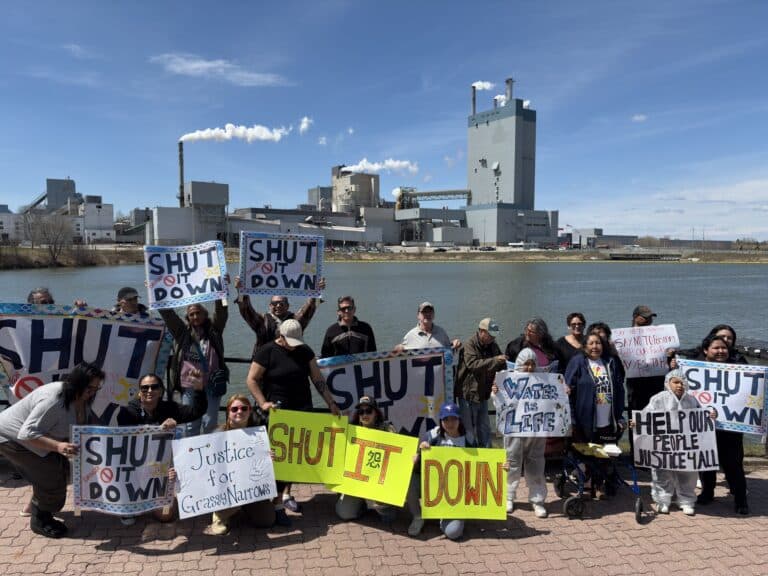
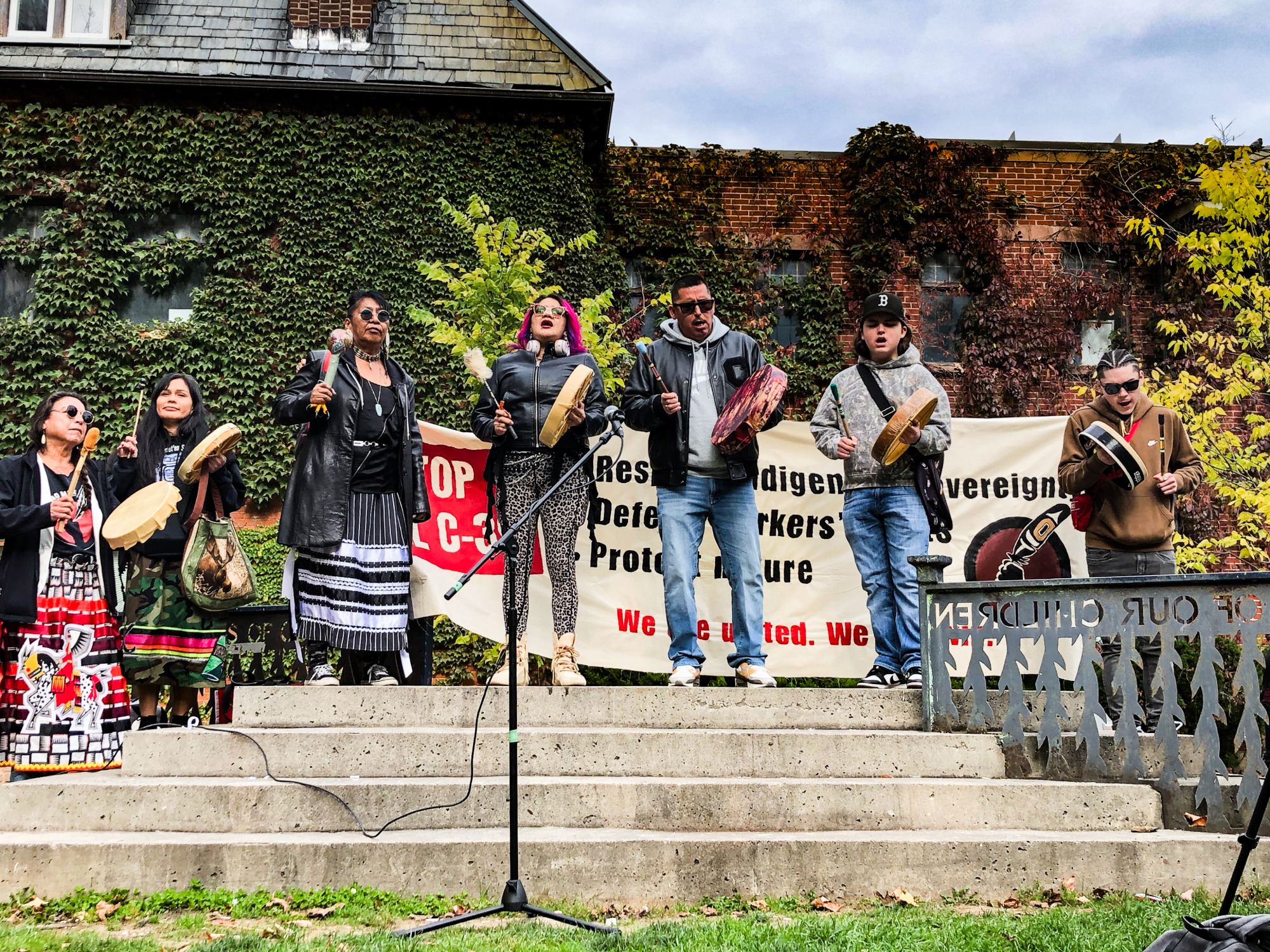
On 28 October, members of CPT’s Turtle Island Solidarity Network joined an Indigenous-led demonstration in Toronto protesting the Canadian government’s proposed Bill C-39. Speakers from grassroots Indigenous organizations and labour unions explained how the omnibus bill threatens Indigenous sovereignty, labour rights, and the lands and waters we all depend on. Like Bill C-5 – the “One Canadian Economy Act” – passed last year, Bill C-39 aims to fast-track major resource extraction and energy projects. It proposes extremely broad changes to regulatory processes, including:
- A one-year timeline for approval of major projects;
- Various measures to centralize and expedite permitting and assessment processes;
- The designation of “Regions of National Interest” for which multiple projects could be approved through a single assessment process; and,
- Measures that expand the federal government’s ability to intervene in labour disputes affecting major infrastructure.
The bill has been broadly condemned by Indigenous leaders and advocates. An analysis by Kate Gunn of First Peoples Law points out, “[T]he Bill makes no mention of the United Nations Declaration on the Rights of Indigenous Peoples or the principle of Free, Prior and Informed Consent.” It appears to disregard the fact that “passing new federal laws does not, and cannot, alter Canada’s constitutional obligations to Indigenous peoples.”
A joint press release by The Chiefs of Ontario, the Assembly of First Nations Quebec-Labrador, the British Columbia Assembly of First Nations and Nishnawbe Aski Nation asserts,
First Nations must have sufficient time, information, and capacity to understand potential impacts on their territories, engage their citizens, undertake technical and legal review, and make decisions according to their own laws and governance processes. Free, prior, and informed consent cannot be squeezed into a predetermined federal project timeline.
Grand Chief Alvin Fiddler of Nishnawbe Aski Nation further commented,
This government is writing legislation about our lands and our future without us at the table. That is not reconciliation – it is a continuation of the same pattern our people have fought against for generations. Our Chiefs have rejected Bill C-39, and we stand with our partners. We will not stand by while our rights are trampled on.
Meanwhile, a statement by the Canadian Labour Congress explains that “Bill C-39 would give the Canadian government broader unilateral power to end a legal strike than exists in any other G7 country.”
At the demonstration on 28 October, CPT partner Eve Saint, Land Defender and co-founder of the 8th Fire Rising coalition, offered a succinct take: the Canadian government is “coming for our rights.”
Indigenous grassroots organizations, labour unions, and environmental groups are organizing a day of action on Thursday, Nov. 12. Find an action near you on the map at 350.org. CPT will be there!