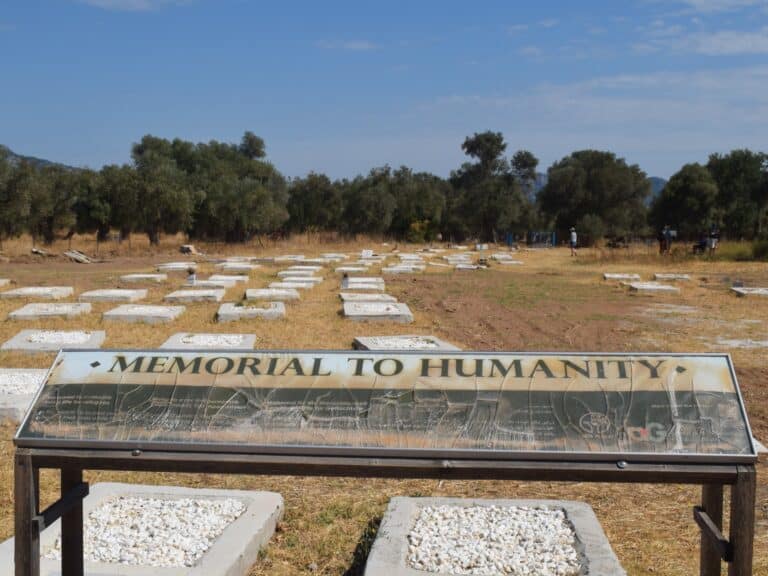

Before the Covid-19 pandemic forced us all to stay indoors in March 2020, the island of Lesvos already felt locked down. For thousands of people, it was a prison island. Migrants were trapped: unable to leave the island, cut off from mainland Greece and prevented from continuing their journeys.
We used to describe the place as a set of prisons within prisons – first the country of Greece itself, then the island, then the camp. Finally, there was the camp’s jail, which held the people who were awaiting deportation. They were all single men, disproportionately from African nations.
There were legal limits on how long the government could hold people in administrative detention. When they were released, they emerged as a tight-knit community. They had been through hell inside, but they had each other’s backs. We’d meet them on the outside and invite them into communities of solidarity in town. These connections became relationships, and relationships became the basis for collective action. Together, we tried to find new ways of challenging the violence inherent in the camp.
Part of what we were doing was community building: making spaces where migrant and local communities could come together to talk, laugh, eat, grieve; to share advice and experience, to lift each other up and to raise each other’s voices. The moment before the lockdown felt full of possibility.
All these years later, the struggle of migrants stranded in Lesvos continues. Though the people have changed, the demand for dignity remains the same.
This week, CPT’s Aegean Migrant Solidarity team reports on the action of Senegalese and Gambian communities living in the island’s camp. They are subject to a specific injustice in the asylum procedure. Because of where they come from, their claims are considered illegitimate, and so they are trapped in the camp and denied the right to basic services. Now, they have come together to challenge their shared injustice. They remind us of what’s made possible when communities speak as one.