“They will not let me rest in peace upon my mountain slopes,
I long for partridge songs, not minefields crushing hopes.
My deepest wish is freedom for all of humankind,
How could I bear to see my people trapped, oppressed, and blind?”
Hemin Mukriyani1
In the beginning, it was difficult to understand my emotions and separate them from one another. Hearing so many lifeless numbers and statistics, alongside dozens of heartbreaking stories from beyond the mountains and rivers, left me overwhelmed and struggling to process everything I was learning.
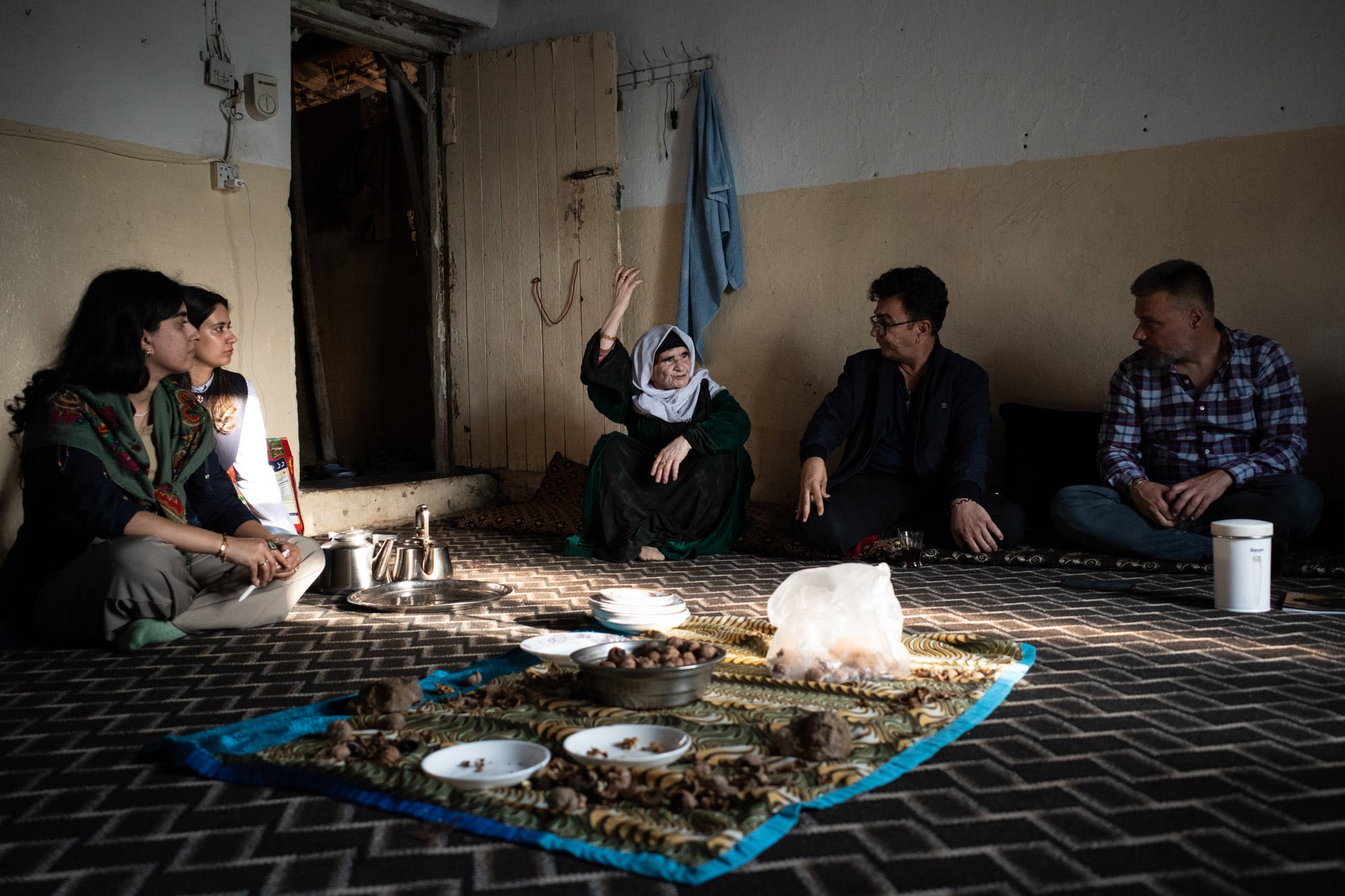
Meeting the families of the victims of cross-border bombardments, military operations, and genocidal campaigns, and listening to their stories hurt me so deeply. I wanted to cry out loud with all my heart to ease their pain, but the sadness was so heavy that the tears seemed trapped in my throat. I wanted to hug them to take away some of their loneliness and grief. I wished I had the power to bring them justice, or at least be a daughter or a sister to them, sharing a little of the burden they have carried for so long.
It feels like a knife in the heart when you hear that people have been denied the freedom to walk on their own land and through their own mountains. It hurts to see bodies, lives, homes, and memories destroyed and erased simply because the people are Kurdish and want to live freely on their own land.
And yet, amid all this pain, I witnessed something that deeply moved me: their refusal to give up! Families who had lost 21 members, people who had lost their arms or legs, the death of an innocent newborn baby, and the pain of searching for a missing sister for 38 years. Despite being displaced, forced from their homes, and having their villages and childhood memories turned into forbidden areas, they continued to raise their voices; they still protect every inch of their homeland, even with wounded hands. They hold their flag up high, and bravely fight for their mountains and rivers.
In the middle of all these heartbreaking stories, hope grew inside me when I saw that everyone was working toward one sacred goal: the freedom of their homeland. I was happy to see their deep love for their land; they still see the mountains and valleys as their only true home. I was deeply moved by the way they spoke about their mountains and valleys, not simply as places on a map, but as home. A place inseparable from their memories, their sense of belonging and who they are.
The most beautiful thing I heard from them was how, peacefully and without weapons, using only faith and love, they stand up for their land and protect their identity.
1 Self translation of Hemin Mukriyani’s poem Firmêskî Runû.