In an old house of four rooms and a big yard, filled with an old soul and spirit, a house full of laughter and wisdom, joy and safety, belonging and trust, and the feeling of being seen, were a combination of emotions associated with gratitude and comfort, all created by my beloved parents and siblings. Somewhere in the Old City of Hebron, is where I grew up.
My father always woke me up to Fajr Prayer, and took me with him to pray in the Ibrahimi Mosque every Friday. Walking around the Old City in the early morning felt like breathing in fresh air, yet it was something much deeper than a physical experience. I felt safe holding his hand and talking about all the blessings we have been granted by Allah (God), and how fortunate we are to be able to walk, breathe, and pray. How blessed we are to be alive, to live for another day, and to have another chance to do good – Ihsan, احسان – and serve others well. Because we only live once, we have only one chance in this lifetime.
I can always hear his voice echoing in my head, saying “Alhamdullilah, in good times and bad times, just Alhamdullilah”, which means praising and thanking God for everything, through the worst and best situations. My father always seemed blissful as if he were constantly surrounded by the mercy of Allah. I don’t think I had ever heard him complain about anything. I wouldn’t say I possess that same quality but I could never understand how he managed to approach difficult situations differently, to handle them in a simpler way, and to believe that there is always a way out of everything. His ability to surrender and trust in God’s plan was truly remarkable. Now, I find myself craving those very qualities of his, hoping to embody them so I can navigate life’s difficulties. So I can survive things, so I can survive his loss.
My heart is heavy as I am writing this. My dad, my beloved dad, is dead. And I am not saying he died because he “is” in fact always, every single day, dead: as in the present, not as something that has happened in the past to move on from. And this is something new I have to learn the hard way: that grief lives within your soul for the rest of your life.
Now, I choose to embrace his memory because I wouldn’t be the person I am today if it weren’t for him.
Ihsan – احسان – means benevolence or to give goodness sincerely from your heart. And this was his name. He was a man who lived up to his name and I know that he embodied its meaning in the most beautiful way. He was among the most benevolent of people, and I bear witness to the fact that he carried his name with grace, sincerity, and honor.
On one particularly difficult night, as his illness grew more severe and its symptoms began to take their toll on him, I heard him whispering. His voice was filled with sorrow as he spoke about the Ibrahimi Mosque situation. He said, “The Ibrahimi Mosque is now closed, and the soldiers are not allowing anyone to pray there.”
It was as if something inside him was breaking, aching over what was happening.
My father had a deep attachment to the Ibrahimi Mosque. He considered it almost a personal duty to visit the mosque and pray there. He would return home overjoyed, eager to tell me about every visit and everything he had experienced there.
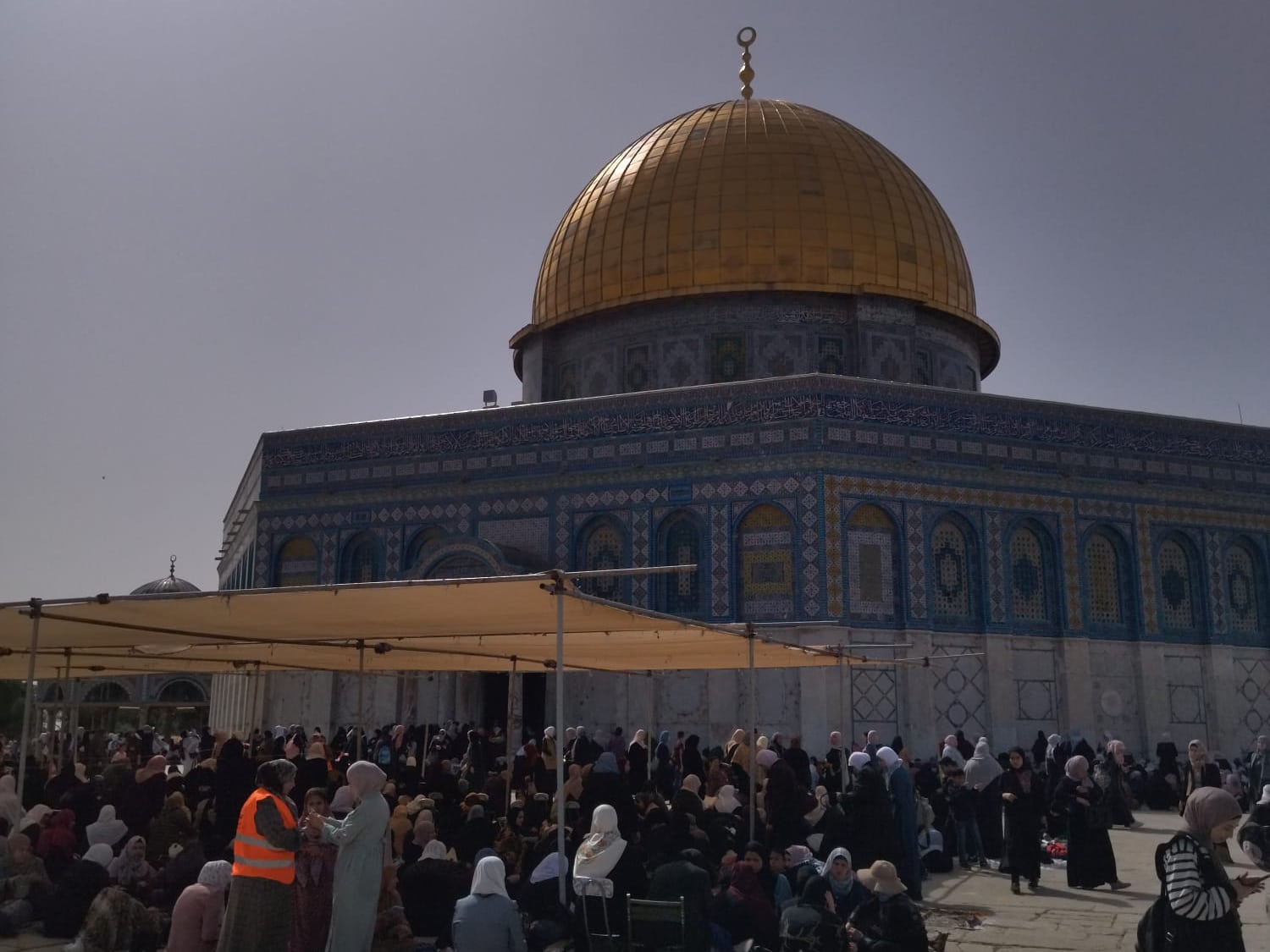
And it was not only the Ibrahimi Mosque. He felt the same deep connection to Al-Aqsa Mosque in Jerusalem. He always carried a permit allowing him to cross into Jerusalem, and whenever he had the opportunity to go, he would seize it to pray at Al-Aqsa, specifically during Ramadan where he would go every Friday and every Isra’a and Miraj. He would also buy some of Jerusalem’s incomparable ka’ak (traditional sesame bread rings) and some of the sweets that the city is famous for.
Every time he returned, he would bring home Jerusalem ka’ak and sweets, beaming with happiness. He would hand me his phone and ask me to take a look at it, filled as it was with pictures of him at Al-Aqsa Mosque. Something I used to laugh about back then has become one of the things that brings me comfort in his absence.
If you were to look through his phone, you would find almost nothing but pictures of him at Al-Aqsa Mosque, as though visiting the mosque was one of his greatest joys and his deepest connection to this life.
It was then that I came to understand that our connection to this homeland is something far greater than the slogans we repeat. Our very existence is an act of dignity, strength, and resistance.
I also came to understand that the occupation illusion – fathers die and their children forget – is nothing but a fantasy.
Here I am, living proof that children do not forget, and that being a Palestinian is one of the greatest things. I am so proud to be because to exist is to resist, and resistance is an idea, and an idea never dies.
I know if he were here he would be looking at me with proud, shining eyes, and smiling as if I were one of his greatest achievements. And I’ll make sure to always be his biggest victory, to live another day and make it worthwhile. To embrace the blessings I have been granted, which is to be alive today, to be able to tell you about who I am now, and advocate for it.
May you rest in peace habibi.