
This week, Netanyahu yet again visited Trump in Washington. Despite a warrant from the International Criminal Court issued for his arrest, the USA – with its now-proud and outspoken culture of impunity – has proved a safe haven for Netanyahu. Trump placed sanctions on ICC staff, including travel bans and asset freezes. Now he’s also placed sanctions on the UN’s special rapporteur, Francesca Albanese, for calling out the economic forces behind the genocide.
This coalition has hollowed out international law. They distort language, too. Ethnic cleansing is described by Israeli statesmen as offering Gazans “the freedom to choose” whether they stay or go. Aid distribution has been handed over to the “Gaza Humanitarian Foundation,” whose cruelty is made starker by its cynical naming. Now, Defence Minister Israel Katz has announced plans to create a “humanitarian city” built on the ruins of Rafah. First, 600,000 people will be pushed into a camp they can’t leave. The rest of Gaza’s population will eventually follow. What else could you call this but a concentration camp? Ultimately, they are to be forced out of Palestine through what’s called “the emigration plan.”
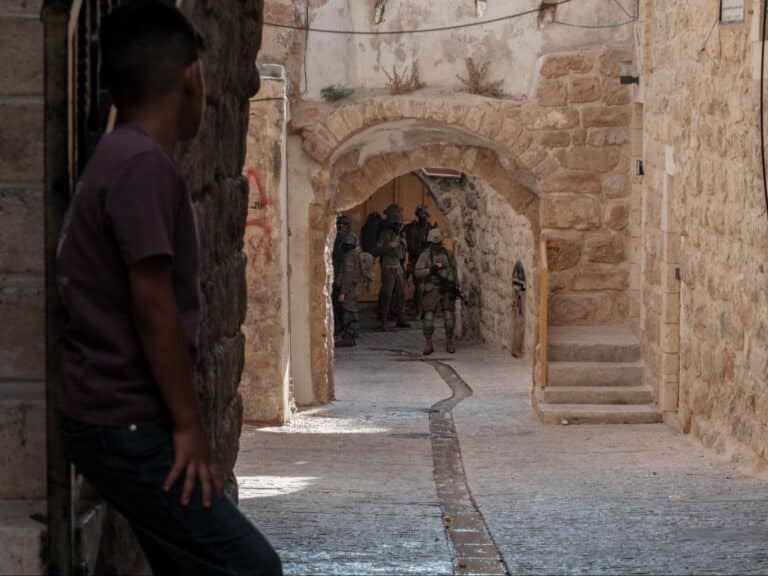
I’m often aware, as I write these bulletins, that I paint a gloomy picture. When looking for something hopeful to balance the dark, I turn to the work of CPT’s teams on the ground. This week, CPT Palestine reminds us that, despite living under constant threat, the people of the West Bank remain steadfast. In “Holding on to Hope in Masafer Yatta”, the team reads the stories of suffering and resistance written into the stones of its villages. “The world often measures strength by power,” they write. “Yet here in Masafer Yatta, true strength is something quieter and far more profound.”
Next week, in Bogotá, Colombia, the Hague Group – a coalition of eight Global South states – will hold an emergency conference to halt the genocide in Gaza. Colombia’s president Petro hopes the conference will lead to concrete action, a call to others to cut the “ties of complicity” in “courts, ports and factories”, and resist a world where “might is right”. “Let us be protagonists together”, he says, “not supplicants apart”.
A few weeks ago a friend and I went to see a movie, Soundtrack to a Coup d’État, a collage of documentary footage that captures the Bandung spirit of ’50s and ’60s decolonisation. When we met a week later, we realised it had stayed with us ever since. Those who fill the streets week after week in defence of Palestine have committed themselves to following through on decolonisation’s promises. Is it too much to hope that we see a spirit stirring?