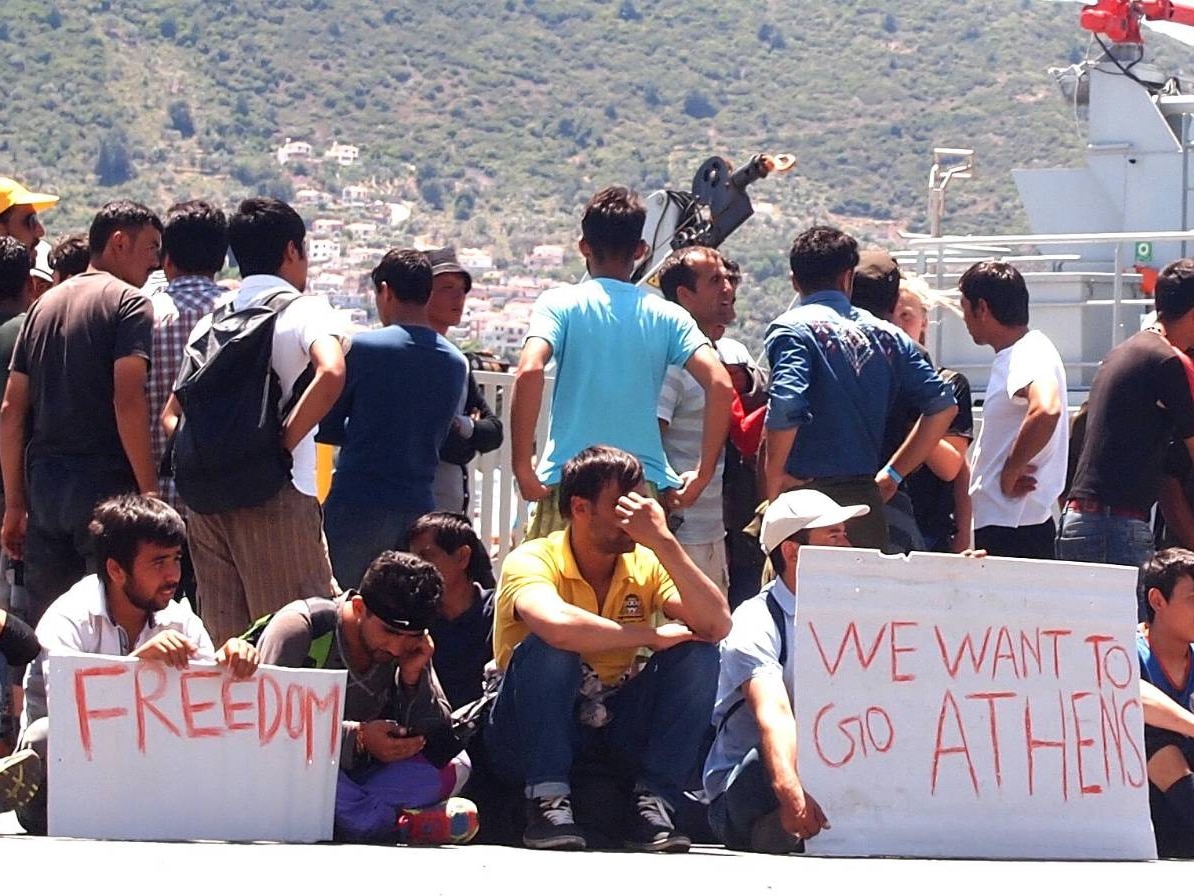
In May 2016, migrants held a protest in Mytilene, demanding to be treated with dignity. Ten years later, those same demands still remain while the situation of People on the Move in the Aegean Islands has only become worse.
This week, Senegalese and Gambian residents in the Lesvos Closed Controlled Access Centre (CCAC) have released an open letter directed to the CCAC management and the competent authorities, demanding an improvement to the situation in the camp.
In the letter, they explain that people from these countries of origin are being held in the camp for many months with no clear explanation why, or when they will be released. They also emphasize the deeply concerning psychological stress that this uncertainty causes them, pointing out that one co-national has attempted suicide.
They describe how, during their last meeting with camp management, they asked for permission to organise a peaceful demonstration. Not only did management deny them permission, they also threatened them with legal consequences, such as arrest and imprisonment.
This letter arrived a week after a march was held by Senegalese residents of the Chios CCAC against the same conditions. Last month, Senegalese residents in Chios carried out a hunger strike that ended with the promise that their situation would be reviewed. But the deadline for answers from the Ministry of Migration and Asylum has passed. Having received no answer, they decided to march towards the city.
The situation faced by people from Senegal and Gambia in the camp is not unique. The living conditions in the CCACs are unbearable for all. The accommodation spaces are shared between 7 or 8 people, despite the fact that the current number of residents is very low. The isoboxes in which they live are full of cockroaches, and most of the hygiene facilities are broken. They don’t have access to cleaning products to maintain their spaces and there is no privacy. Still, being from Senegal and Gambia means that you have to live in these conditions for much longer.
Gambia and Senegal are considered safe countries of origin by the Greek state. For people from there, it’s impossible to go to Athens to submit an appeal against a negative asylum decision, meaning that they must remain on the islands. According to the legislation, people who are no longer in the asylum procedure are excluded from the provision of food, water or any other benefit given to asylum seekers, leaving them dependent on the little non-governmental support still active.
Since September 2025, following the approval of the new law on migration, 5226/2025, illegal stay is considered a criminal offence, carrying penalty of imprisonment only avoidable by signing up for “voluntary return”. How “voluntary” it can be is up for discussion, especially if the alternative is imprisonment. Nevertheless people signing the paperwork have still been detained in the Pre-Removal (Deportation) Centres while they wait to be returned.
The migration and asylum legislation is based on detention. When we look at the new EU Migration Pact, the situation only worsens. Since it was implemented on 12 June, people have been de facto detained inside the camps waiting for a new registration system to begin operation. With the new pact, people from countries with low rates of positive asylum decisions, people who have arrived via “safe third countries”, and people from “safe countries of origin” must be detained throughout their whole asylum procedure, from registration until decision. Furthermore if their asylum application is rejected, people must be detained until their deportation.
This is not a new strategy. It’s the result of multiple migration policies, moving in this direction for years: policies based on criminalisation and deterrence, dehumanising People on the Move, creating the figure of the “dangerous”, the “criminal”, who must be kept away from “our society”, locked in camps far away from the cities or put directly in prison.
We stand in solidarity with those living in the camps, with their struggles and their demands. We want a society that can live together, in which we recognise each other as neighbours. We stand against any camps and structures, made only for the purpose of segregation.