Across the world, and for centuries, states and settler colonial movements have used selective histories to turn colonial occupation into a narrative of return. These histories foreground ancient ties to the land while treating the people living on it, and their histories, as mere obstacles to sacred return. The language used to explain the past makes control in the present appear both neutral and natural.
As in all of Palestine, the city of al-Khalil (Hebron) knows that history is never neutral. For decades, the Israeli occupation has mobilised history as a territorial claim, its efforts written into the streets of the Old City. The city has long held deep significance for Muslims, Christians and Jews, and is home to the Ibrahimi Mosque, revered in all three Abrahamic traditions. Jewish presence in the past – namely Sephardic Arabic Jews – is recast in settler narratives as supporting evidence for an exclusive Jewish ‘return’ and justification for expanding illegal Israeli settlements, alongside a violent regime of control in the present.
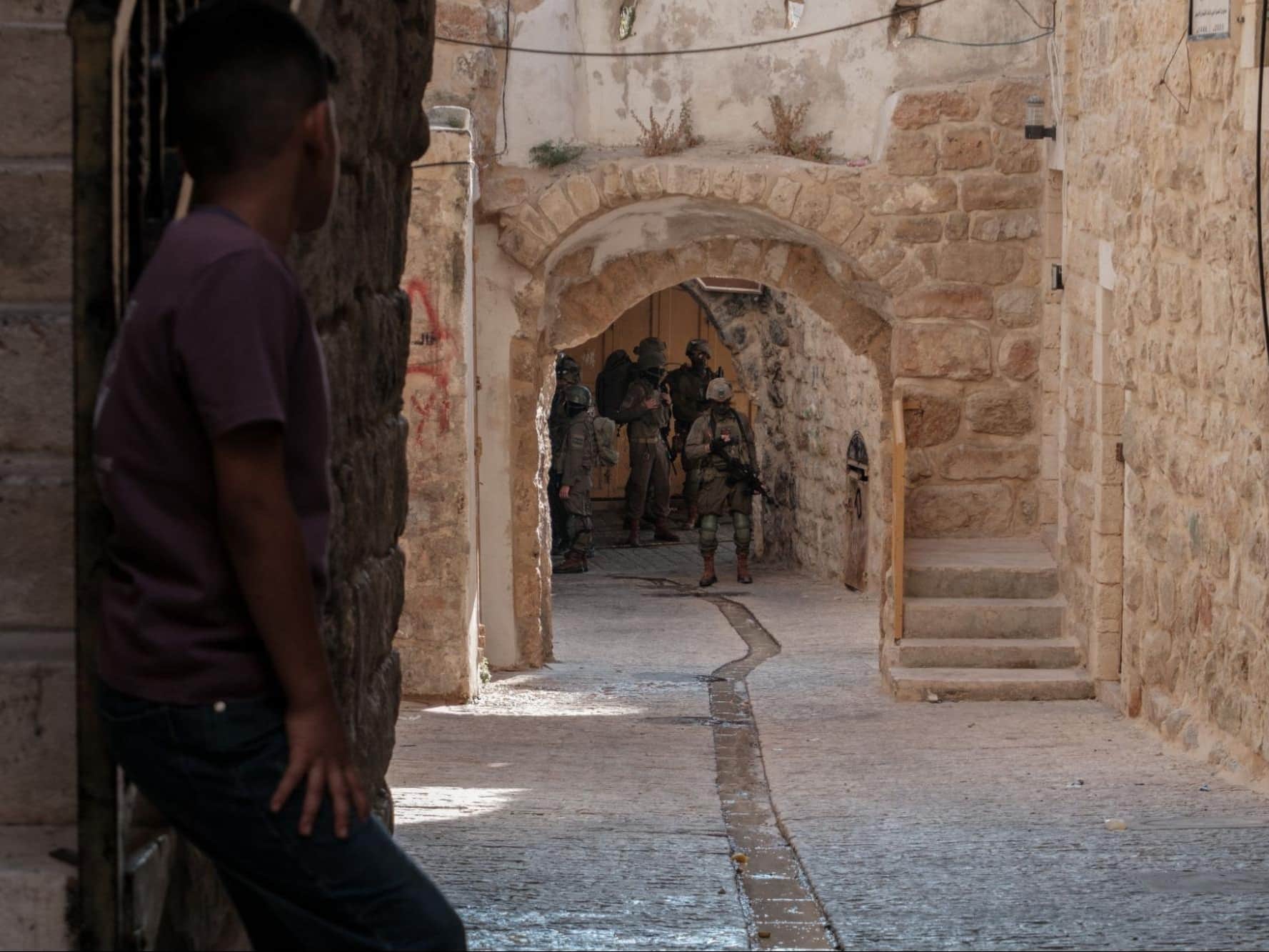
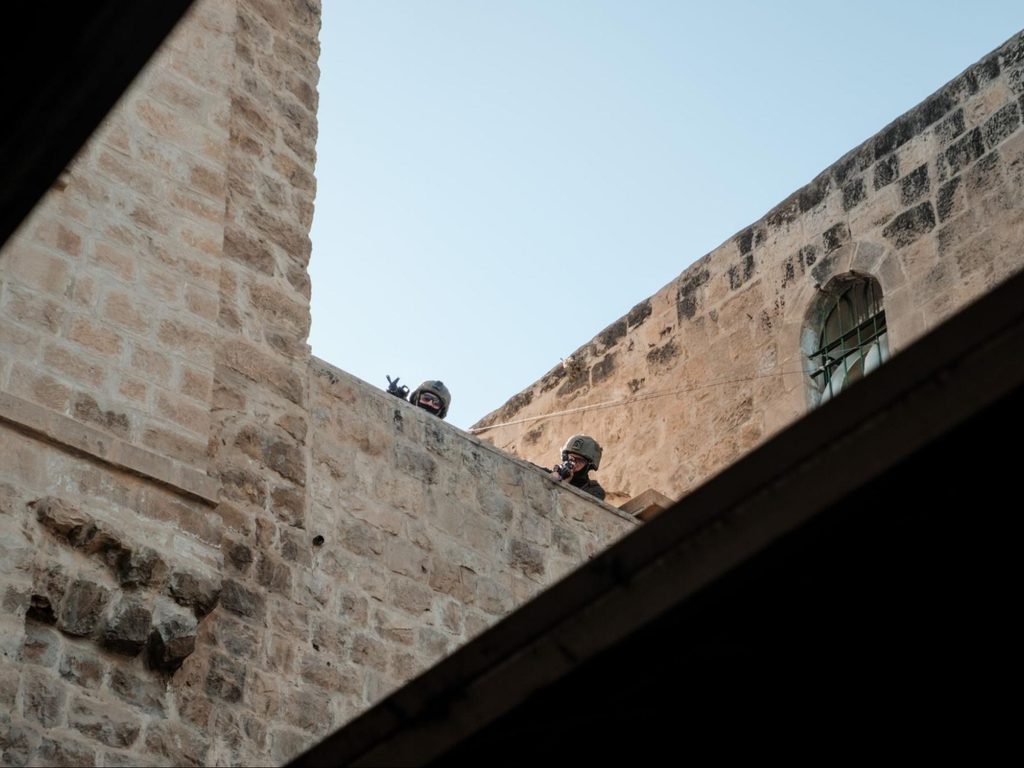
Every Saturday for the past fourteen years, Palestinian life in the Old City of al-Khalil comes to a standstill as a ritual of territorial claiming unfolds at the expense of Palestinians. As soon as the first soldiers ascend from their watchtowers to ‘prepare’ the area for the ‘tour’ that follows, life for Palestinians comes to a standstill as they are unable to move freely, reach their homes, or operate their shops. Those who don’t follow the Israeli army’s orders run the risk of verbal assault, violence or arbitrary arrest. As the Israeli army cleanses the Old City of Palestinian presence, it becomes painfully clear that life under occupation has taught al-Khalil’s residents that when the army enters, you freeze.
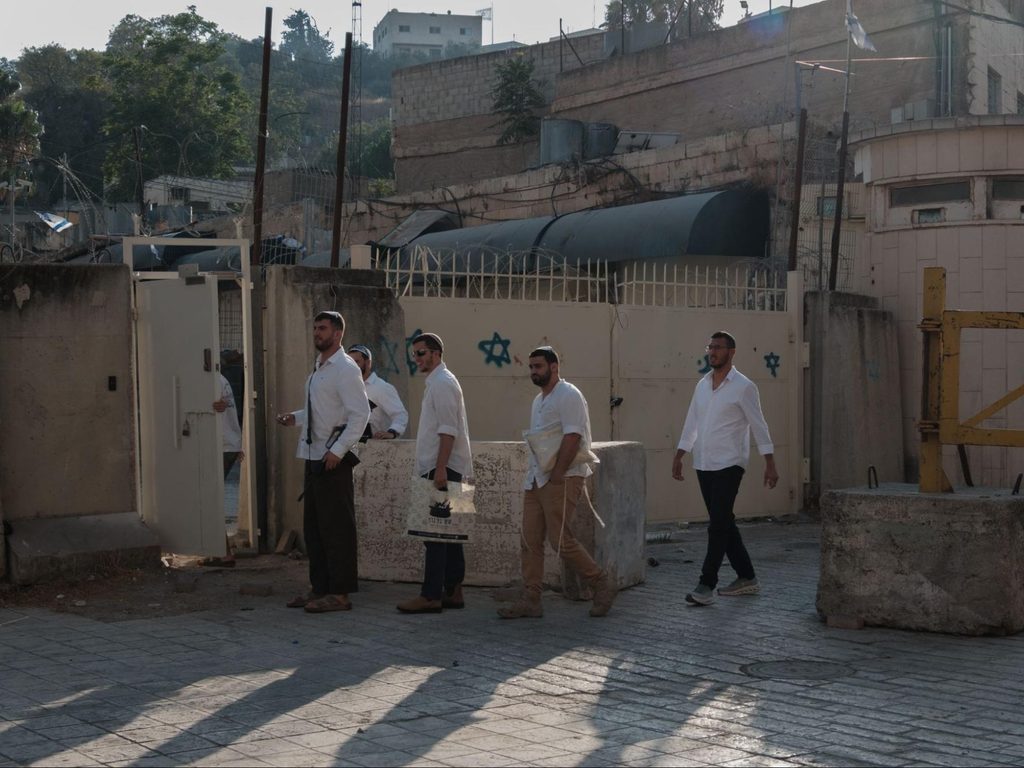
What unfolds is similar every week. A group of around fifty Israeli and international settlers, guarded by at least thirty soldiers, are guided through the Old City of al-Khalil. As they move through the emptied streets, the guide narrates a Zionist version of al-Khalil’s past centred on Jewish buildings and Jewish historic presence. The settlers who participate are often singing, laughing, and making vile hand gestures at Palestinian and international journalists and observers.
To understand how the Israeli government and settlers reinterpret history, we should go back to the sixteenth century, says Palestinian historian Dr Ahmed Al-Herbawi, founder of the Cultural Symposium Club in al-Khalil. Dr Al-Herbawi has conducted extensive research into the historical Jewish presence in Hebron. Through Ottoman-era records, Al-Herbawi found that twenty Jewish families settled in the city in 1539. They were part of the Sephardic Jewish tradition and fled forced conversion and expulsion by Catholic rulers in the Iberian Peninsula (Spain and Portugal). Having previously lived as part of the Muslim empire (the region was then called al-Andalus), Sephardic Jews spoke Arabic and became part of Ottoman Palestine’s social fabric, developing their own institutions and neighbourhood in what is now called the Old City.
By the nineteenth century, al-Khalil’s Jewish community consisted of a well-established Sephardic population of around 250 residents, often referred to as Arab or Palestinian Jews. However, al-Herbawi identifies an important shift in the 1860s and 70s, as Ashkenazi Jews from Eastern Europe began arriving in larger numbers and establishing religious and financial institutions linked to European Zionist networks. This was not merely a demographic change. The new Zionist shift was based on ethno-nationalist ideals, distinct from Judaism as a religion or from the older Jewish communities of Palestine. This distinction mattered as new institutions, land purchases, political networks and settlers increasingly connected the city to the wider Zionist project of a Jewish state in Palestine.
The tensions of this period culminated in the violence that started on 24 August 1929. Sparked by contestation over the Western Wall in Jerusalem and fueled by fears and grievances around Zionist immigration and British occupation, al-Khalil’s residents revolted. Palestinians attacked and set fire to Zionist institutions such as the Yeshiva school, the Anglo-Palestinian Bank and the house of its manager, Eliezer Dam Slonim, leading to the death of 64 Jews on the first day of the revolt, of whom 61 were Western settlers, explains Dr. al-Herbawi. In total, the uprising led to the death of 116 Jews and 133 Palestinians. Some Palestinian families sheltered their Jewish neighbours to protect them from the violence. After the revolt, the British Mandate evacuated all Jewish people from the city of al-Khalil, many of them settling elsewhere in what was then still called Palestine. In the years that followed, the Zionist movement repeatedly tried to re-settle European Jewish families in al-Khalil, but after several unsuccessful attempts, this halted in 1936.
The 1929 violence later acquired enormous political force. For settlers who established themselves in Hebron after Israel occupied the West Bank in 1967, it became central to a story of return, redemption and recovery. Yet Dr. al-Herbawi highlights how that story collapses multiple Jewish histories into one uninterrupted nationalist claim in order to justify expansionist aims. It passes over the difference between long-established Sephardic, Arabic-speaking Jews and European Zionist settlers that fuel today’s settlement movement; it also sidelines the presence of Palestinians who remained in the city and who are turned into mere obstacles to the Zionist project.
At its core, the weekly settler tour is an attempt at historical and civilisational erasure of the Palestinian people in order to justify a narrative of ‘historic redemption’. As the tour leader moves the group past buildings historically occupied by Palestinian Jews, their history is forcefully erased. This becomes especially clear when we learn about the Arab Jews such as Haim Hanegbi Bajayo, who publicly denounced the Zionist settlement in Hebron in the ‘70s. Bajayo was a direct descendant of a prominent Sephardic Jewish family in Hebron who stood against the Zionist project, and attempted to give away the rights to his family’s buildings to the Palestinian community in order to prevent it from falling into the hands of settlers. His position is a reminder that a Jewish connection to Al-Khalil is not synonymous with the ethno-nationalist Zionist project.
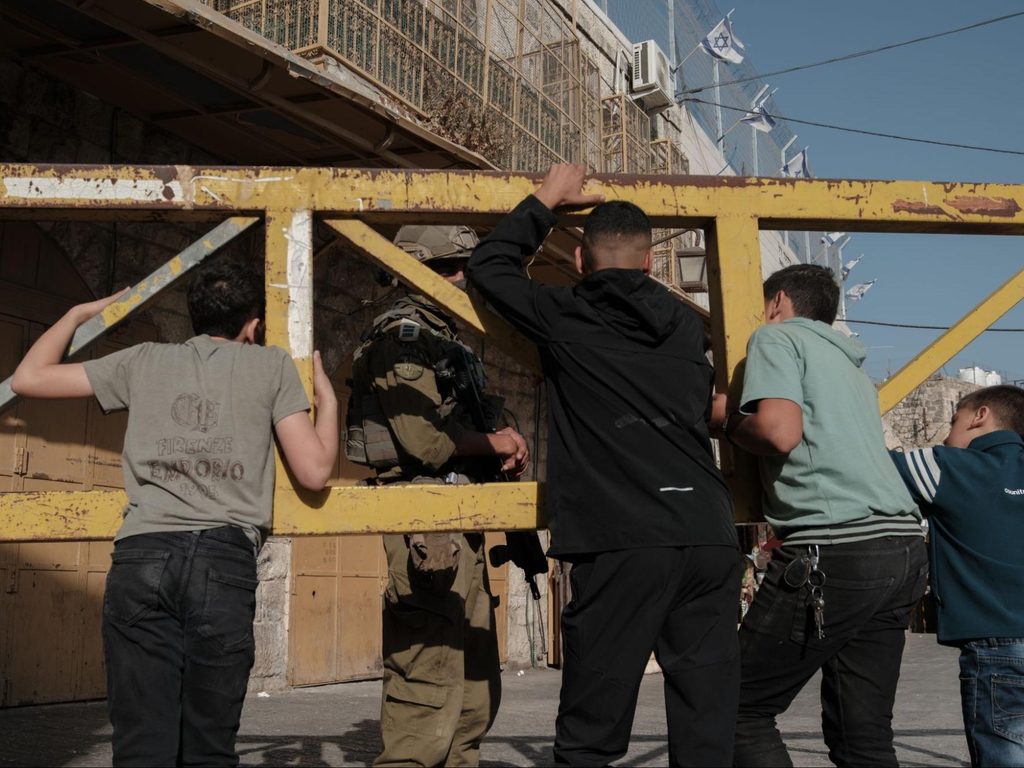
The settler raid is part of an architecture of erasure that employs the politics of memory. Checkpoints, blocked streets, closed shops, surveillance posts, barriers and military escorts reorder the Old City so that Palestinian movement is conditional, and settler movement is protected. The Saturday tour may last only a few hours, yet its claim is much larger. Under the guard of soldiers, a selective history is showcased through settlers walking proudly through the Old City, while Palestinians are forcibly erased.