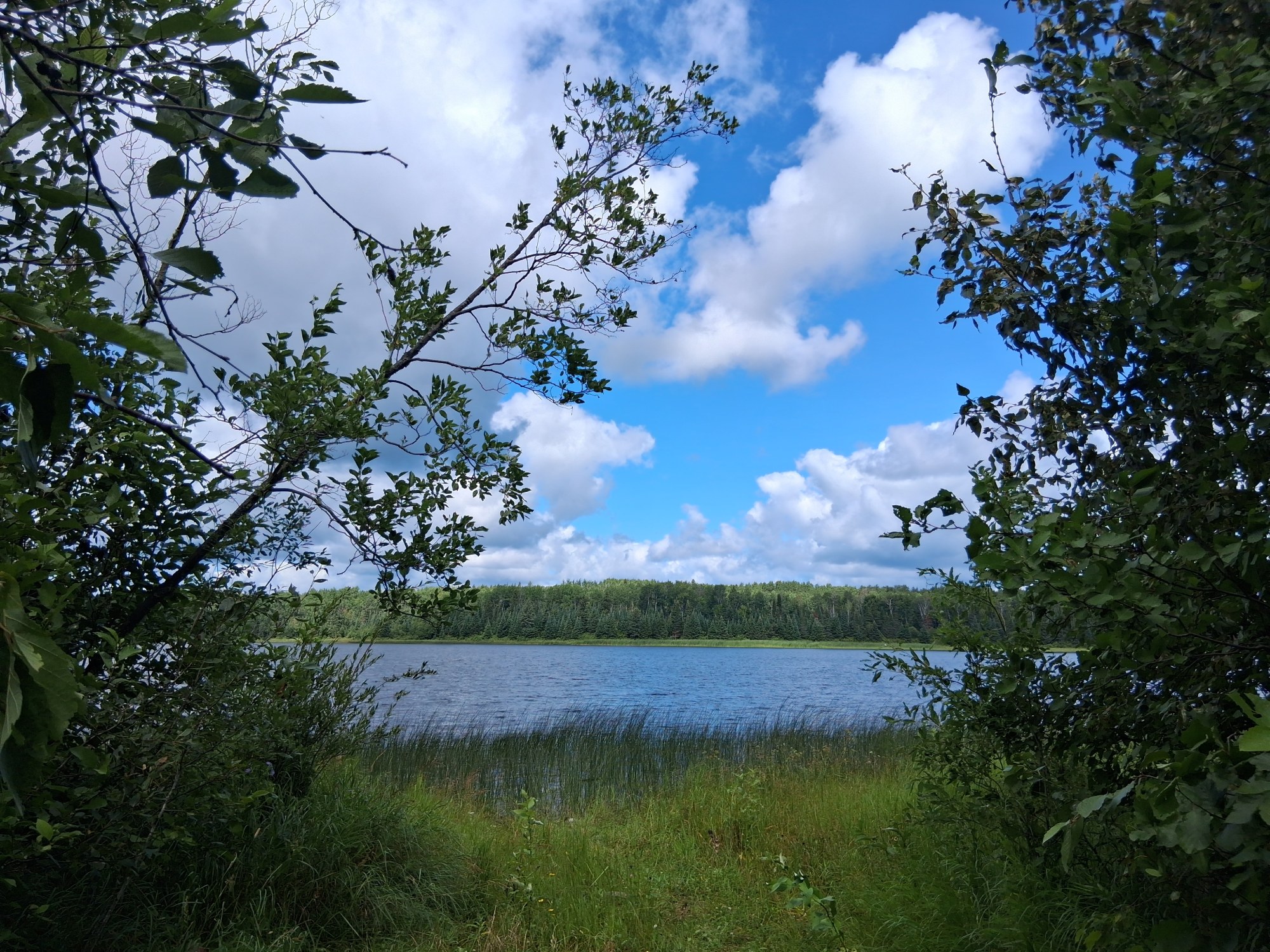
A light rain was glistening on the leaves and needles of the pine, spruce, and poplar forests that embrace the community of Asubpeeschoseewagong – also known as Grassy Narrows – when we arrived at the blockade site. Our delegation had come to this community in northwestern Ontario to meet with Judy Da Silva, an elder, activist, and community leader in the struggle for justice for her people and their waterways. We sat together under the shelter of a pop-up tent at the site where, more than twenty years ago, the youth of her community had first taken the situation into their own hands.
Fed up with logging companies clearcutting the forests where they hunted, trapped, and gathered berries and medicine, a group of youth from Grassy Narrows set out with an old car and a chainsaw one cold December day in 2002 and started felling trees across the logging road. They were dressed only in thin jackets, but they were hot with determination. It was the start of the longest-standing Indigenous-led direct action protest in Canadian history.
Clearcutting is only one of the threats facing the people and ecosystems of Grassy Narrows. In the 1960s and ‘70s the Dryden paper mill dumped around nine tonnes of mercury into the English-Wabigoon River system. The neurotoxin made its way into the food chain, poisoning fish and people. Mercury poisoning can cause tremors, insomnia, memory loss, headaches, tunnel vision, joint pain, loss of balance, hearing and speech impairments, and kidney failure. An estimated 90 percent of the population of Grassy Narrows experiences symptoms.
One woman who now lives in southern Ontario told us she came back to Grassy Narrows recently for a funeral and ended up staying for a whole month. “There were three funerals every week,” she said.
After decades of community activism, the Ontario government set aside $85 million for mercury cleanup in the river system. Scientists are measuring contamination levels to determine how this might be done. Although the Dryden mill no longer dumps mercury into the river, it still releases other chemicals into the waterway, some of which exacerbate the effects of mercury poisoning.
A poster fixed to a trailer in town depicts the varieties of fish that carry the most mercury and offers tips on how to cook fish to minimize mercury consumption.
“This afternoon you’ll go to the community powwow and you’ll see my people dancing,” Judy told us. “My people are beautiful, even though they’re poisoned. You are privileged to be around my people. They are mercury sufferers, but they’re still smiling.”
Judy herself is beginning to experience difficulty swallowing, a symptom of the mercury in her system.
Judy was joined by her friend Chickadee Richard, an Anishinaabe knowledge keeper and grandmother from Sandy Bay First Nation. “When people on the land are being attacked, we come here and pray,” she said. “When I pray, I pray for all of life, not just us.” She referred to Indigenous-led struggles at Oka and Fairy Creek. Chickadee’s daughter is among the Tiny House Warriors in British Columbia who have fought to try to stop the Trans Mountain pipeline from crossing unceded Secwepemc Territory.
Judy gave us each a gift: a poster and a tiny copper pail on a leather cord to wear around our necks. “You’re now water carriers,” she said. “We have to protect Nibi. Water. It’s in danger all around the world.” She mentioned a power plant in Hungary that was on the verge of shutting down because of low water levels in the drought-stricken Danube River.
The poster, illustrated by her daughter Iruwa Da Silva, shows a woman on her knees pouring water from a pail. Leaping fish surround her. She’s held in the embrace of a white-haired woman who in turn is held by the spirit of a thunderbird. Often her daughter feels alone in the struggle to protect the land and the water, Judy told us. Nothing changes. Industry and government hold all the power. “But the ancestors are still supporting us.” She looked at each of us around the circle. “Your ancestors are behind you too. When you feel alone, your ancestors are standing behind you. They brought you here to hear our story.”
On September 23, starting at noon, members of Grassy Narrows along with thousands of supporters will march through the streets of Toronto to demand an end to pollution and compensation for the people of Grassy Narrows. RSVP to join the River Run here.