When I was sitting with my dad, he told me something that stayed with me. He said, “You know, we used to go to Jordan almost every day. Sometimes, we would walk there, have breakfast in Jordan, and then have lunch back in Hebron.”
He was describing a time when crossing and moving between places did not carry the same weight it does today. The challenges that now come with crossing weren’t part of everyday life then. Movement was simply part of life. Maybe life was better then, but perhaps, more importantly, movement was easier.
My dad told me that he used to work in Amman when he was seventeen, or even younger. At that age, travelling to another place was not something he had to overthink. He did not have to calculate every possibility before leaving: Will I be able to cross? How long will it take? Will the road be open? Will I be allowed to pass? Today, even travelling to another city does not always feel like an ordinary choice. Sometimes, before thinking about where you are going, you have to think about whether you will be able to get there at all. You cannot always plan your time based on distance. You plan around checkpoints, closures, waiting, and uncertainty. And this made me think about what freedom of movement actually means.
In the poem Passport, Mahmoud Darwish writes, in the version performed by Marcel Khalife:
“All the birds that followed
My palm to the door of the distant airport…”
When I first heard these words, I imagined the freedom of a bird, moving wherever it wants, crossing distances without asking permission, without passports, checkpoints, or borders. But then I asked myself: Is freedom really that easy? What does it mean to feel free when you travel outside the occupation? Does crossing a border mean you are free? Or does it simply mean that, for a moment, you have entered a place where movement is easier?
When I travel, I can experience something that feels so ordinary elsewhere: getting on a plane, crossing a border, arriving somewhere without constantly thinking about whether I will be allowed to move. For a moment, movement becomes invisible. I do not notice it because it is simply there. And perhaps this is what makes returning different. Because once you have experienced movement without constantly questioning it, you begin to notice how extraordinary that freedom actually is and how much it is missing from everyday life back home.
It is like tasting freedom for the first time. Once you have tasted it, you begin to understand how much of your life has been shaped by its absence. If I think about it as a Palestinian who wants to travel outside, sometimes travelling itself becomes an attempt to experience a different kind of freedom, away from visas, papers, waiting, questions, and the constant uncertainty of whether the passport I carry will be enough to prove that I am who I say I am.
A tourist.
Not a terrorist.
Sometimes I think about how strange that is. I am not travelling to do anything extraordinary. I want to take a plane, see a new place, meet people, walk around, see the sea, eat good food, and have a vacation. I am a tourist. And yet, somehow, even that simple identity can feel like something I have to prove.
Am I being seen as a tourist, or am I being questioned as a terrorist?
It sounds almost ridiculous when you say it out loud. But this is part of the reality of travelling with a Palestinian passport. We sometimes joke that our passport is only useful for getting us into the bathroom. We laugh about it because sometimes joking is easier than explaining the frustration behind it.
Then comes the visa. Let us forget, for a moment, the two months of waiting, the paperwork, the documents, the questions, and the uncertainty of whether you will be approved. Let us imagine that you finally get the visa. You finally get to travel. And then you discover something beautiful. You realise how many people know Palestine. How many people stand with Palestinians. How many people recognise your flag, your story, your struggle. And somehow, travelling away from Palestine does not make me feel less Palestinian. It makes me feel it even more.
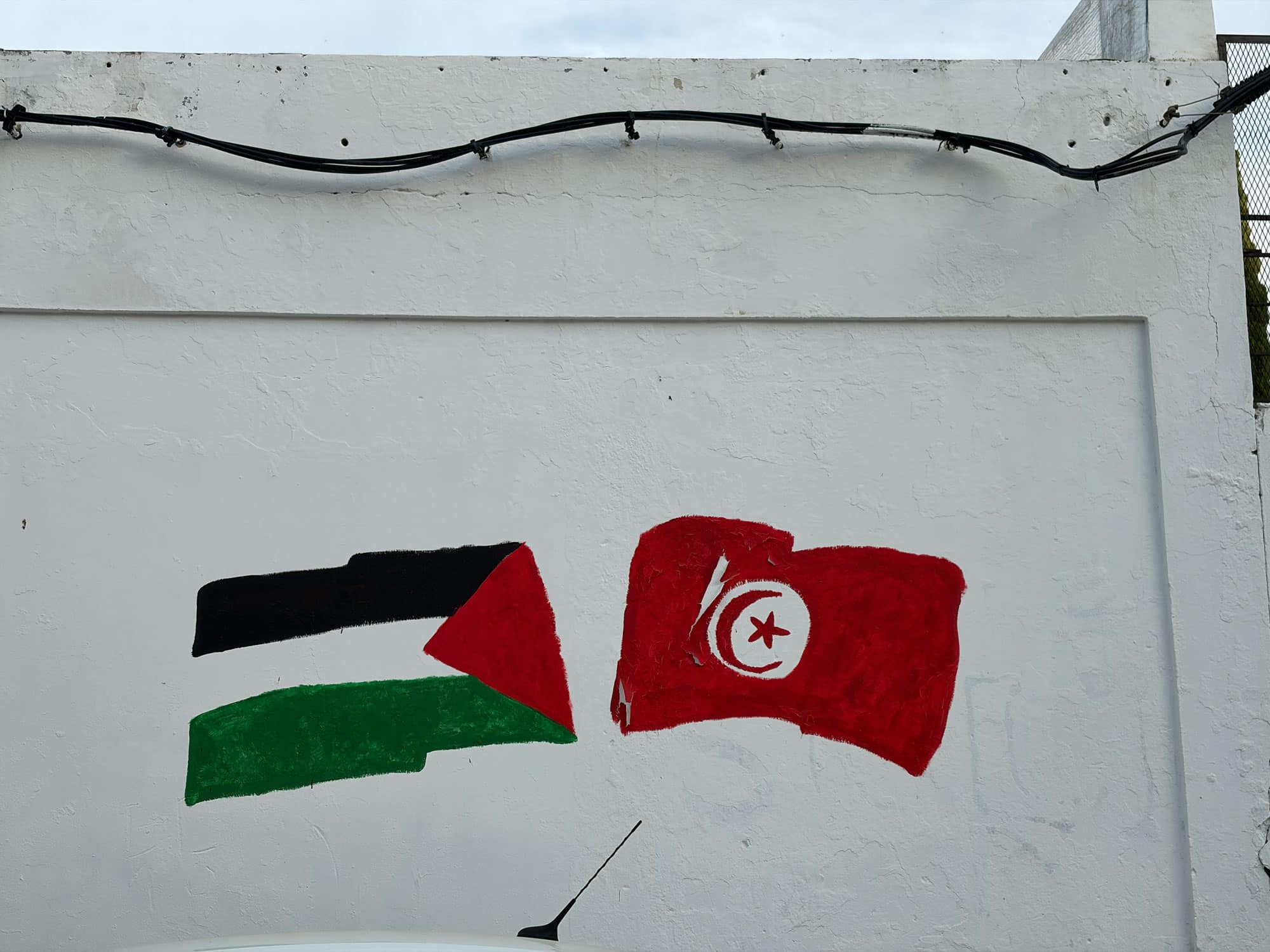
This is what travelling to Tunisia did to me. For ten days, I experienced something that felt almost unfamiliar: moving without constantly thinking about movement. I crossed borders without thinking about the next checkpoint. I saw the sea. I walked through the streets. I enjoyed the people, the conversations, the food, and the atmosphere. I laughed. I explored. I lived. For ten days, I could almost forget about the occupation. We say, “We are just living life.” And maybe we were. But even while I was living those ten days, I never stopped being Palestinian. If anything, being away made me more aware of it. Because for those ten days, movement was simply movement. I did not have to calculate how long a journey would take because of a checkpoint. I did not have to wonder whether a road would be open. I didn’t have to prove I was allowed to pass. I could simply go. And perhaps that is what freedom felt like: not something extraordinary, but something so ordinary that I only noticed it because I had spent so much of my life without it.
Coming Back
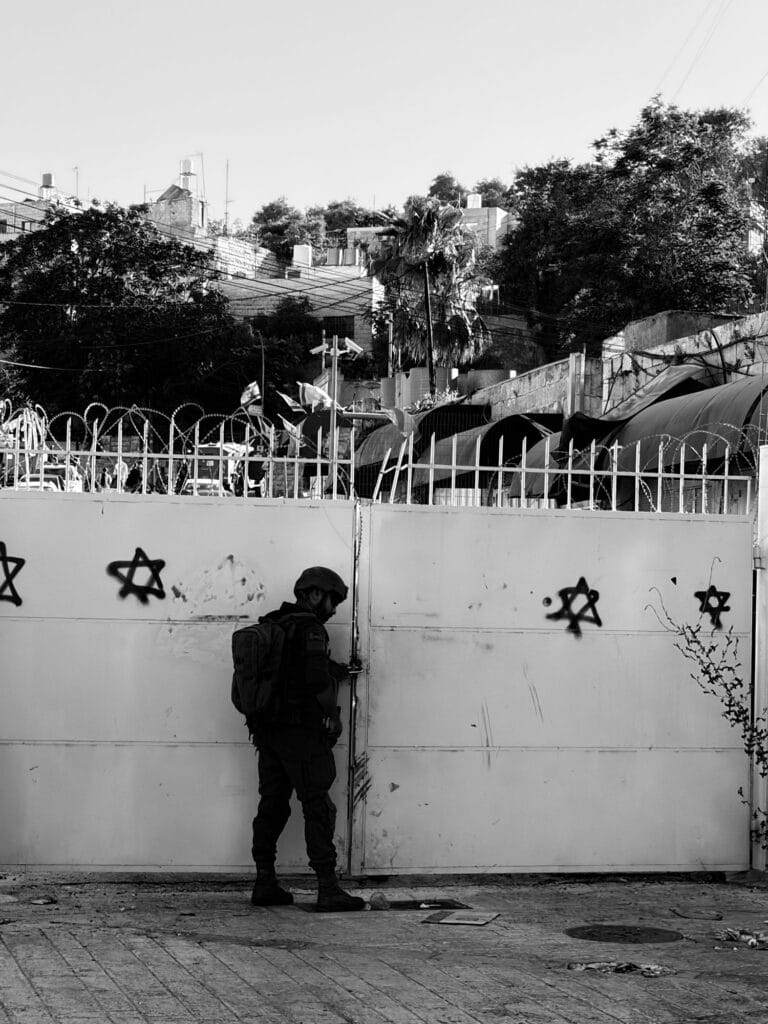
Returning to Palestine felt like: “Oh hell, we’re back.” Is this real? The Israeli flags remind you. Checkpoints at every entrance to the city. Soldiers everywhere. A soldier with an American-looking face, speaking with a Hebrew accent mixed with broken Arabic, looks at me and says, “Welcome back.” Then demands, “ID, passport, papers.” And then the fake smile, the smile you learn to give because you know that, sometimes, smiling is part of getting through.
And just like that, the culture shock begins again. Again and again, you feel the occupation. After ten days of moving freely, seeing the sea, walking without calculating time, crossing borders without thinking about checkpoints, you suddenly return to measuring your movement by barriers.
Back to Israeli flags.
Back to checkpoints.
Back to soldiers.
Back to settlers.
And suddenly, you notice things you might have learned to ignore before: settlers everywhere—the power they carry, the roads built for them, the settlements expanding around you.
Then you see the olive trees. Trees that have been standing there long before the new roads, the new houses, the new settlements. Trees that are cut down to make space for something else. A bulldozer removes what took generations to grow, and in its place comes a new settlement, green, organised, clean, almost beautiful from a distance—a beautiful, environmentally friendly-looking landscape. Underneath that green is something you cannot ignore: Palestinian land.
The trees are gone, and the land has been taken. New roads cut through as if nothing was there before; bulldozers, Israeli police, and soldiers are everywhere. And the strangest part is how quickly your eyes adjust again.
Ten days ago, I was shocked by how easy movement could feel; now I am shocked by how quickly I can become used to its absence. Maybe this is another kind of culture shock: not arriving somewhere new, but returning to a reality you know too well. You come back from a place where movement felt like a basic human right, and suddenly you are reminded that here, movement is something you negotiate, something you wait for, something you may be stopped from doing, or something that can depend on a soldier standing in front of you.
You smile. Not because you are happy, but because you want to pass.
Back to Reality
I return to reality, back to the city where I live, the city of my heart, that holds my blood, my memories, and my soul the Old City of Hebron, a ghost town. A place that once felt alive, but now carries the weight of everything that has been taken from it, where settlers enter and soldiers stand nearby to protect them from the people who belong to this land. The contrast feels almost unbearable.
After ten days of experiencing movement as something ordinary, I am suddenly back in a place where movement is watched, questioned, and controlled. The colours seem darker again. Reality feels black again, and I remember, again and again: You will remain Palestinian no matter how many borders you cross, how many countries you visit, or how far you travel.
Travel will never erase the fact that you are Palestinian; if anything, it can make you understand it more deeply. Leaving can give you a glimpse of what freedom feels like, but returning reminds you why that freedom matters. We cannot allow ourselves to forget the land, the stories, the trees, the streets, the people, the memories, or the soul and spirit of this place.
Travel will not make me forget, nor stop me from caring, or stop me from hoping.
However, one fear stays with me: I hope I never wake up one day and discover that this land no longer recognises me. When I return home, and somehow, home looks at me as a stranger. Or when I stand in the streets where my history lives, and the place itself denies that I belong there. Perhaps the most painful form of displacement is not only being forced to leave your land, but returning to it and finding that it no longer recognises you.
As Ghassan Kanafani wrote in Returning to Haifa:
“I know it, Haifa, but it denies me.”
And maybe this is what I fear most.
Not travelling away.
Not crossing borders.
Not even being far from Palestine.
But one day, after all the travelling, all the leaving and returning,
all the years of holding on, to come home and find that home
has been made to forget me.
But one question continues to haunt me: What if Palestine itself is one day denied the ability to remember its people?