Between 28 February and the announcement of the ceasefire on 8 April, a total of 647 attacks were recorded. Despite the ceasefire, attacks have continued. Between 8 and 24 April, a further 48 attacks were carried out, bringing the total number since the start of the conflict to 695. During the ceasefire period, Iranian Kurdish opposition party camps and bases were the primary targets. Compared to the pre-ceasefire period, a larger proportion of attacks were conducted directly by Iran.
Patterns of attacks (28 February–8 April)
During the initial 40 days of war (28 February to 8 April), the IRGC and affiliated groups carried out 647 attacks on the Kurdistan Region:
- US diplomatic and military facilities were the most frequently targeted accounting for 277 attacks.
- Civilian and non-belligerent infrastructure, including Peshmerga facilities, residential areas, oil fields, refineries, telecommunications companies, and other civilian sites, accounted for 224 attacks.
- Iranian Kurdish opposition party camps and bases were targeted in 146 attacks.
The IRGC was responsible for 31.8% of attacks, while affiliated groups carried out 68.2%. Overall, 42.8% of attacks targeted US facilities.
Attacks during the ceasefire (8–24 April)
Despite expectations that violence would subside following the ceasefire announcement and the start of negotiations in Islamabad, attacks persisted.
During this period, 48 attacks were recorded:
- 75% carried out by the IRGC
- 25% by affiliated groups
This represents a notable shift, with a greater share of attacks conducted directly by the IRGC compared to the pre-ceasefire period.
Targeting patterns also changed:
- Iranian Kurdish opposition groups: 37 attacks (77.1%)
- Civilian areas and Peshmerga facilities: 7 attacks (14.6%)
- US diplomatic and military sites: 4 attacks (8.3%)
This trend indicates a shift in focus from US targets to Iranian Kurdish opposition groups within the Kurdistan Region. It also underscores that the ceasefire between the United States and Iran has not translated into the end of violence in the region.
Overall analysis of attacks
Since 28 February up to 24 April 2026:
- Total attacks: 695
- Directly by Iran: 34.8%
- By affiliated groups: 65.2%
Distribution of attacks by Governorate
Due to the presence of the US Consulate and US military bases in Erbil, as well as the concentration of Iranian Kurdish opposition camps, Erbil Governorate experienced the highest number of attacks.
- Erbil: 544 (78.3%)
- Sulaymaniyah: 123 (17.7%)
- Duhok: 22 (3.2%)
- Halabja: 6 (0.8%)
Types of Attacks
- 551 drone attacks
- 131 missile attacks
- 12 artillery attacks
- 1 gunfire attack
Target categories
CPT classifies targets into three categories:
- US diplomatic and military facilities: 281 attacks (40.5%)
- Civilian and non-belligerent infrastructure (including Peshmerga bases, residential areas, commercial centers and energy production sites): 231 attacks (33.2%)
- Iranian Kurdish opposition groups’ camps: 183 attacks (26.3%)
Interceptions
Of the 695 recorded attacks, 407 (58.6%) were intercepted or neutralized by air defence systems, aircraft, or other countermeasures.
Human, civilian and material impact
Between 28 February and 24 April 2026, attacks resulted in 123 casualties in the Kurdistan Region, including 22 fatalities and 101 injuries. At least 24 of those affected were civilians.
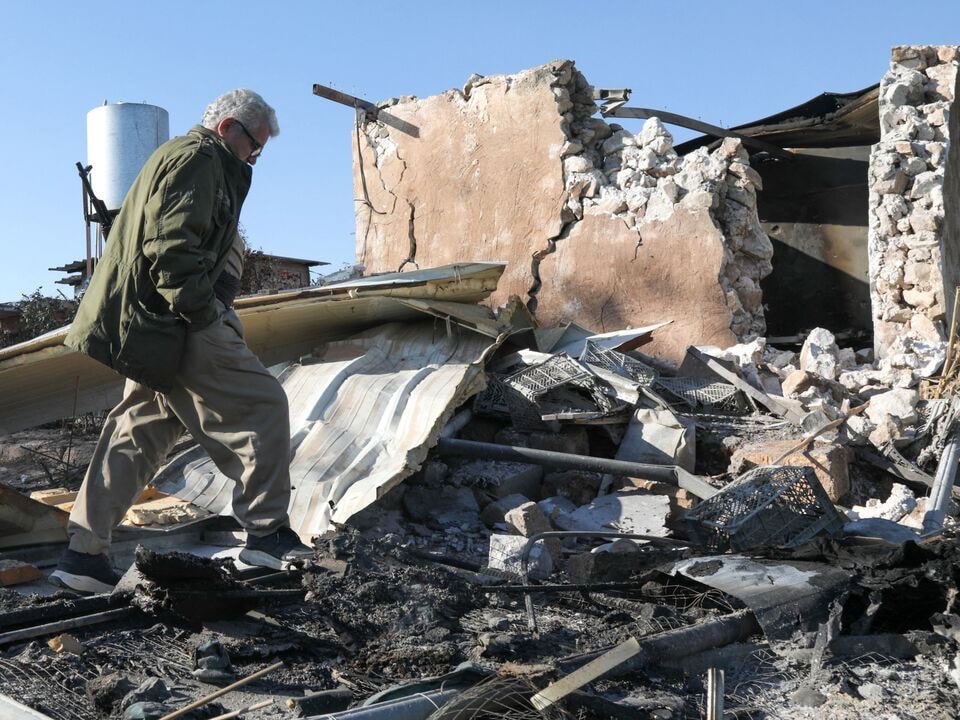
Civilian material damage has also been significant. More than 67 homes and residential buildings and 45 civilian vehicles were damaged.
Recommendations
CPT Iraqi Kurdistan welcomes the extension of the ceasefire. However, an end to hostilities between the principal parties must be accompanied by an immediate cessation of attacks on the Kurdistan Region by Iran and affiliated groups.
The Government of Iraq should take concrete steps to uphold the sovereignty of its territory and hold accountable armed groups operating from within Iraq.
The Kurdistan Regional Government and the Government of Iraq should also ensure timely compensation for civilians affected by the conflict, in line with Law No. 20 of 2009 and the amended Law No. 57 of 2015, approved by the Iraqi Council of Representatives.