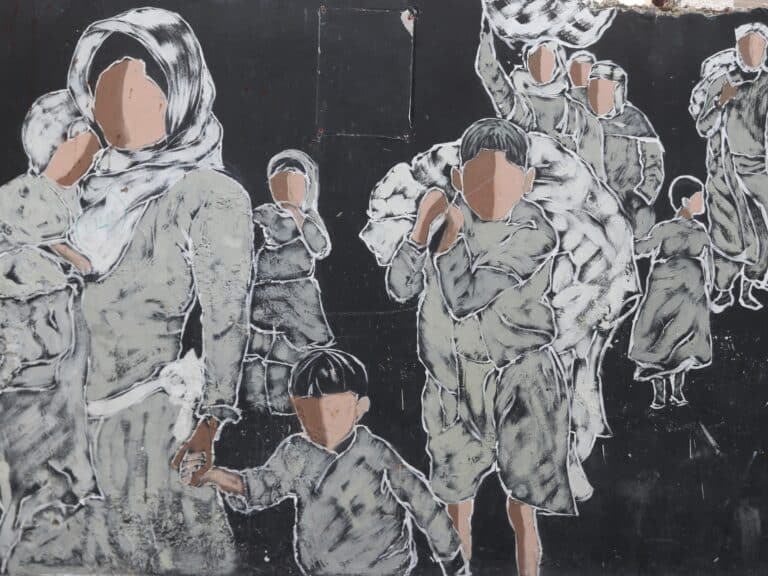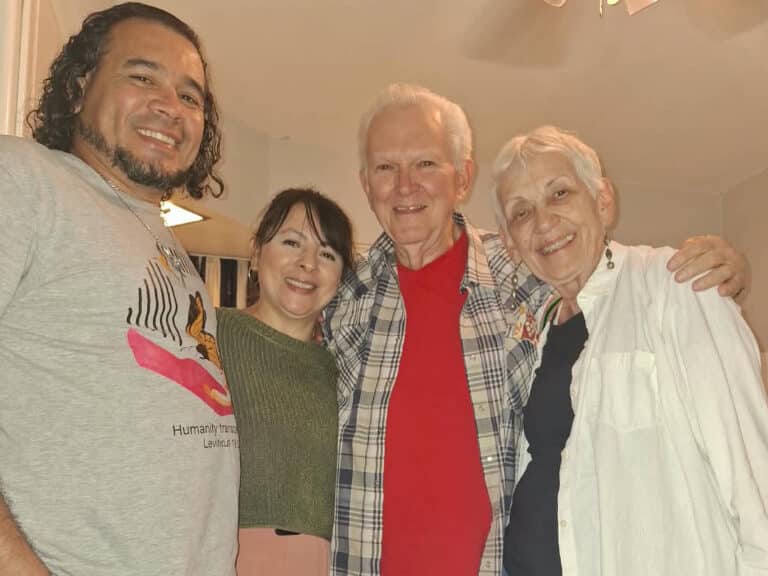

December 7 is the Day of the Candles in Colombia. Although it has its roots in Christianity, it has become a cultural tradition where individuals, families, and communities gather together to light candles and offer a prayer for a person or a situation of concern or simply an opportunity to send light and love. Light is also recognized as a symbol of hope in the midst of so much violence and oppression in the world.
As the CPT Colombia team, we gathered around the light in solidarity with the Palestinian people and with our CPT team that lives and works in the city of Al-Khalil/Hebron in the West Bank, Palestine. As a symbolic act, we used our candles to write +21,731, which corresponds to the number of Palestinian people assassinated in Gaza since October 7, 2023, as a result of the genocidal policies of the Israeli government. This is the highest number of casualties in the history of the 75 years of Israeli apartheid and does not include the thousands of people who have been wounded, injured, imprisoned, tortured, displaced or are still trapped under the rubble.
It is important to keep shining the light, to ensure that hope prevails in the face of indifference and allows us to continue believing and dreaming of the possibility of putting an end to violence in the world.