In the courtrooms of Mytilene, Lesvos, last week we finally witnessed the acquittal of colleagues and friends who were facing grave criminal charges, including forming and participating in a criminal organisation, money laundering, and facilitating the illegal entry of third-country nationals allegedly not entitled to enter Greece.
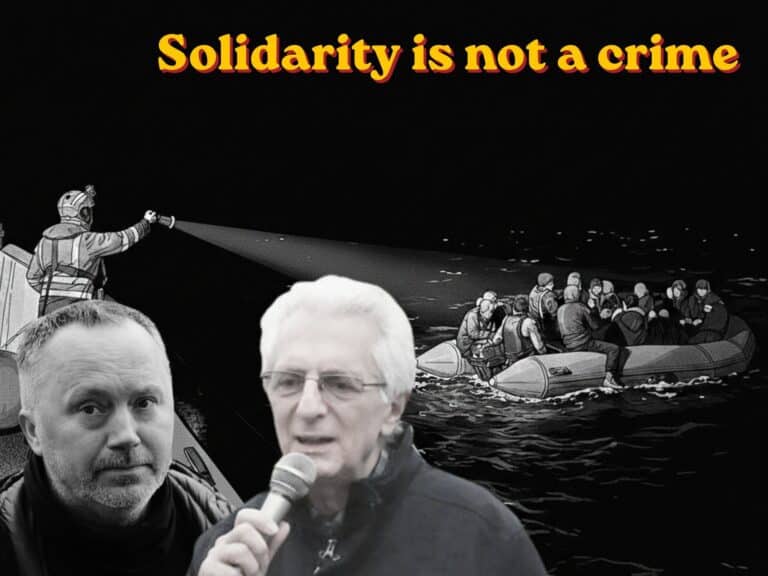
The case was described by the European Parliament as one of the most striking examples of the criminalisation of solidarity in Europe. It became widely known as the “ERCI” or “humanitarians” case. In 2018, following the arrest of two workers from ERCI, a search-and-rescue organisation, the Mytilene Police Directorate was instructed to conduct a broader investigation into humanitarian organisations and solidarity groups operating along the shores of Lesvos. At that time, arrivals of people trying to reach Europe were at such high levels that the authorities themselves were unable to cope. Numerous humanitarian organisations, individual volunteers, and grassroots solidarity groups patrolled the coastline, observing, waiting, and listening, ready to provide support and medical assistance to people arriving in inflatable dinghies. For this purpose, a WhatsApp coordination group had been established by UNHCR to facilitate communication among the various groups, over 2,000 individuals, and the authorities.
Thousands of people who survived the sea crossing were fortunate enough to encounter these volunteers: people who guided them with voices and flashlights toward safe landing points instead of the dangerous rocky shores that have claimed hundreds of lives over the years. They were met by people, young and old, who helped them disembark safely, offered towels to dry off, and provided rescue blankets to warm themselves after hours in the often rough and windy Aegean Sea. They were welcomed with smiles and embraces, rather than being left alone in isolated areas, or worse, being confronted immediately by armed, militarised units of the Hellenic Police and Coast Guard.
We know the meaning and importance of this solidarity. We also know that this was one of the primary reasons behind the legal persecution of the 24 aid workers and volunteers.
Following the prosecution, most aid groups were forced to dissolve. Fear of further persecution, combined with the deliberately-cultivated hostile environment around humanitarian work, led to the retreat of those who would have remained active on the shores. Greek mainstream media amplified a narrative portraying NGOs as part of smuggling networks, responsible for people’s decisions to migrate to the Greek islands. This narrative later contributed to violent attacks against NGO workers and volunteers in Mytilene and elsewhere.
Eight years later, 19 of the original 24 accused were finally brought before the Three-Member Felonies Appeal Court in Mytilene. During those years, they had waited for the Greek judicial system to overcome a series of procedural errors and omissions that repeatedly delayed the completion of the felony trial. In the meantime, in February 2024, 16 of the accused had already been acquitted of misdemeanour charges by the competent court. For the felony trial, five additional individuals named in the original investigation had their cases severed, as their whereabouts remain unknown and the indictment could not be formally served. It remains unclear whether they are even aware that criminal charges were brought against them.
The trial, which began on 4 December 2025, concluded on 15 January 2026 after three days of hearings, and a lengthy ten hours of examination. The proceedings confirmed what had long been evident: not only were these aid workers not part of any criminal smuggling network, but through their efforts they helped save lives, often at personal risk. Their actions were entirely lawful and conducted in accordance with the requirements of the Hellenic Coast Guard. This was also confirmed by the testimony from the Coast Guard commander and the coordinator of the rescue teams under Operation “Poseidon”, who stated that the authorities were fully aware of the volunteers’ activities. They also testified that they were never questioned about it during the investigation!
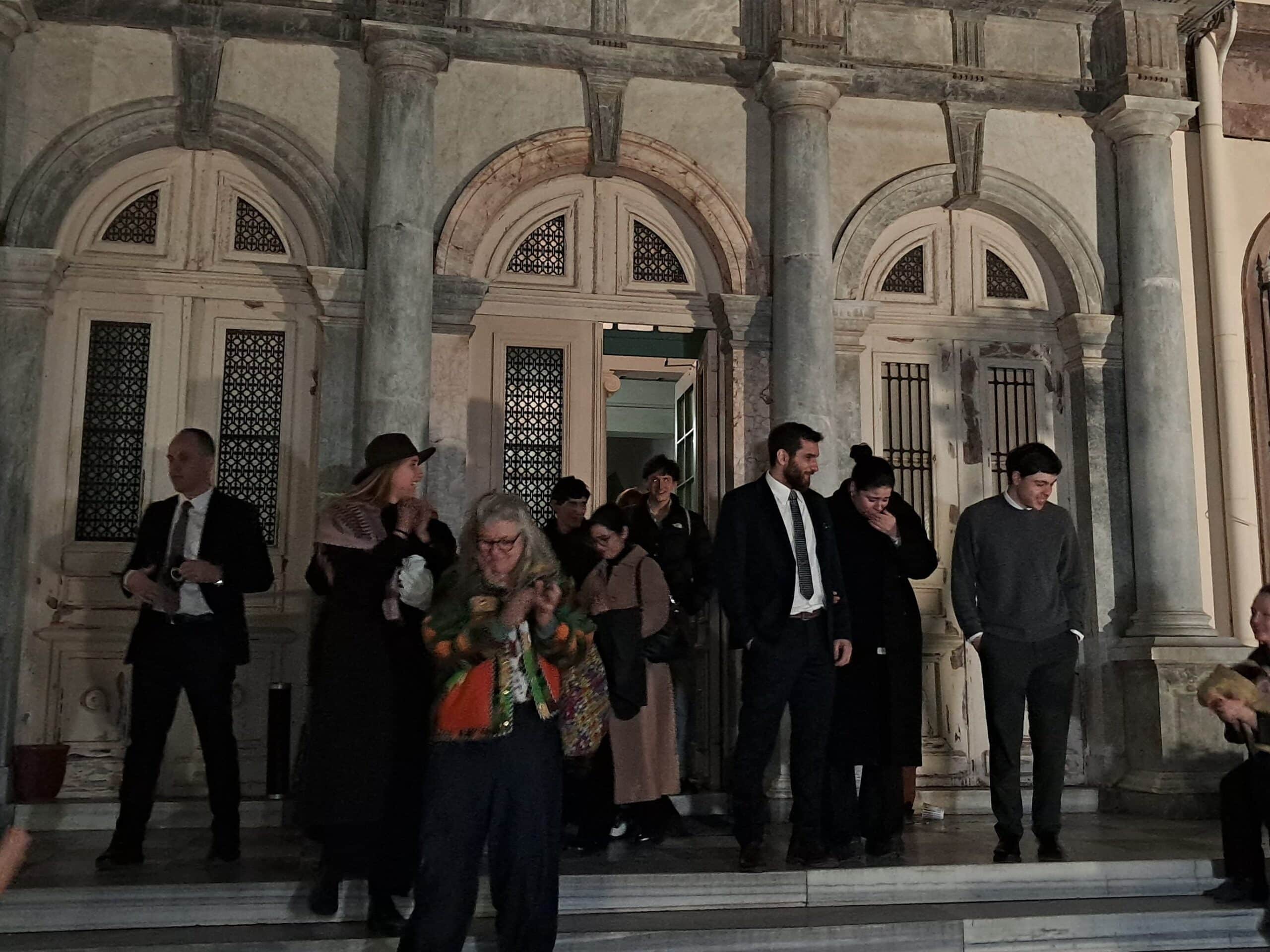
The verdict was unequivocal. Accepting the recommendation of the State Prosecutor, the court acquitted all 19 defendants of all charges. The decision was met with relief and emotion by the defendants, their lawyers, and their supporters, who had filled the courtroom and mobilised widely in solidarity. Together, they left the court to mark the end of a long and exhausting struggle.
Yet a bitter aftertaste remained.
For 2,897 days, the defendants lived in a state of legal limbo. Three of them, Sara Mardini, Sean Binder, and Nasos Karakitsios, were subjected to nearly three months of pre-trial detention. Solidarity networks were dismantled, creating space for the emergence of a new deterrence doctrine pursued by successive Greek governments. A hostile and politically convenient narrative was promoted: that responsibility for forced migration lies with humanitarians, rather than with the colonial legacies, exploitative systems, corruption, and wars driven by the Global North. This narrative served its purpose, and caused irreparable harm.
Can this be called justice?
As one of the defence lawyers reminded us outside the courtroom: “Justice delayed is justice denied.” After eight long years of persecution, this verdict is a relief, but it is not the full measure of justice.
We cannot let that be forgotten. This is a call to action: our fight for humanity, for protection, for justice, must continue and grow stronger. We must remain vigilant, defiant, and united against the systems that punish compassion and criminalise those who save lives.
Let it be heard clearly and without compromise: saving lives is not a crime.