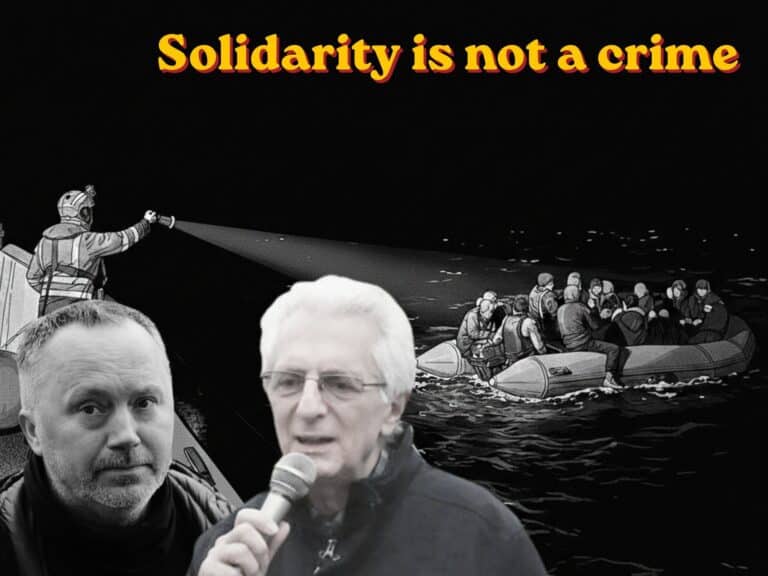

On 3 February, off the coast of Chios island, fifteen migrants drowned in the Aegean Sea. Once more, the Greek Coast Guard has questions to answer. For at least the past six years, the agency has routinely behaved as a paramilitary force, adopting brutal methods of interception and deterrence in the middle of the sea, where there are no witnesses. Coast Guard officers claim that the migrant dinghy, in attempting to evade capture, rammed their vessel.
CPT Aegean Migrant Solidarity this week reminds us of the Coast Guard’s track record, unpicking the narratives used by Greek parliamentarians to shield the agency from accountability. These narratives deflect blame onto the victims themselves, onto a nebulous and ill-defined “smuggling network”, and onto those who advocate on behalf of the victims’ truth.
Health workers have said the injuries were too severe to support the official narrative. The survivors told them that the Coast Guard gave no warning and drove directly into their dinghy. They are in hospital, reportedly under guard. The Minister of Health has pre-empted any investigation, claiming that survivors are being told what to say by “NGO members” with their own anti-Coast Guard agenda.
Meanwhile, CPT’s Iraqi Kurdistan team continues to count the toll of the ethnic cleansing of Kurdish families by armed affiliates of the new Syrian government in Rojava. It makes for difficult reading, but the team is doing the vital work of speaking to survivors and gathering the evidence of what has taken place.
Our teams are keeping memory alive, calling for accountability and refusing to look away. We can walk with them and with besieged communities, echo their demands for truth, and choose to bear witness too.