On 6 February 2014, the Spanish Guardia Civil fired smoke cartridges and rubber bullets at over 200 people who were in the water, to prevent them from entering the city of Ceuta. Fifteen migrants were killed on the Spanish side, dozens disappeared, and others died in Moroccan territory.
Twelve years later the situation has only worsened. According to official data 33,441 people are confirmed dead or missing in the Mediterranean from 2014 until now. Those numbers only cover those that have been reported. In reality, the number is much higher.
On 3 February, once again we witnessed the murderous practices of the Hellenic Coast Guard. Fifteen people are confirmed dead and twenty-four were hospitalised, some of them in critical condition. The number of missing is unknown. That raises the number of dead and missing people in the Aegean Sea to twenty-eight in the year’s first thirty-four days.
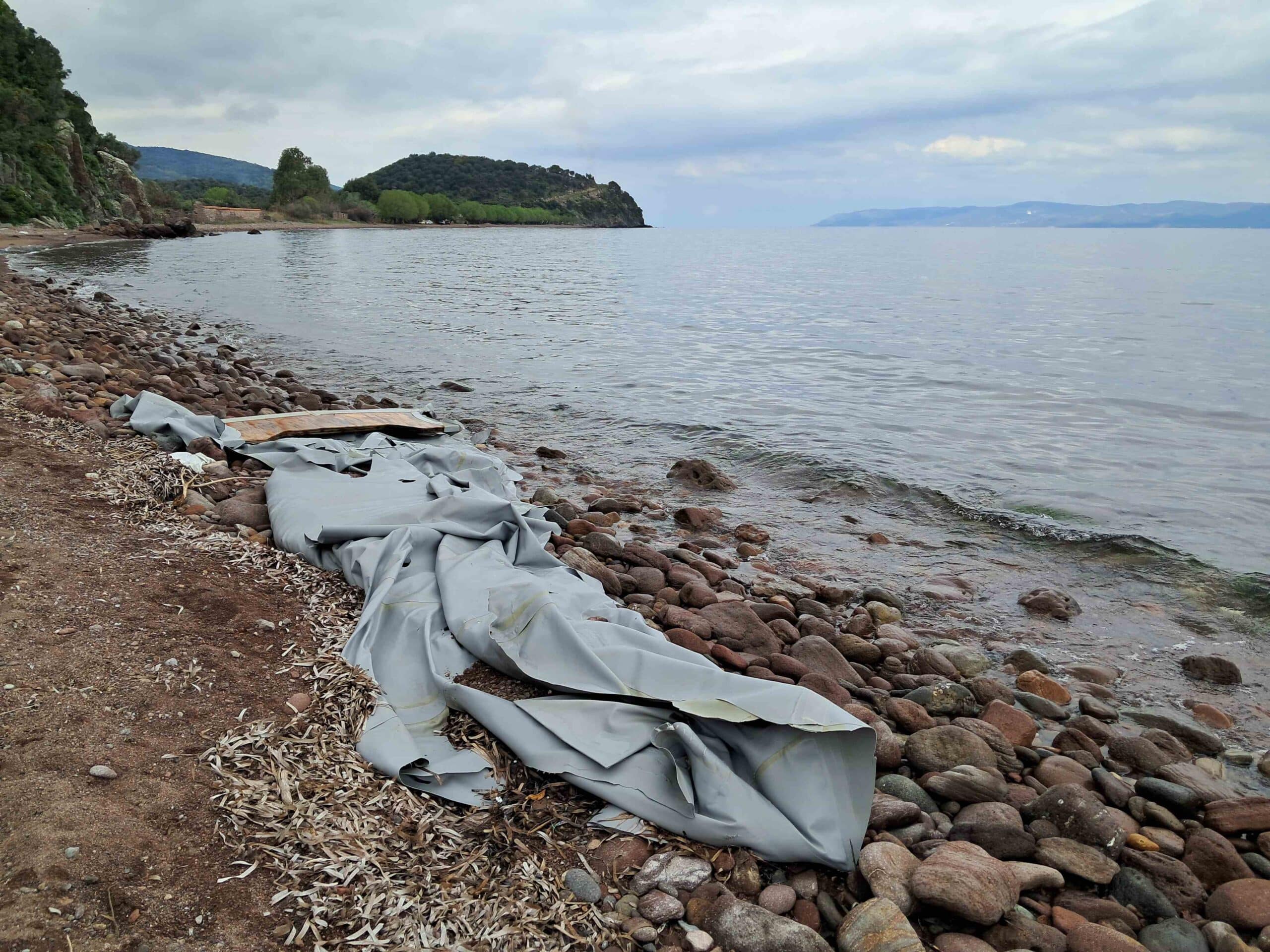
In 2025, ninety-two people were confirmed dead during travel from Turkey to the Aegean islands. Here again, we only take into account those deaths that can be related to specific incidents, but there have been multiple bodies that showed up on the shores of the Aegean islands that remain unidentified. Further, we cannot count all those who started their journeys and went missing on the way.
The deaths in the Aegean have been proven to be a direct consequence of the border regime in place. The European Union’s (EU) policies of closed borders lead migrants seeking safety into unsafe routes, and the use of illegal networks. They are packed on unseaworthy boats and dinghies, crossing the Aegean waters, usually in dangerous conditions, hoping to reach one of the Greek islands. Lately they have been aiming for Crete.
Since 2020, the Greek government and its counterparts have adopted the doctrine of “aggressive surveillance”, as they call it. Pushbacks have become systematic, endangering the lives of People On The Move. Under the pretence of protecting the borders, hundreds of migrants must endure this violence, which regularly leads to the loss of their lives. A series of reports and testimonies present the way in which migrant boats are attacked by the Hellenic Coast Guard, with those onboard being beaten, robbed, abused in many ways and then left adrift in the Aegean Sea, or even thrown directly in the water!
These deaths are not accidents, nor isolated incidents, they are the result of political decisions from the Greek government and the European Union, where the use of violence against migrants as a deterrent measure has become one of the main tools of migration management. At the same time far-right narratives are gaining strength in society.
The 6th of February is a day for remembering, a day to name all those who have been killed at the EU’s borders but also a day to stand against this violent border regime that is responsible for all these deaths.