This year Colombia is going through a decisive moment. In the coming months, the country will elect Congress, Community Action Boards, and the Presidency. These are not simply dates on the electoral calendar; they are a time when the direction of the country and the future of human rights are at stake. It is a moment that tests what the peoples of this country have sown for decades through their struggle, their organization, and their hope.
Many of the communities we accompany may not speak in the most academic terms of political science, or debate theories about the Right or the Left, yet they deeply understand what political decisions mean. For decades they have lived through stigmatization, persecution, displacement, criminalization, and violence that directly impact their lives and their communities. For them, politics is not an abstract discussion. Impoverished communities do not have the privilege of declaring themselves “apolitical” when politics runs through their bodies and their territories.
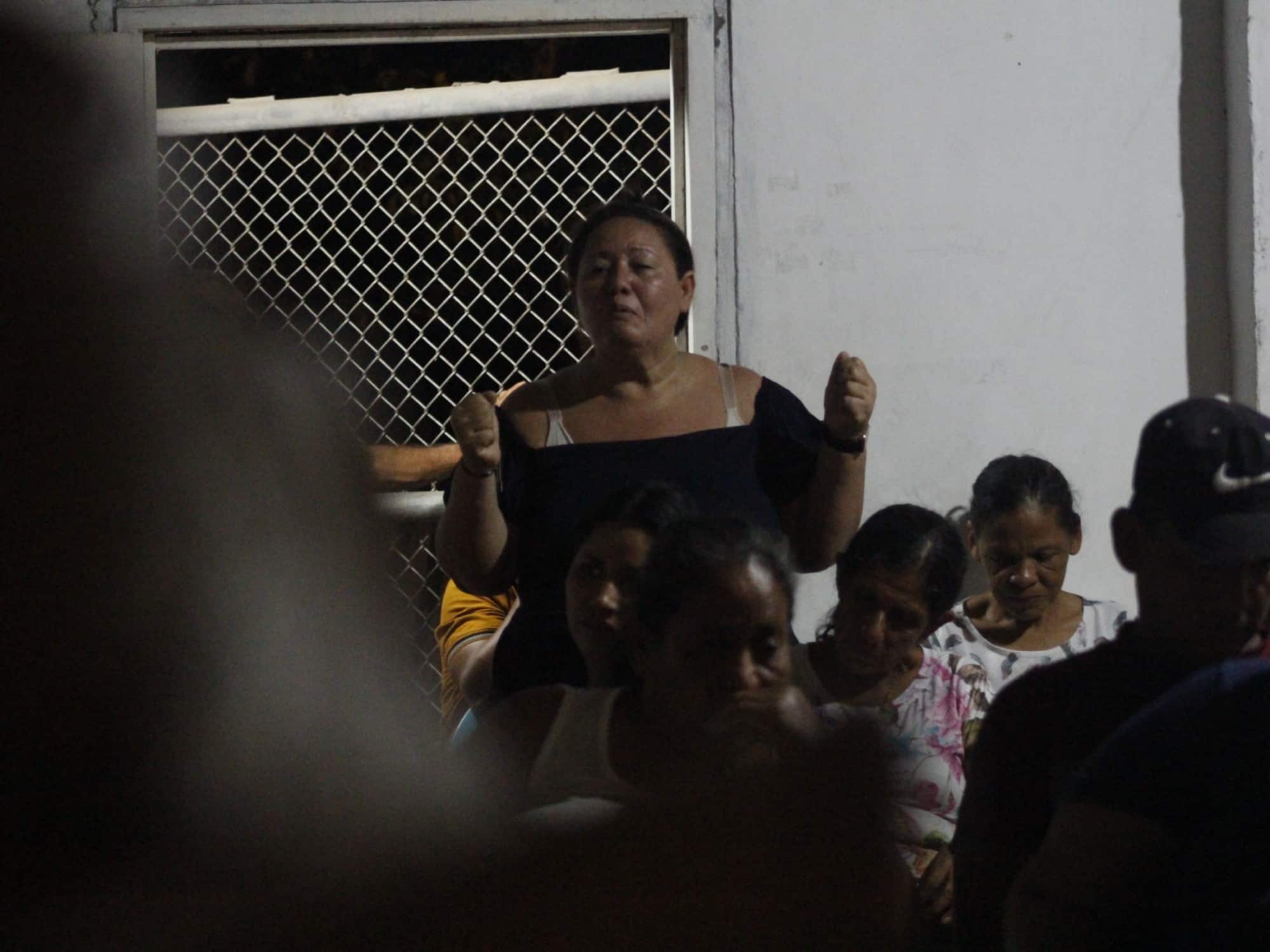
For a long time, Colombia knew practically only one form of government. For many peasant, Indigenous, and grassroots communities, state institutions seemed to be constructed far away and often directly against them. Yet in the past four years, without the need to name doctrines or ideological currents, many communities have experienced something different: for the first time they have felt reflected in the language of the State. They have seen concrete progress, such as the new Law 01 of 2023, which officially recognized peasants in Colombia as subjects of special constitutional protection, and the enactment of Law 2166 of 2021, which granted greater legitimacy and tools to Community Action Committees, recognizing and strengthening their historic role as fundamental actors in territorial development and citizen participation. These advances make it possible for leaders like Marisela Jiménez – our beloved “Chela” from the community of El Guayabo – to exercise her leadership with greater legitimacy and dignity. These changes are not simply administrative reforms. They are political actions that recognize the struggle and resistance of those who were historically oppressed and made invisible.
At the same time, after decades of armed conflict and millions of victims, the country has built – through enormous effort – a Comprehensive System for Truth, Justice, Reparation, and Non-Repetition, composed of the Special Jurisdiction for Peace, the Truth Commission, and the Office for the Search for Disappeared Persons. This entire institutional framework represents the commitment of a society to trying not to repeat the history of violence that has scarred it. Today, many of these achievements are at risk, because these advances do not sustain themselves: they depend on the political will of those who govern and on society’s commitment to protect them. That is why the decisions the country makes today are so important. What is at stake is not only an institutional framework, but the right of victims to truth, justice, and memory, and the real possibility that this history of violence will not be repeated. For this reason, this moment demands collective wisdom.
At the same time, we watch with concern the rise of authoritarian and far-right discourses spreading rapidly across Latin America. We see how countries that have gone through profound struggles to remember their history and defend human rights are once again under authoritarian governments that have already dismantled social gains, sold off natural resources, and militarized politics and their territory. In a region where several neighboring countries have fallen under far-right governments, military coups, or deep processes of militarization, violent discourses, forms of governance – such as those of Milei in Argentina or Bukele in El Salvador – are gaining strength and being presented as models of governability.
Colombia is not isolated from this context. Some presidential candidates openly share these political positions, promote these fascist ideas, and advocate for the militarization and intervention of the United States and Israel in Colombia. Colombia faces the challenge of remaining a place of resistance, of maintaining the ethical and social commitment to stand firm against fascism and to keep saying: they shall not pass. To resist today is not a symbolic gesture; it means refusing complicity with violence, defending what has been achieved, and keeping open the possibility of a different future for our region.
From Colombia we will continue raising our voices against the militarization of the continent, against the advance of paramilitary structures that seek to intimidate and control territories, and in defense of communities that resist with dignity, such as the peasant community of El Guayabo.
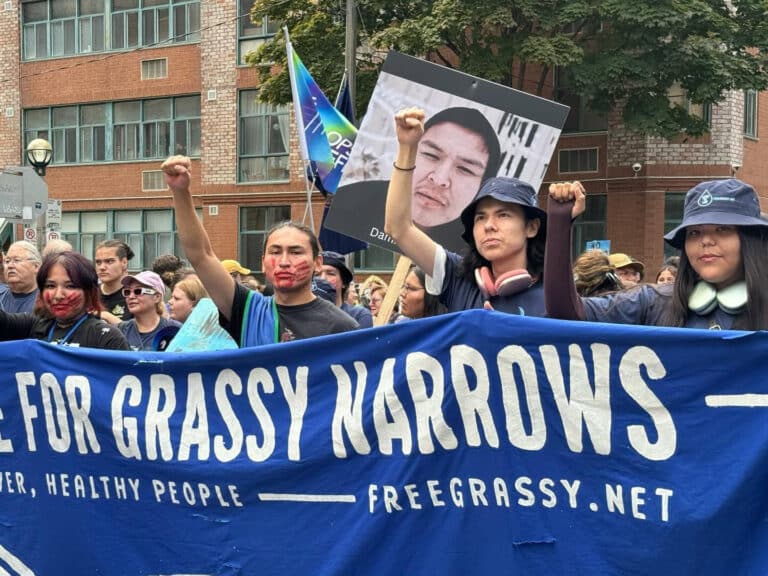
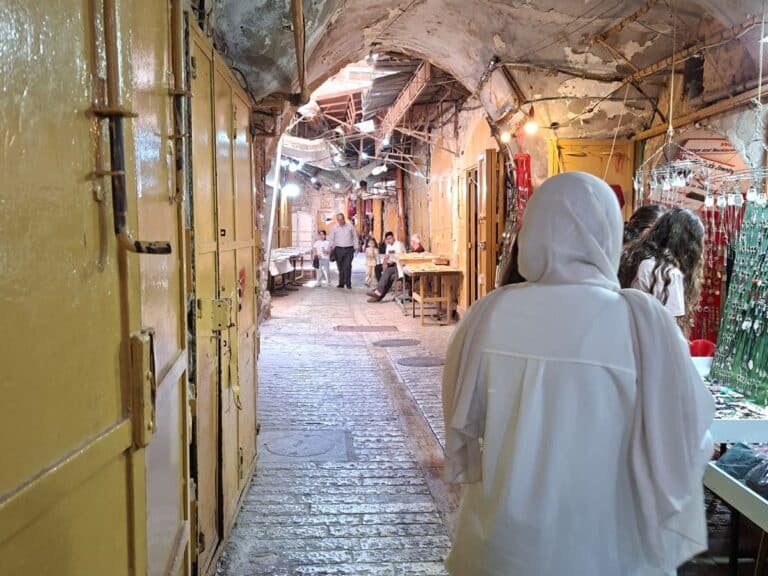
As CPT we reaffirm our historic conviction. For 40 years our organization has chosen nonviolence as its path—but never a nonviolence of silence or neutrality. Our nonviolence has always been active: taking a stand alongside those who have been silenced, walking with those who have been persecuted, and raising our voices for those who have been excluded. Today that conviction remains intact. We will continue to accompany without neutrality and without fear, standing beside those who believe that another world is still possible. It is not “now more than ever”; it is more than ever and always. We will continue with the tenderness and the firmness of active nonviolence, alongside the peoples who resist in Colombia, in Palestine, in Kurdistan, in Lesvos, on the Mexico–United States border, on Turtle Island where CPT has programs, and in every place where human dignity refuses to disappear.
Let us pray that the Colombian people may have the wisdom to choose paths that preserve the separation of powers, the Constitution, the fundamental rights enshrined in it, and the recognition of diversity as the foundation of our richness as a society.
Let us pray that Colombia may have the wisdom not to forget the pain it has endured as a nation, and that this history will not have been lived in vain.
Let us pray that the memory of those who have resisted in the territories, of those who have sown dignity in the midst of violence, may illuminate our collective path.
We ask for prayer, solidarity, and accompaniment from our allied communities and congregations, from those who support our work in different parts of the world and in many different ways. Nothing you do is small. Every word, every prayer, every form of support matters. You make our work possible. From CPT Colombia we invite you to continue weaving hope together.