Show me hope when all I can see is death.
Millions of lives quenched and forever changed.
Show me hope when all I can see are the faces of my sisters in flight.
Show me hope in a world run by men who believe their destiny is with the gods,
while the earth spirals into the abyss
engulfed by flames
lit by them.
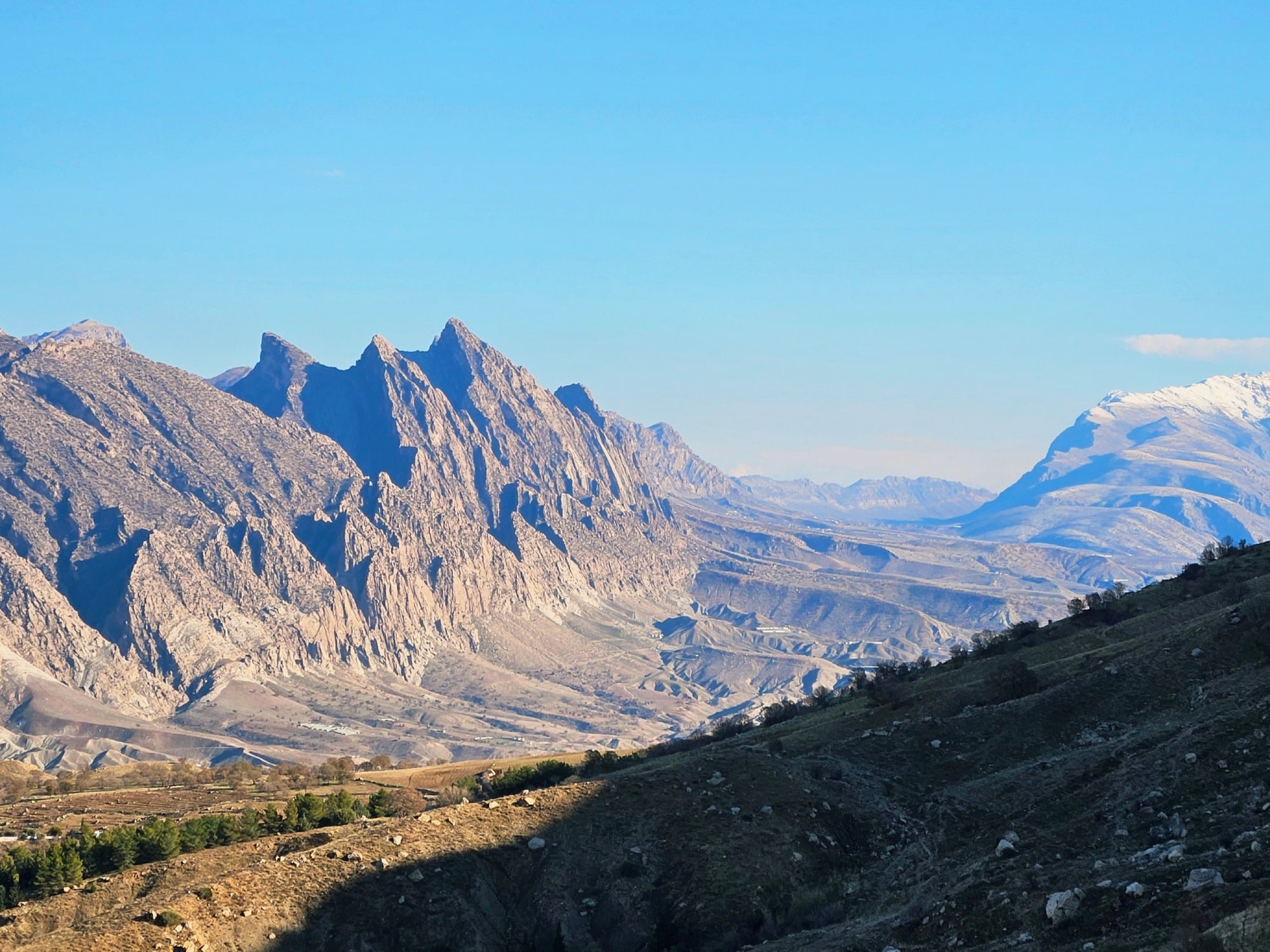
There is nothing quite like the view from the village of Rûste in Başûr (South Kurdistan): fires flaring to life one after another along the slopes of a magnificent valley, stretching all the way to the snow-capped mountains on the horizon, glowing red in the final light of the year’s last sunset.
Newroz, 21 March, marks not only the beginning of the Kurdish year, but also an expectation, a turning point that will bring liberation from foreign rule and oppressive regimes. According to a story told since ancient times by the fires, the blacksmith Kawa shattered the head of a despotic ruler with his hammer, and the news of liberation spread across the land through flames lit from horizon to horizon.
At times, I find myself praying that the heads of those “men who believe their destiny is to be (ruthless) gods” might be shattered by Kawa’s hammer. At times, I seek hope in sacred texts that envision a divine intervention that, once and for all, disarms oppressive powers and authorities and makes them flee in shame for all they have done.
And then, far from myth or distant intervention, I meet Khalida, Jeylan, Niyaz, Sabir, Sherko, Yusif, and so many others, whose names and stories could write a thousand books. Their daily struggle for peace with justice, their nonviolent resistance, holds back the world’s descent into the burning abyss. Their hammers are their lives, wisdom, love, vision, the truth itself.
And as I see others picking up the hammer of solidarity, I can see hope.