On 8 March, many of us celebrated International Women’s Day. When I came home from church, my roommate asked me whether my church had marked the day. He was surprised that we had not. As my church is largely led by women, trans and non-binary people, I didn’t feel any disappointment in the lack of explicit acknowledgement. Our priest had preached on the story of Jesus meeting a Samaritan woman at a well (John 4:5-42), and her interpretation foregrounded women’s experiences in a way that was more meaningful to me than a straightforward celebration of Women’s Day would have been.
In retelling the story, Mother Maggie read between the lines of the conversation between Jesus and the unnamed woman to illuminate a delicate dance of verbal self-defence that women throughout history would recognize: a woman alone, gently challenging a strange man intent on engaging her in conversation, using humour to set boundaries without giving offense. She gradually lets down her guard as she sees that he really has no agenda beyond a theological conversation. His words connect with her – his promise of “living water” offers the possibility of relief from the daily labour of fetching water from the well, and his vision of reconciliation between Jews and Samaritans inspires hope. When he plainly tells her personal history – married five times, now living with a man to whom she is not married – she responds, perhaps sarcastically, by calling him a prophet. In fact, it is she who becomes a prophet when he identifies himself as the Messiah and she proclaims the story of their encounter to the people of her city.
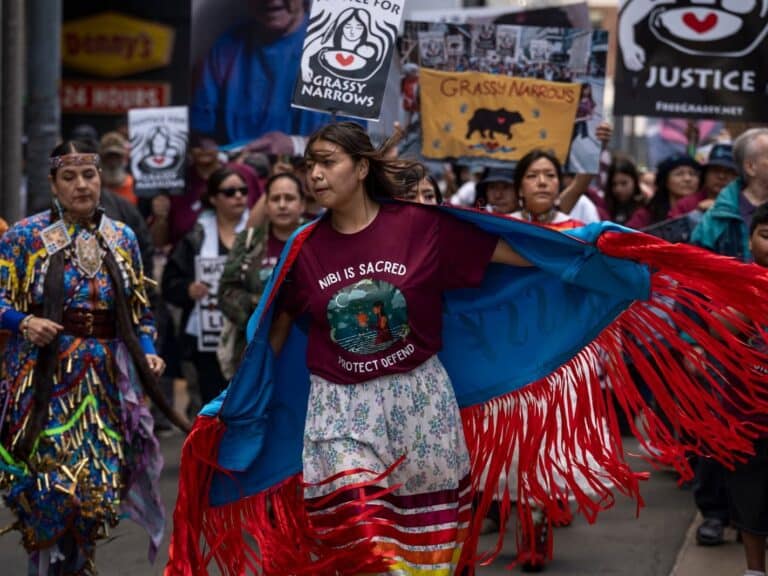
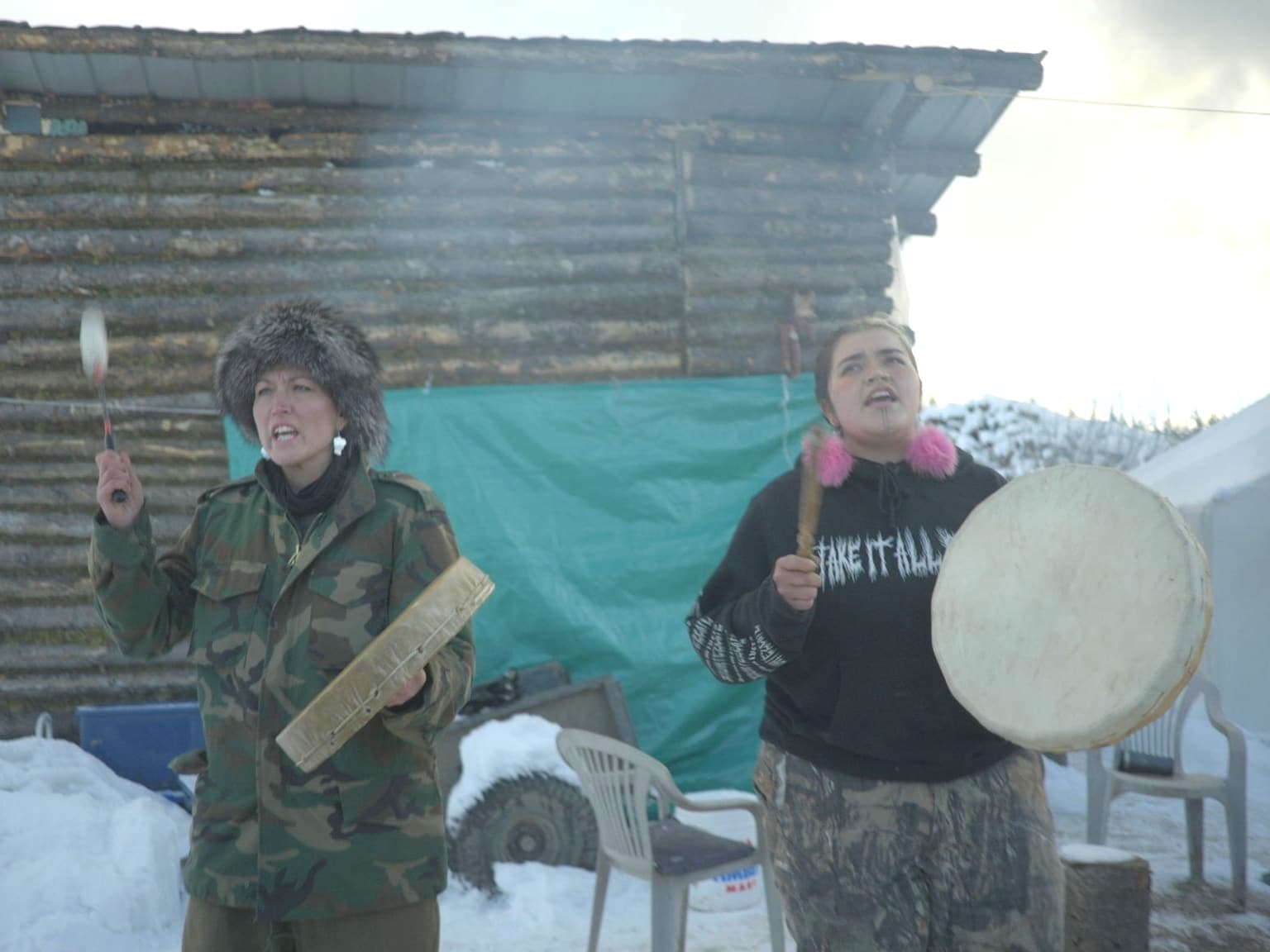
In this story, I hear the resonance of women as water carriers. In the literal sense: so many women’s and girls’ lives are still defined by the daily task of carrying water. But also in the spiritual sense celebrated by Turtle Island Indigenous cultures. I think of Indigenous midwives who have reclaimed the sacredness of pregnancy and childbearing by integrating traditional practices with modern medical knowledge. I think of Indigenous women who have taken on the identity of water protectors: Josephine Mandamin leading water walks around the Great Lakes; Autumn Peltier speaking to the United Nations at the age of 13 about the right to clean water; Judy da Silva, Chrissy Isaacs and other matriarchs from Grassy Narrows who have campaigned for decades for reparations for mercury poisoning; and leaders of the Wet’suwet’en pipeline resistance such as Sleydo’, Shaylynn Sampson, Eve Saint, and Jocey Alec, who have left home and family and put their bodies on the line to defend the waters of the Wedzin Kwa. I give thanks for their holy work.
I hear, too, the stories of women whose communities define them by their relationships with men and by their fertility. I hold in prayer women and non-binary people in the US and elsewhere whose control over their own bodies is endangered by far-right campaigns against reproductive healthcare. I hold in prayer trans women who are so often the targets of far-right violence and discrimination, because their very existence troubles the gender binary on which patriarchy is founded. I hold in prayer all survivors of sexual and intimate partner violence. I hold in prayer women who organize struggles for equity so that all women can build their own lives on their own terms.
And I hear the stories of women who speak truth and come into their full identity as agents of change. I hold in prayer the brave survivors of sexual violence who are refusing shame and casting it onto the powerful men who have abused them. I hold in prayer the women and queer people advocating for equality in religious institutions. I hold in prayer all of the women who lead communities and social movements, taking the traditional role of nurturing into the public sphere with politics of care – for the earth, for each other, for future generations.
I pray for men, too. In this time of misogynistic far-right politics, I pray for men to reject masculinity based on dominance and aggression, and to build the kind of strength that is expressed through caring and responsibility. I pray for more men to come to know the beauty of relationships of full equality and reciprocity that transcend gender roles. I pray for men to have the courage to challenge misogyny when they hear it, and to name women’s leadership when it is erased. I pray for a time to come when our societies support all people, regardless of gender, in growing into their full, powerful, vulnerable, beautiful humanity. Please pray with me.