by Haven Whiteside
CPT Reservists Haven and Rose Whiteside served together on the Arizona team last summer. This May was Haven’s first time on team since Rose died of cancer on November 23, 2005.
My teammates and I are sitting in the back of the pickup at a water station in Sonora, Mexico, one mile south of the border. It is noon time and hot. The migrants are lying low right now, wherever they can find shade, but they will start moving again at the end of the afternoon. Our team carries water and small food packs in case we find someone who needs them. If not, we will leave them by the trail for anyone who may come along.
Last year, 282 migrants were found dead in the Arizona desert, mostly due to dehydration and exposure during scorching days and frigid nights. Migrants manage to carry barely enough water for the one day’s travel. They hope to get more when they meet their ride. But what if they have to wait an extra two or three days hiding from the Border Patrol or the drug traffickers, or because they get lost? Then the body loses water – more than a gallon a day – and you can die of dehydration.
My wife, Rose, died of dehydration after a bout with cancer. Originally she weighed 134 pounds. When I picked her up near the end, she was like a feather. After three weeks of taking in almost no food or water, the body functions shut down one by one: digestion, elimination, motion, memory, speaking, thinking, then seeing, and hearing, and finally breathing. Is it like that in the desert?
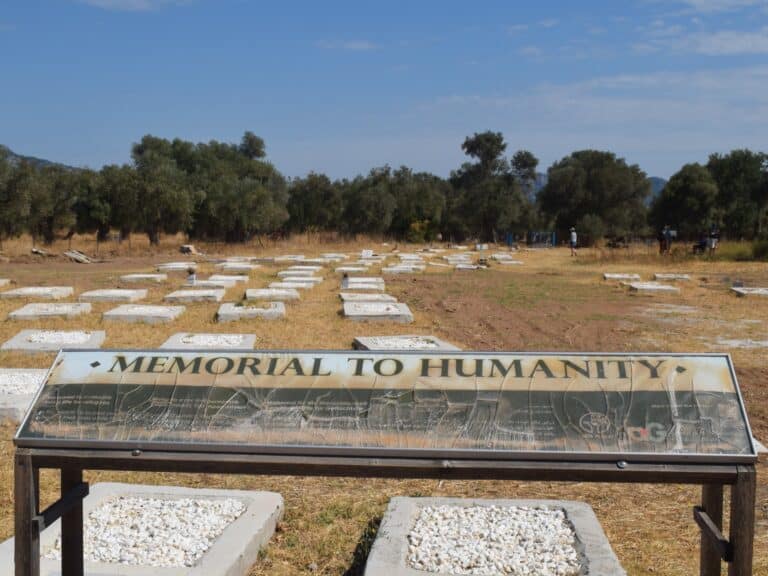
At a vigil for the migrants who died in Cochise County over the last six years, CPTers and community members lay crosses beside the road, reading out the name of each victim, and responding “Presente” to indicate that each is remembered and present in spirit. One cross had no name. Instead it read “Mujer no identificada” – unidentified woman. We will call her Desconocida (Unknown) because all we know is that she died unknown, she died alone, in the desert.
Desconocida was probably young, perhaps 25 or 35. She probably left loved ones, possibly children, who may not know where she is.
The contrast was heartbreaking. My Rose lived 73 years before she died. Her children all saw her in her last days. We buried her in the family plot where she belongs.
Desconocida must have been buried with strangers, with no family, no funeral. Alone. And her loved ones do not know what happened to her.