CPTnet
12 April 2012
ABORIGINAL JUSTICE: KI celebrates bittersweet victory
by Chris Sabas
On 29 March 2012, the Ontario government paid $3.5 million to
mining company God’s Lake Resources (GLR) to walk away from its leases, located
on Kitchenuhmaykoosib Inninuwug (KI) lands. Multiple sacred KI graves lie within the claim area. KI had issued an eviction notice to GLR
last September.
For KI, one of the largest First Nations communities in the
region, it was perhaps a déjà vu moment.
Following the 2008 sentencing of six months in 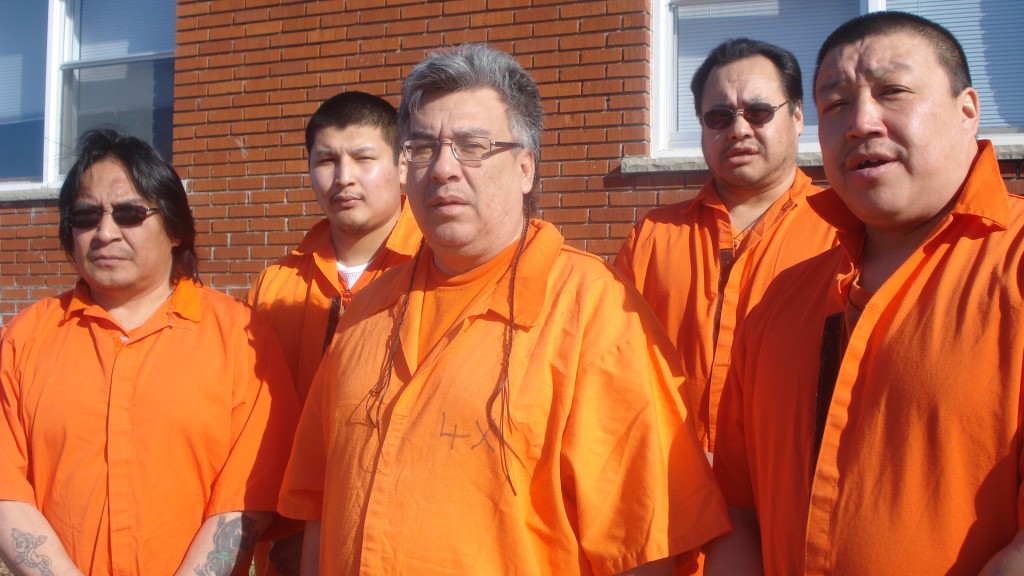 prison of six community leaders
for protecting their land from mining exploration by Platinex Corp., the
province bought out Platinex for $5 million. The “KI 6” served sixty-eight days before a judge released
them unconditionally on sentencing appeal.
KI is located approximately 580 km (360 miles) north of
Thunder Bay, Ontario, and is a fly-in community of pristine boreal forests,
waters, and wetlands, within Treaty 9 territory (officially known as the James
Bay Treaty). Not only does KI have
treaty rights attached directly to its traditional lands, but the community
must be consulted in matters that affect its rights and interests.
In 2000, KI declared a moratorium on mining exploration,
park creation, and all other Ontario land dispositions. In July 2011, KI proclaimed a Watershed
Declaration to protect the Fawn River watershed as well as all the water that
flows in and out of Big Trout Lake. It also created a Consultation Protocol, which sets out how
KI consent is to be sought before any action affecting KI’s lands and resources. (See www.kilands.org.)
KI broke off talks with the province in November 2011 when
Ontario officials could not offer assurances that GLR would not desecrate KI lands
with its proposed drill program. Now
that GLR is no longer a direct threat, talks could resume, with the goal of
creating a unique joint panel tasked with developing creative solutions for
KI’s jurisdictional concerns with the province.
“The decision is bittersweet,” said Chief Donny Morris. “KI has a sacred duty under KI law to
assert its jurisdiction, care for the land and protect and honour sacred
landscapes and graves of our ancestors.
That is why we went to jail in the past and that is why we will defend
our lands in the future,” he said.
Numerous social justice and environmental organizations have
rallied to support KI. While the
threat of GLR entry on to KI Territory escalated before the buy-out, KI
community members and allies, including CPTers, converged in Toronto on 6 March 2012
at the annual Prospectors and Developers Association of Canada’s International
Convention, Trade Show and Investors Exchange-Mining Investment Show. The message from KI has been consistent.
“I know today we’re here to say
that we [KI] are still against mining; we still say no to mining; we still want
to defend our lands; we still want to defend our ancestors on official resting
grounds and hunting grounds,” said KI Band Councillor and KI 6 member, Cecilia
Begg. “We’re still asking the
government to recognize we are a nation and we have a government and we have
indigenous laws.”