CPTnet
12 December 2014
AL-KHALIL (HEBRON): Israeli military
arbitrarily change rules around Checkpoint 56 closure, detains elderly, sick
people
On 10 December, Israeli soldiers prevented teachers from the Qurtuba School,
elderly people, a disabled man, and both a doctor and an ill woman  trying to
reach the hospital from passing through Checkpoint 56 in Hebron. In some cases, they delayed people trying to
pass through for one hour; in others, as much as three. Checkpoint 56 has
been subject to closure and restrictions by Israeli forces since it was burned
from the inside nearly three weeks ago. No one knows who is responsible for the
burning of the checkpoint, and Israeli forces have not released footage. Leading onto the small section of Shuhada
Street on which Palestinians are allowed to walk, checkpoint
56 connects Bab iZaweyya, the commercial district in Palestinian
Authority-governed H1, with the neighbourhood of Tel Rumeida in Israeli-controlled
H2. Checkpoint closure here demands that families living in Tel Rumeida and
school children and teachers from the Qurtuba School walk an extra hour or that
they walk a difficult route through the homes and gardens of other Palestinians
to reach their homes.
For the past week, Israeli soldiers and border police have permitted elderly
people, teachers, children and ill people seeking medical treatment to pass the
checkpoint. When CPTers arrived at 11:00 a.m. on 12 December, one 60-year-old
doctor told them that he had been at the checkpoint for two hours. CPTers,
ISMers, and those wishing to pass through the checkpoint, attempted to
ascertain the reasoning behind this change, which was subjecting teachers
leaving work, and older people of varying 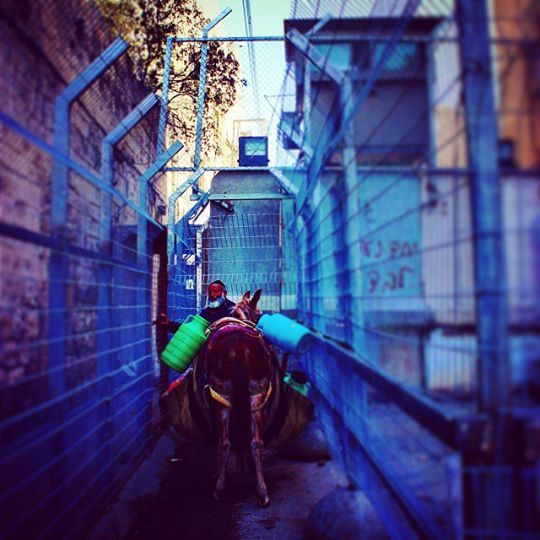 physical abilities to stand in the
sun for hours. CPT and ISM stood in
solidarity with the affected Palestinians and joined them in negotiating with
soldiers to reopen the checkpoint. At about 12:00 p.m., soldiers allowed
individuals through the checkpoint one by one until approximately twenty
minutes later when an elderly man arrived with a donkey, which initiated
another arbitrary change in the ‘rules’ of occupation. The Israeli military
again closed the checkpoint, and CPT was unable to gain an answer from the
soldiers as to why this donkey appeared to necessitate another closure.