CPTnet
19 August 2016
COLOMBIA: Celebrating the voice of Colombia women in the
struggle for peace!
by Pierre Shantz
[Note: This article has been adapted for CPTnet. The
original is available on CPT-Colombia’s
blog.]
|
Since Christian Peacemaker Teams arrived in
Barrancabermeja in 2001, we have had the honor to walk in solidarity with the
brave women of the Women’s Popular Organization (OFP). OFP has been fighting
for women’s voices to be heard since 1972. They have fought so that women would
not be under submission or controlled by violent actors in the conflict. They
have fought so that women would not be under submission or controlled by norms
and sexist laws that have allowed men to hurt or even kill their partners
without consequences. They have fought for women to be educated and trained and
be independent, strengthened and be recognized as a political subjects with
proposals for peace in Colombia.
On July 21, 2016, to celebrate its forty-four years, the OFP
invited its members of several municipalities of the Magdalena Medio region and
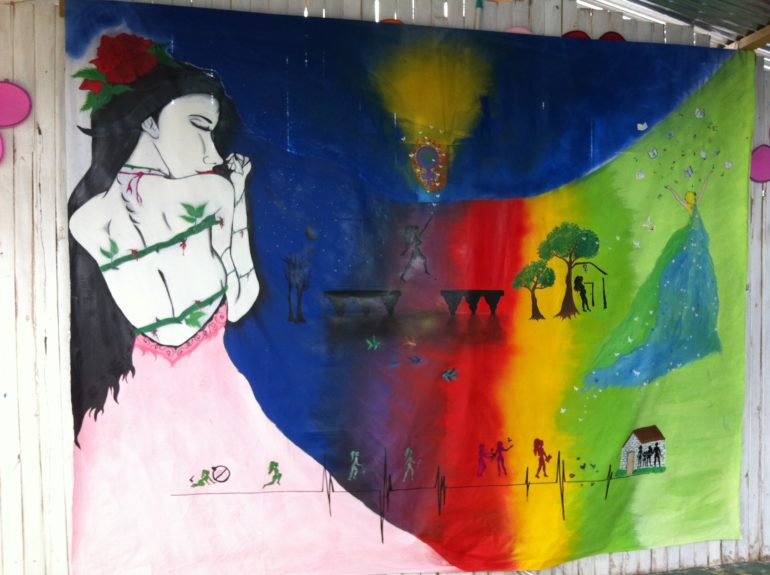
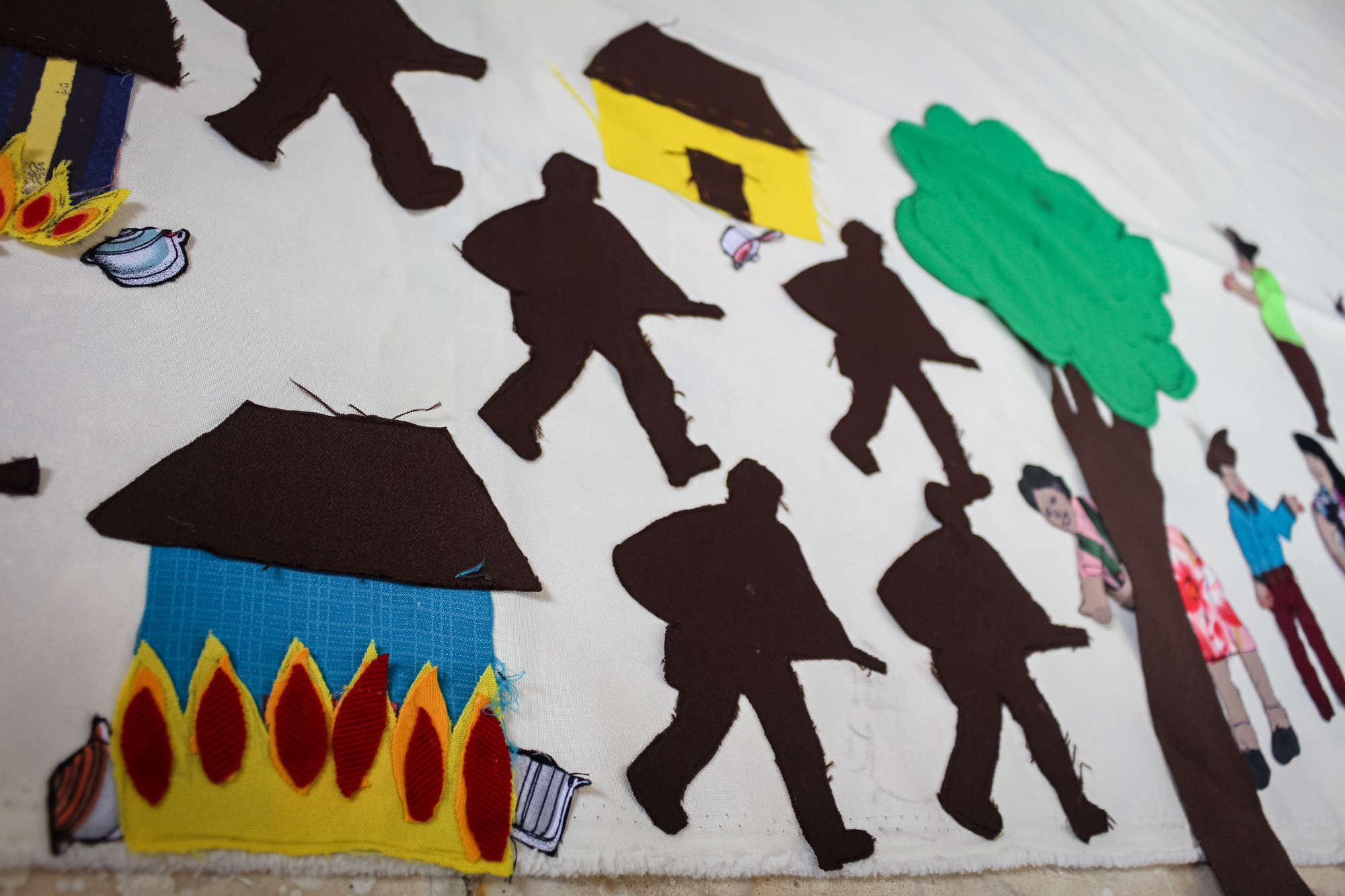
sectors of Barrancabermeja, to build and paint murals depicting peace. The
women of OFP have always worked with symbols to express themselves. The murals,
ten in total, were profound symbols of how the women of OFP have built and
continue to build peace through its space led by and for women (though with
much love, they allowed us men to participate). The murals show the pain and
suffering of women as a result of the war and the appalling sexism that has
oppressed them. But the beauty of the effort is that they did not remain in the
pain. In the murals they showed that with strength and determination they
gained respect and were able to move forward with concrete proposals for a
better society. A just and decent society to live in peace.
This quote is from an article published in the Colombian
magazine Semana, written by Nina
Chaparro, researcher at the Center for Law, Justice and Society: Dejusticia.
She shows us the stark reality that although men have the
main responsibility of having caused wars, we continue to believe that we will
have the best answers to end them. Our
egos do not allow us to simply give space for women to participate in finding a
solution to end the violence
|



|
|
|