
A villager showing CPT pieces of the rocket that was dropped on Chame Rebatke.
Turkey bombed the Kurdish village of Chame Rebatke in the Amedi district of Iraqi Kurdistan on 03 September 2018. Prior to the missile strikes, local villagers from Chame Rebatke and other nearby villages report that drones had been flying and continue to fly overhead daily. These drones are noisy and an invasion in people’s lives and make the villagers fearful to leave their homes. “Lives of farmers are completely different from people in the city,” according to Zaya, a farmer of Chame Rebatke, “We need to go out; we need to get our harvest.”
Turkey has been bombing Iraqi Kurdistan for decades, claiming that it is targeting armed groups in the mountainous regions of Kurdistan. However, these bombings have been occurring for thirty years, and they impact the peaceful, Kurdish civilian populations most.
On the night of 03 September, a Turkish rocket shook the village of Chame Rebatke, landing just outside village limits on a mountain a few hundred meters away. The entire village woke, and all of the families came out to see what had happened. Five minutes later, another Turkish rocket struck within the village of Chame Rebatke, breaking windows, causing structural damage to buildings, and shaking the ground beneath the feet of the villagers. The impact of the rocket caused people to fall to the ground because of the explosion’s shock wave. One villager close to the point of impact fell, and if he had not, “shrapnel would have wounded or killed him,” says Zaya.
Since the night of the bombing, everyone is afraid to leave their homes and be seen by drones flying overhead. Children are alarmed by the sound of doors shutting. Ninos, a villager from Chame Rebatke, says, “My children don’t want to sleep in their home, so we moved them to their uncle’s home in Erbil.” (Erbil is a larger city, which Turkey does not bomb.) Local leaders say that if bombing continues, everyone will leave the village, their home, their livelihood, if they can afford to do so. Once people leave, very rarely do they return.
The missiles on the night of the 3rd also destroyed the villagers’ sesame crop, resulting in a loss of income that families rely on for the entire year. The bombings and fear of future bombings also stunts the growth of the village. “We can’t invest in any projects. We are worried that if we start and bombing starts, who will compensate us for that project?” The villagers never receive compensation for the damage done to their bodies, homes, lands, and crops, so they face a constant struggle simply to survive as a village, and never really have an opportunity to thrive.
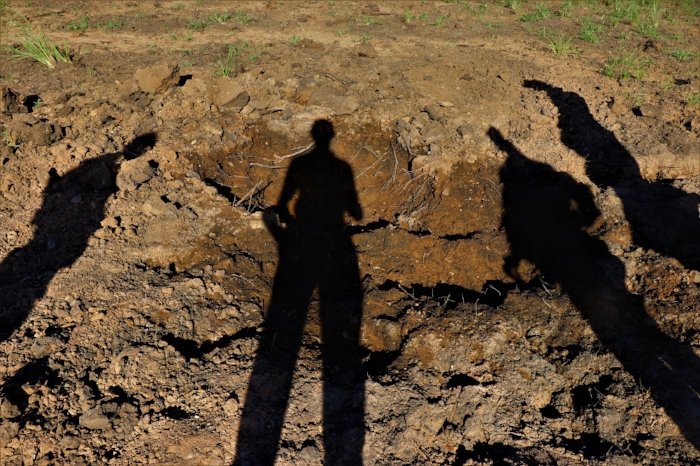
Crater made by Turkish rocket that hit the sesame field just outside village limits.
By attacking Kurdish civilian populations, Turkey is violating United Nations General Assembly’s resolution 217A of the Declaration of Human Rightsof 1948, against the Kurdish people, largely through the 3rd and 12th articles, which are as follows:
Article 3: Everyone has the right to life, liberty and security of person.
Article 12: No one shall be subjected to arbitrary interference with his privacy, family, home or correspondence, nor to attacks upon his honour and reputation. Everyone has the right to the protection of the law against such interference or attacks.
Such attacks by Turkey against Kurdish peoples also violate the United Nations General Assembly resolution 44/25 Convention on the Rights of the Childof 1989 through at least the following articles:
Article 16: 1. No child shall be subjected to arbitrary or unlawful interference with his or her privacy, family, home or correspondence, nor to unlawful attacks on his or her honour and reputation.
Article 38: 1. States Parties undertake to respect and to ensure respect for rules of international humanitarian law applicable to them in armed conflicts which are relevant to the child.