The conflict in the Magdalena Medio region of Colombia where CPT works claimed at least five civilian casualties during the same week that CPT celebrated the safe return of Jim Loney, Harmeet Sooden and Norman Kember after four months of captivity in Iraq.
A worker at the Popular Women’s Organization (OFP) was murdered, presumably by right-wing paramilitary groups that have targeted the organization before. A teacher and another young man were badly wounded, also by suspected paramilitaries. The National Liberation Army (ELN – a leftist guerilla group) kidnapped two educators working in the rural area of San Pablo.
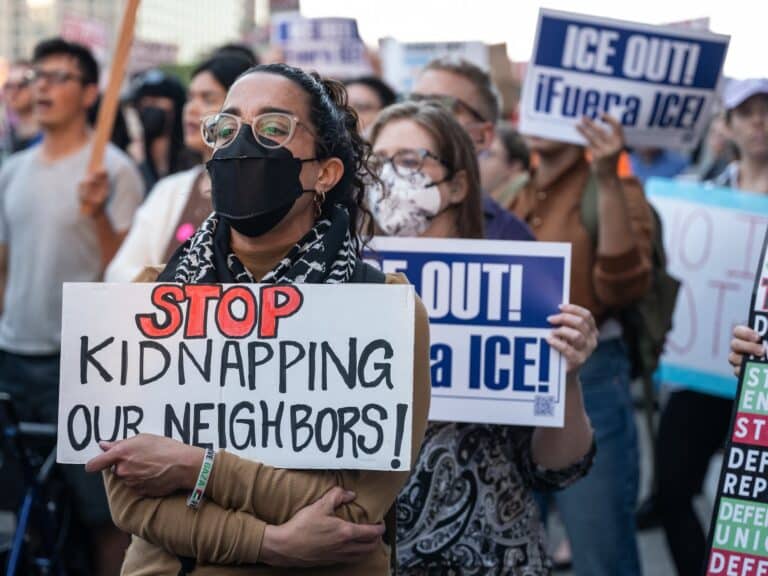
These stories are seldom told outside of Colombia, or even outside of the region where they occur. But the 2500 students, teachers, human rights workers, religious, labor, women’s, and local government leaders marching in the streets of Barrancabermeja on March 30 do not forget. They are part of a nationwide movement saying to those choosing violence, “¡Basta ya! Enough! We do not want more tears! We do not want more bloodshed! We do not want disappearances, assassinations, kidnappings!”
“We have been sowing for the future,” said the Director of Unipaz, a local, post-secondary institution, of the painstaking development work that he and others have done for years. Unipaz, like the OFP and the Program of Development and Peace in the Magdalena Medio (“Programa”), assert that the root causes of the violence in Colombia – economic, social, and political inequities – must be addressed if there is to be lasting peace.
The murdered OFP worker cooked and served low-cost food at a Community Kitchen. The men held by the ELN taught cocaine farmers about alternative crops through a Unipaz program. CPTers were on the scene when the young teacher, attending a workshop co-sponsored by “Programa” on human rights education, was shot.
“We did our best to help, calling an ambulance, calming those who witnessed the attack, holding the hand of the wounded man,” reported team member Suzanna Collerd. “People believe this assassination attempt was a result of the man’s refusal to act as an informant,” she continued. “It fits well into the pattern of paramilitary selective assassinations.”
Although the teacher will live, he may never walk again, and the terror created by the attempt on his life remains. “¡Basta ya! Enough! We do not want more fear.”