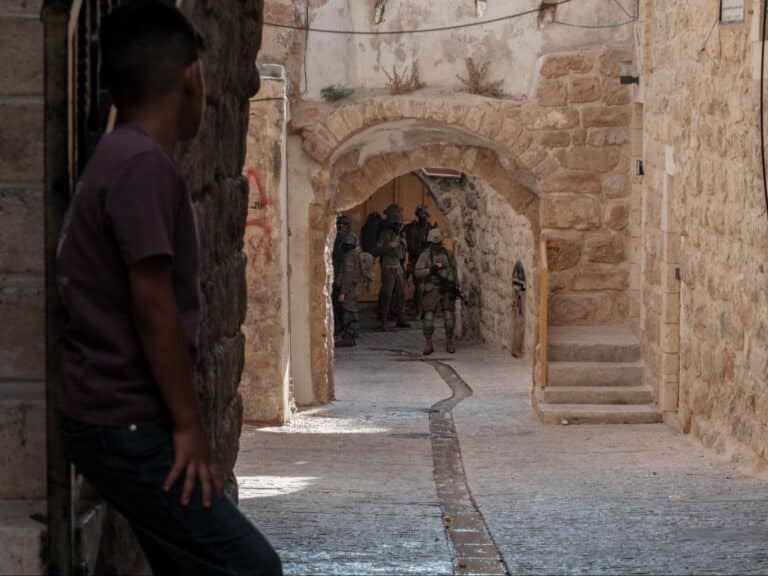
 Israeli border police destroyed several Palestinian fields in Al Beqa’a Valley just east of Hebron on 6 July 2010, directly affecting the livelihood of more than one hundred Palestinians. The fields each measured ten dunums (approximately 40 acres) and included tomatoes, eggplant, cauliflower, and beans.
Then on 14 July, the border police–allegedly with the help of workers from Mekorot, the Israeli water company–removed more irrigation pipes and demolished a rainwater cistern in the same area.
Badran Mohammed Jabber, looking out onto his destroyed fields after the 6 July episode uttered in exasperation, “I have spent 43 years under the Israeli reign of terror. I have lived my life in fear; I never know what the Israelis will do tomorrow. They have destroyed my land, they have destroyed my life; these fields are my life.”