Prayers for Peacemakers 15 July 2020 Borderlands

Facebook
Twitter
Email
WhatsApp
Print

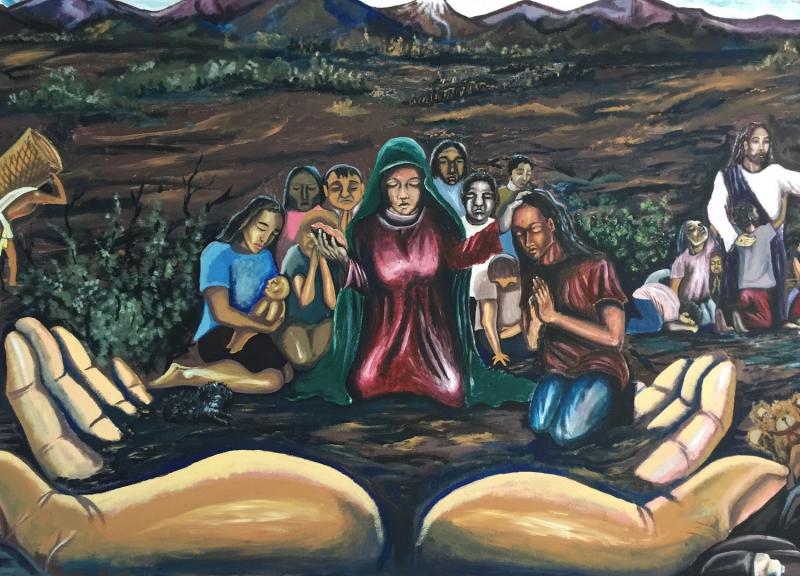
Mural on wall of CAME dining room by Nogales, Sonora artist

Pray for the people who are still at the migrant shelter CAME (Centro de Atención al Migrante Exodus) in Agua Prieta, Sonora, Mexico across the border from Douglas, Arizona, U.S.A.  They are losing hope that they will ever be able to request asylum in the U.S.; they are trapped in the shelter, and now they are becoming ill.  Pray that they may know God’s mercies in their lives.

Of the 12 people still at CAME, four migrants have tested positive for Covid-19.   In addition, one volunteer has tested positive.  Now only two volunteers are able to work at the shelter.  With the coming of the virus, more families have left.  Not only are people leaving the border, very few people are arriving from the South to seek asylum.  Indeed, the U.S. government has imposed ever harsher guidelines to block asylum seekers, claiming that they pose a health risk to U.S. citizens.
Subscribe to the Friday Bulletin

Get Ryan’s thoughts and the entire bulletin every Friday in your inbox, and don’t miss out on news from the teams, a list of what we’re reading and information on ways to take action.

This site is protected by reCAPTCHA and the Google Privacy Policy and Terms of Service apply.

Read More Stories

A picture of a crowd from behind marching in a demonstration on a street

Possibility in community

Before the Covid-19 pandemic forced us all to stay indoors in March 2020, the island of Lesvos already felt locked down. For thousands of people,

Solidarity with those living in Lesvos CCAC

An open letter from Senegalese and Gambian residents of the Lesvos Closed Controlled Access Centre is the latest chapter in over a decade of migrant resistance against Greek migration policy on the Aegean islands.

A child walking along the road past a military vehicle

Fourth of July in Palestine

The author, a lifelong educator from the USA, is spending time with CPT Palestine in Al-Khalil/Hebron. Here, he acknowledges his own connection to settler colonialism and reflects on the impact of the occupation on education for young Palestinians.

Skip to content