The narrow stone streets of Hebron’s Old City have witnessed centuries of history. They have welcomed traders, worshippers, families, and visitors from across Palestine and beyond. Today, however, many of these streets tell a different story – one of restriction, isolation, and daily struggle.
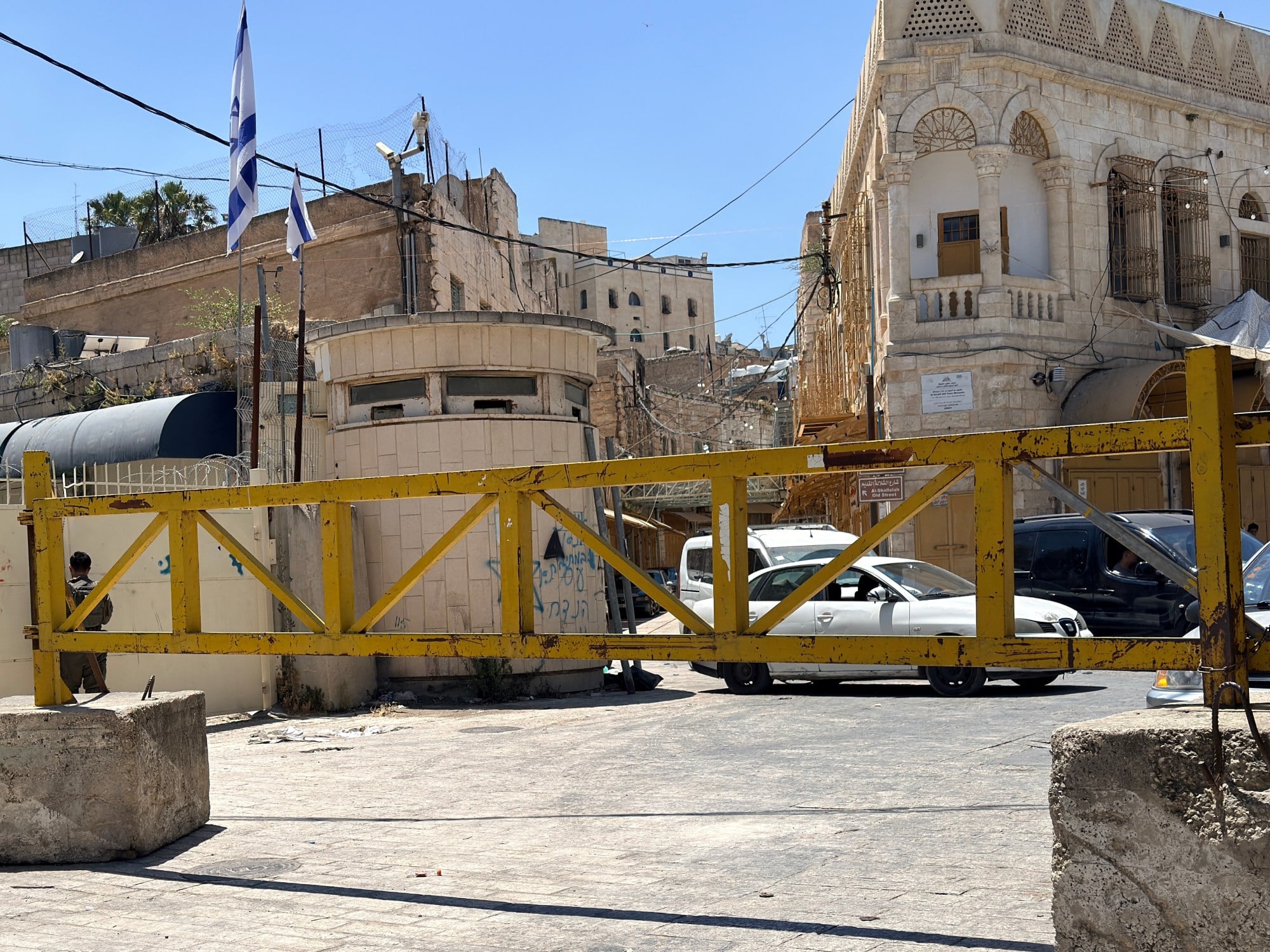
Recently, the Israeli occupation installed a new gate at one of the main entrances to Hebron’s Old City. The gate is another layer in a long system of movement restrictions that has gradually transformed the area. For Palestinian families living inside the Old City, the gate is an obstacle to an already difficult reality. For decades, Palestinians in Hebron’s Old City have lived under unique conditions, worse than anywhere else in the West Bank. The area surrounding the Ibrahimi Mosque is heavily controlled by the Israeli military and surrounded by Israeli settlements established in the heart of the city. Numerous checkpoints, road closures, and restricted areas divide neighborhoods and limit freedom of movement for Palestinian residents.
Choking the economy
The installation of the new gate has intensified concerns among residents. Shop owners, for example, fear further isolation and economic decline. Bader, who owns a souvenir shop near the entrance affected by the new gate, described the situation as a constant struggle.
“We are already officially living and working in a restricted area, surrounded by barriers, soldiers and settlements,” he explained. “Now this new gate has been added. Every new restriction makes life more difficult. It makes life in the Old City even more challenging, for shopkeepers, visitors, and residents alike.”
Many shop owners already struggle to transport merchandise into their stores. Deliveries that would normally take minutes can require serious coordination and additional expenses. Suppliers may be unwilling to enter restricted areas, forcing merchants to transport goods manually.
The economic impact extends beyond individual business owners. The decline of commercial activity affects workers, families, suppliers, and the broader social fabric of the Old City. Each closed shop reflects the gradual weakening of a historic commercial center that once served as the economic heart of Hebron.
Accessing basic provisions
Ordinary tasks have become complicated and exhausting. Bringing even basic necessities into the Old City often requires navigating military checkpoints and carrying supplies by hand through narrow passages.
One of the most significant challenges involves access to water. Many homes in the Old City rely on water tanks because municipal water supplies are often insufficient. Residents frequently need to transport water tanks or arrange deliveries to ensure their families have enough water for daily use.
The new gate creates additional difficulties for these deliveries. Water tanks, gas cylinders, construction materials, household appliances, and other essential supplies often cannot pass freely through restricted entrances. As a result, families must find alternative routes and carry heavy items over long distances.
For elderly residents, people with disabilities, and families with young children, these restrictions are particularly burdensome. What should be a simple delivery of cooking gas or drinking water can become a lengthy and stressful process.
Emptying the Old City
Many residents and shopkeepers believe that these restrictions are part of a broader policy aimed at emptying the Old City of its Palestinian population. As daily life becomes increasingly difficult, many families feel pressured to leave their homes and shops. Residents argue that these measures are designed to create conditions that force people to relocate and leave, gradually reducing the Palestinian presence in the Old City.
The Old City was once one of Hebron’s most vibrant commercial centers. Traditional markets, shops, workshops, and vendors attracted customers from throughout the region. The city’s historic souqs were famous for their handmade products, food, textiles, and local crafts.
Movement restrictions have reduced customer access and discouraged visitors from entering the area. Shop owners report that many Palestinians avoid the Old City because reaching it requires passing through gates, checkpoints or navigating restricted streets surrounded by settlements.
Unlike other settlements in the occupied West Bank, several Israeli settlements are located directly inside Palestinian neighborhoods. The presence of settlers has led to extensive military measures, including checkpoints, road closures, surveillance systems, and restrictions on Palestinian movement.
Residents often describe feeling trapped between military control and settlement expansion. Entire streets that were once bustling commercial areas have become almost empty after being designated as restricted zones for Palestinians. Some roads can be used freely by settlers while they remain closed or heavily restricted for Palestinian residents.
The new gate fits within a wider system of barriers that residents say prioritizes settlement interests at the expense of Palestinian daily life.
Over the years, many families have chosen to leave the area – or been forced out – due to economic hardship, restricted movement, and concerns about safety. Those who remain face ongoing challenges trying to preserve their connection to the Old City.
Access to worship
The impact of the new gate is also felt by worshippers traveling to the Ibrahimi Mosque, one of the most important religious sites in Palestine. Thousands of Palestinians visit the mosque regularly for daily prayers, Friday prayers, and religious occasions. However, access is frequently affected by Israeli checkpoints and closures.
Residents and worshippers fear that additional gates and restrictions may further complicate access to the mosque, particularly for elderly worshippers and visitors coming from other parts of Hebron. During religious holidays and special occasions, long lines often form at checkpoints leading to the mosque. Worshippers may experience delays, searches, and movement restrictions before reaching the site.
For the Palestinians, the restrictions are a part of daily life. Many have never experienced unrestricted movement through their own neighborhoods. Despite these challenges, many residents remain committed to preserving life in Hebron’s Old City. Shop owners open their businesses each morning despite economic difficulties. Community organizations, local leaders, and human rights groups continue documenting conditions and advocating for freedom of movement and equal access.
Reflections on resilience
Every time I walk through Hebron’s Old City, visiting a family or monitoring in the field, I am reminded that the restrictions imposed here are about people. Behind every closed entrance is a family trying to live with dignity, a shop owner struggling to earn a living, or an elderly person trying to reach a place of worship.
When I saw the new gate installed at the entrance to the Old City, I thought of the residents, who already face countless obstacles in their daily lives. For many people outside Hebron, a gate may seem insignificant. But for those who live here, it means another delay in receiving water, another challenge in bringing gas home to cook with, another customer who decides not to visit the market, or another worshiper discouraged from reaching the Ibrahimi Mosque.
What affects me most is the contrast between the beauty and history of the Old City and the reality its residents face every day. The stone streets, ancient buildings, and vibrant culture tell the story of a community that has existed for generations. Yet those same streets are increasingly interrupted by barriers.
Despite everything, I continue to witness remarkable resilience. Shopkeepers open their stores each morning, families remain in the homes that their ancestors have lived in for generations, and residents continue to welcome visitors with warmth and hospitality.
Their determination to stay connected to their city is inspiring, but it should not be mistaken for acceptance of the conditions imposed upon them.