The last week of June has become International Refugee Week, and different organisations have been holding events, celebrating … but what is there to celebrate?
The date was first established in 2001 to celebrate 50 years of the Geneva Convention. Seventy-five years later, on 12 June 2026, the new EU Migration Pact has begun to be implemented. This pact is a compilation of regulations to systematise – on a European level – screening procedures heavily based on profiling people depending on their country of origin, while expanding the concept of “safe third country”, de facto detention, and restrictions on movement. It is a compilation of regulations directed to further dehumanise people on the move, to look at them as numbers, percentages of recognition and rejection, considering them a “threat to national security” that must be addressed by deterrence and incarceration.
In the same week, the new Return Regulation was approved in the European Parliament, as a large group of parliamentarians chanted “send them back”.
Yoga and Sports is an NGO providing sports to people on the move. This week, they have organized a volleyball tournament on the beach of Mytilene. People are having fun and celebrating during a very warm start to the summer, but the environment is weird. A summer of changes is coming and no one knows yet what it will look like.
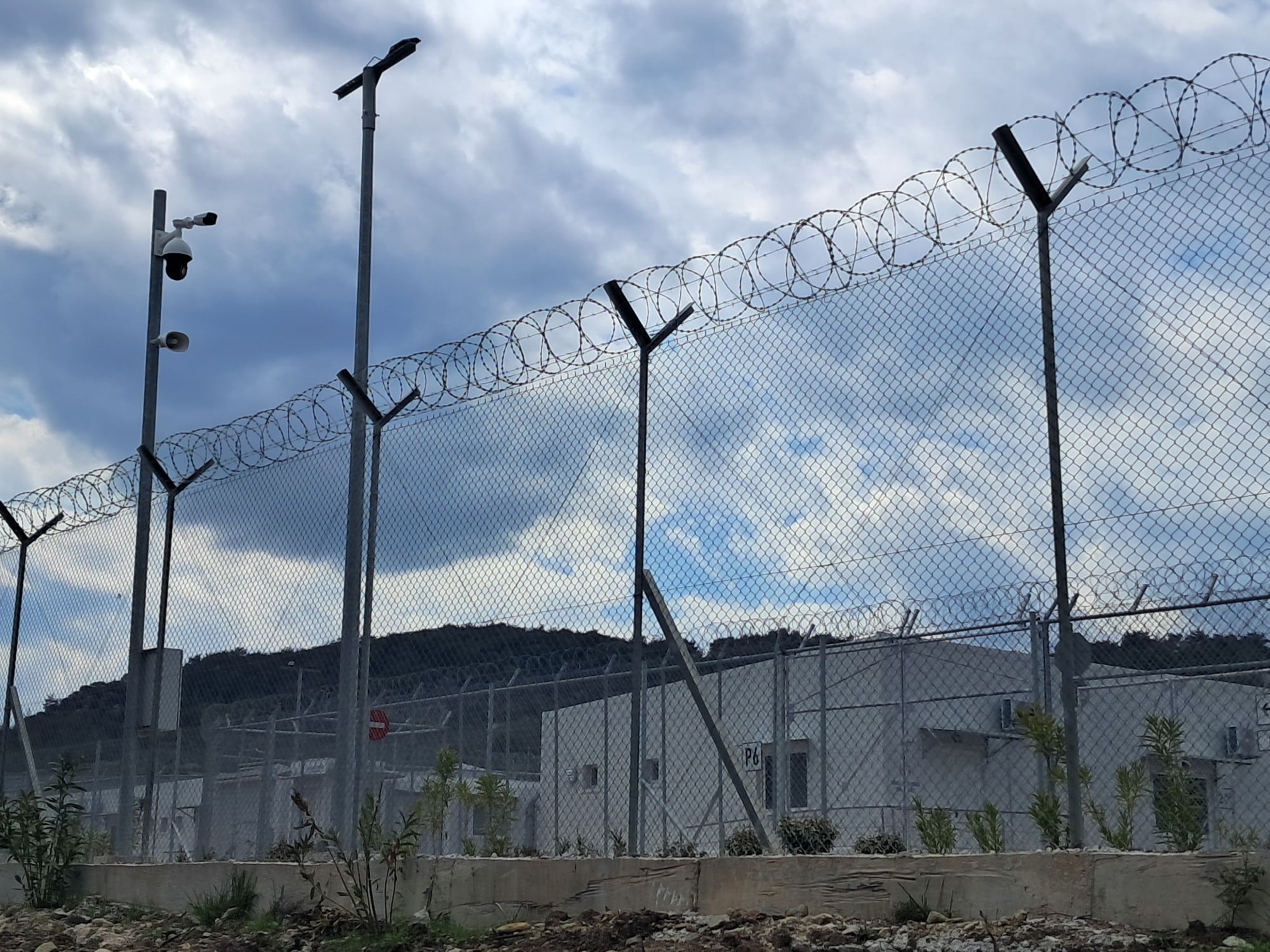
As the Refugee Week celebrations took place, 300 people were transported from Crete to Samos island, following the implementation of the new EU pact. The new pact states that people arriving at the borders should be submitted to a screening procedure at the border under the “fiction of non-entry”, meaning that people should be restricted from entering the country – which they have already entered – until their asylum claims have been reviewed. In case of rejection, people must stay in detention awaiting deportation. All these procedures must happen in closed facilities situated at the borders. In Greece, that translates to the Closed Controlled Access Centres in the Aegean Islands.
In Lesvos, the population in the camp has reached historically low numbers, due not only to fewer arrivals but also to the government’s efforts to transfer asylum seekers to mainland Greece in order to prepare the ground for the new pact. Although there are far fewer arrivals, that doesn’t mean that there are none; the asylum applications of those who arrived in the camp after 12 June must be examined under a new EU Regulation. It’s difficult to understand right now what that means. For the moment, people are being held inside the camp without being fully registered, due to the lack of governmental guidance on how to apply the new laws.
Still, one sign of how the new Pact will be implemented can be seen in the increasingly strict implementation of new Greek legislation. Two weeks ago and, as far as we are aware, for the first time in Lesvos, the application of Law 5226/2025 (which passed last September) was fully implemented when seven people were convicted for illegal entry immediately after arriving in the northwest of the island. Their sentence was not suspended, even after they expressed their will to ask for asylum.
The world is going further right, and far-right governments are emerging over almost all of Europe, with candidacies based increasingly on a narrative against migration. We can only expect further restrictions and the strictest application of the new EU Regulation.
Europe has supported the United States and Israel with the destabilisation of the Middle East, and for years has been complicit in the genocide in Gaza and so many other countries. Now, it is developing new agreements with the same countries it destabilised, to deport people back to them. Last Tuesday a delegation of the Taliban government travelled to Brussels to speak, among other things, about the possibility of returning people to Afghanistan.
In the meantime in Lesvos, one of the icons of the European border, or “shield of Europe” as it has been named before, we can only wait and see what the next developments will look like. We already have the prisons built. Now we also have the legal framework to incarcerate people on the move. How and when are the only questions left.