
For many years, Palestinian workers from the West Bank formed a vital part of the labor force inside the Palestine of 1948 or “Israel”. Thousands worked daily in construction, agriculture, manufacturing, and service industries. These jobs were not luxuries; they were lifelines. In an economy weakened by occupation, movement restrictions, and limited local opportunities, work inside Israel often provided the only stable source of income for Palestinian families. Workers endured long commutes, crowded checkpoints, and humiliating inspections, all in exchange for the ability to support their households with dignity.
This fragile reality collapsed with the outbreak of war. Almost immediately, work permits were suspended or revoked, checkpoints were closed, and Palestinian access to Israel was drastically reduced. Overnight, tens of thousands of workers lost their jobs. Men who had woken before dawn every day to cross into Israel suddenly had nowhere to go. Wages stopped, savings disappeared, and families were pushed into economic freefall.
The consequences were immediate and devastating. Many Palestinian households rely on a single income, often earned through daily labor. Without wages, families struggled to buy food, pay rent, cover electricity and water bills, or afford medical care. College students were forced to leave school because parents could no longer pay fees or transportation costs. Small businesses that depended on workers’ spending also suffered, deepening the economic crisis across entire communities.
According to UN OCHA OPT, since October 2023 about 14 Palestinians have been killed by Israeli Occupation forces while attempting to cross informal openings in the barrier to access East Jerusalem and Israel. Additionally, around 129 were injured
Beyond the financial impact, the loss of work created a deep psychological burden. Employment had provided not only income but also a sense of purpose and self-worth. Suddenly, many workers felt useless and trapped, unable to fulfill their roles as providers. Anxiety and depression spread rapidly. Tensions within families increased as stress mounted, especially in overcrowded homes where options for escape or relief were limited.
As weeks turned into months and no political or economic solutions emerged, desperation grew. Legal work opportunities inside the West Bank were scarce, as movement restrictions, land confiscation, and limited investment have long stifled economic growth. With no permits and no alternatives, some Palestinian workers began taking extreme risks to enter Israel illegally in search of work.
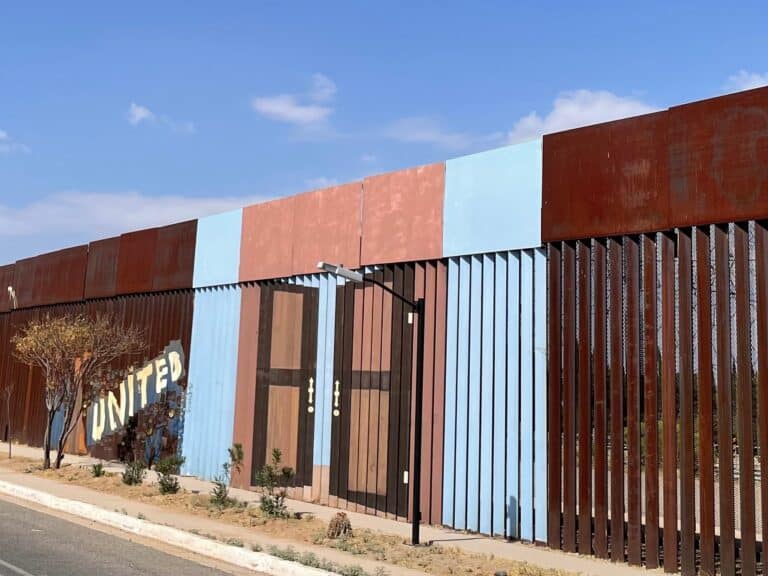
These journeys are dangerous and often life-threatening. To avoid checkpoints and patrols, workers travel at night, walking long distances through rough terrain. Some climb or jump from high sections of the separation wall, risking serious injury or death. Others squeeze through holes in fences or use ladders, ropes or makeshift tools. There are cases of workers hiding under trucks or inside vehicles, suffocating or being severely injured in the process.
The risks do not end with the crossing. Workers live in constant fear of arrest, physical abuse, and being shot. If caught, they may face detention, fines, or imprisonment. Many return home injured, with broken bones, head trauma or permanent disabilities caused by falls from the wall. Others disappear for days, leaving families in agony, unsure whether their loved ones are alive, detained or lying in a hospital.
Since October 2023 Palestinian unions report 42 Palestinian laborers have been killed either by gunfire, falls from the wall or during military chases related to attempts to cross the Barrier and seek work
Even for those who manage to find work inside Israel, conditions are harsh and exploitative. Without legal status, workers have no protection or rights. Employers may refuse to pay wages, force excessively long working hours or threaten to report workers to authorities. Injuries on construction sites or farms often go untreated, as workers are afraid to seek medical help. In some cases, workers are abandoned after accidents, left to find their way home alone.
This illegal labor system benefits from the workers’ vulnerability. Fear replaces security, silence replaces justice, and survival replaces dignity. Workers accept any condition because refusal means starvation at home. The choice they face is cruel: remain unemployed and watch their families suffer or risk their lives beyond the wall.
The war has magnified an already existing crisis. Palestinian workers were never truly secure, even when permits existed. Access could be withdrawn at any time, often without explanation. The current situation has simply exposed how dependent thousands of families were on a system that could collapse overnight. With crossing sealed and economies shattered, the safety net has disappeared.
International aid has been limited and slow, while local institutions struggle under financial pressure. Job creation inside the West Bank remains extremely difficult due to restrictions on movement, imports, exports, and land use. As a result, many workers see no future, only a cycle of poverty, danger, and uncertainty.
Palestinian workers do not seek confrontation or risk. They seek the basic human right to work, to earn a living, and to care for their families. Their dangerous journeys are not acts of choice but acts of necessity. Each climb over the wall, each night walking through darkness, is driven by hunger, responsibility, and desperation.
In 2025 the UN Office for the Coordination of Humanitarian Affairs (OCHA) data suggests that 3 fatalities and 47 injuries were recorded in documented crossings through informal openings in the barrier in 2025
As the war continues, the suffering of Palestinian workers deepens. Without urgent action, economic support, legal work access, and long-term solutions, more lives will be pushed toward danger. Walls, checkpoints, and permits may control movement, but they cannot erase the human need for dignity, stability, and hope. Until that need is recognized and addressed, Palestinian workers will remain trapped between unemployment at home and peril beyond the wall.
Testimonies from workers:
Abu Ameer
Many Palestinian workers face the constant risk of death, especially those without permits. They are endangered while climbing the wall, walking long distances in the dark or being exploited by drivers. They also endure poor sleeping conditions and sometimes feel too afraid to leave their shelters even to buy food. Despite all these hardships, I am forced to work. Job opportunities in the West Bank are extremely limited and I have a family to support and responsibilities toward them.
Before working inside Israel, I was employed at a café, but the income was very poor. Some days, my wages did not exceed 20 shekels (about $5) from morning until night. This left me with no choice but to work inside Israel. After the war, however, the danger of crossing or climbing the wall has doubled. It has become alarmingly easy for workers to be killed simply for attempting to cross without a permit.
Dalal, a Palestinian woman working in a restaurant inside the occupied territories
I live in constant anxiety and fear. I work to support my daughter, who is studying at university, and my sick husband, who is unable to work. As you know, work permits are either unavailable or extremely difficult to obtain. When I go to work in the northern region, I travel near the wall at midnight. We wait for coordination from labor brokers who demand large sums of money. This coordination includes monitoring the presence of the army or border guards and arranging transportation with a driver.
We wait for the right moment and search for any place where there is a rope or a hole in the wall to climb through. After crossing, we must run a long distance without stopping while staying in contact with the driver. All of this must happen within minutes. During those moments, I feel that my life is truly at risk and I could be killed at any time. Soldiers have chased and fired at me many times, and on several occasions we were forced to spend the night near the wall in the West Bank waiting for another chance to cross.
Many of those who are arrested are subjected to severe torture, including beatings, theft, humiliation, and imprisonment. Others fall while climbing the wall, suffering broken legs or serious injuries. Despite all this pain and suffering, the only hope we have is earning a living.
Even after reaching the workplace, the fear never ends. I work in constant anxiety, and sometimes even sleep in fear, as there is no real sense of safety.