Presented as a mechanism to manage migration, the agreement between the European Union and Turkey established a framework centred on containment, deterrence, and return. Its core provisions included increased interceptions by the Turkish Coast Guard, the enforced containment of asylum seekers on the five islands of the Eastern Aegean for indeterminate periods, and accelerated returns to Turkey for those who irregularly crossed into Greece. In exchange, Turkey received significant financial support, amounting to €6 billion, alongside political concessions including a roadmap toward visa liberalisation. The agreement also introduced a “one-for-one” scheme, whereby for every Syrian returned from the Greek islands to Turkey, one Syrian refugee would be resettled from Turkey to the EU.
This statement marked a turning point in the externalisation of EU migration policy. It has since served as a blueprint for similar arrangements, including cooperation with governments where fundamental human rights protections are not guaranteed. The prioritisation of migration control over human rights obligations has had profound and lasting consequences.
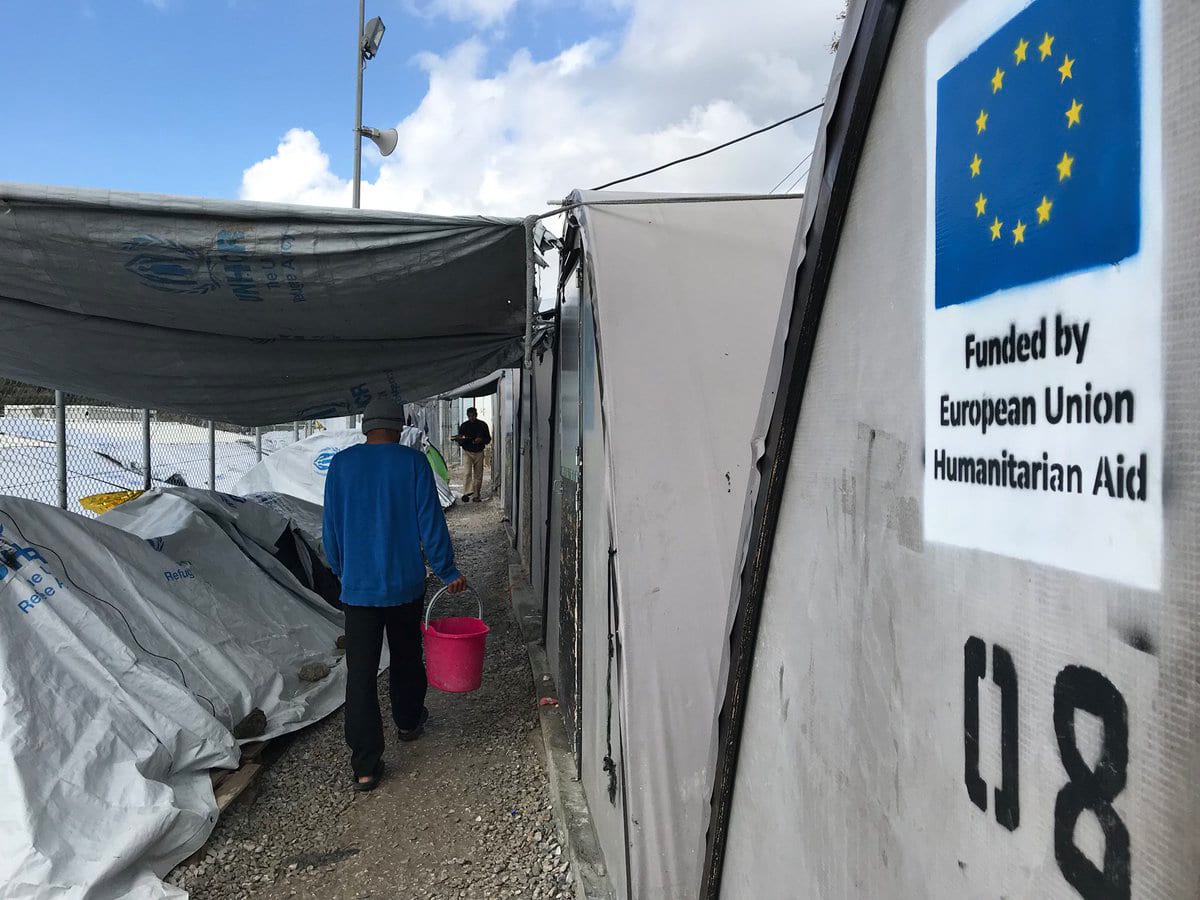
The human cost of this policy has been severe. Thousands of asylum seekers have been trapped in conditions of prolonged uncertainty, with devastating impacts on their physical and mental health. On Lesvos alone, the population of confined people exceeded 20,000 in early 2020, living in conditions widely documented as inhumane and degrading. Between 2016 and mid-2020, at least 26 people lost their lives within the camps on the island, deaths directly linked to the conditions of their containment. And tragedy continues: only days ago, a young man from the Democratic Republic of Congo took his own life after six years of confinement in the island’s detention facilities, during which he was denied adequate protection and support.
Beyond the camps, the Aegean Sea has become increasingly militarised. The intensification of border enforcement under the agreement has coincided with widespread reports of unlawful practices, including pushbacks and collective expulsions. These practices have contributed directly to loss of life. In 2025 alone, at least 99 people were found dead along the coasts of Greece and Turkey, with many more still missing. These deaths are not isolated incidents but foreseeable consequences of policies designed to deter and exclude.
The agreement has also transformed the social and economic fabric of the five Aegean islands. Once places of transit and hospitality, they have been turned into zones of containment, effectively open-air detention sites. While the economic dependence of the local population on the border-industrial complex has increased, social tensions have heightened which have at times erupted into violence and broader social breakdown.
A decade on, it is evident that the EU-Turkey Statement has failed to meet its stated objectives. What was introduced as a temporary mechanism has become a permanent structure, entrenching a system that restricts access to asylum and shifts responsibility away from the European Union. Rather than providing safe and orderly pathways, it has contributed to the proliferation of dangerous routes and the instrumentalisation of human lives in political negotiations.
We call for the immediate revocation of the EU-Turkey Statement.
We urge the establishment of safe, legal, and dignified pathways for people seeking protection.
Human rights are not negotiable.