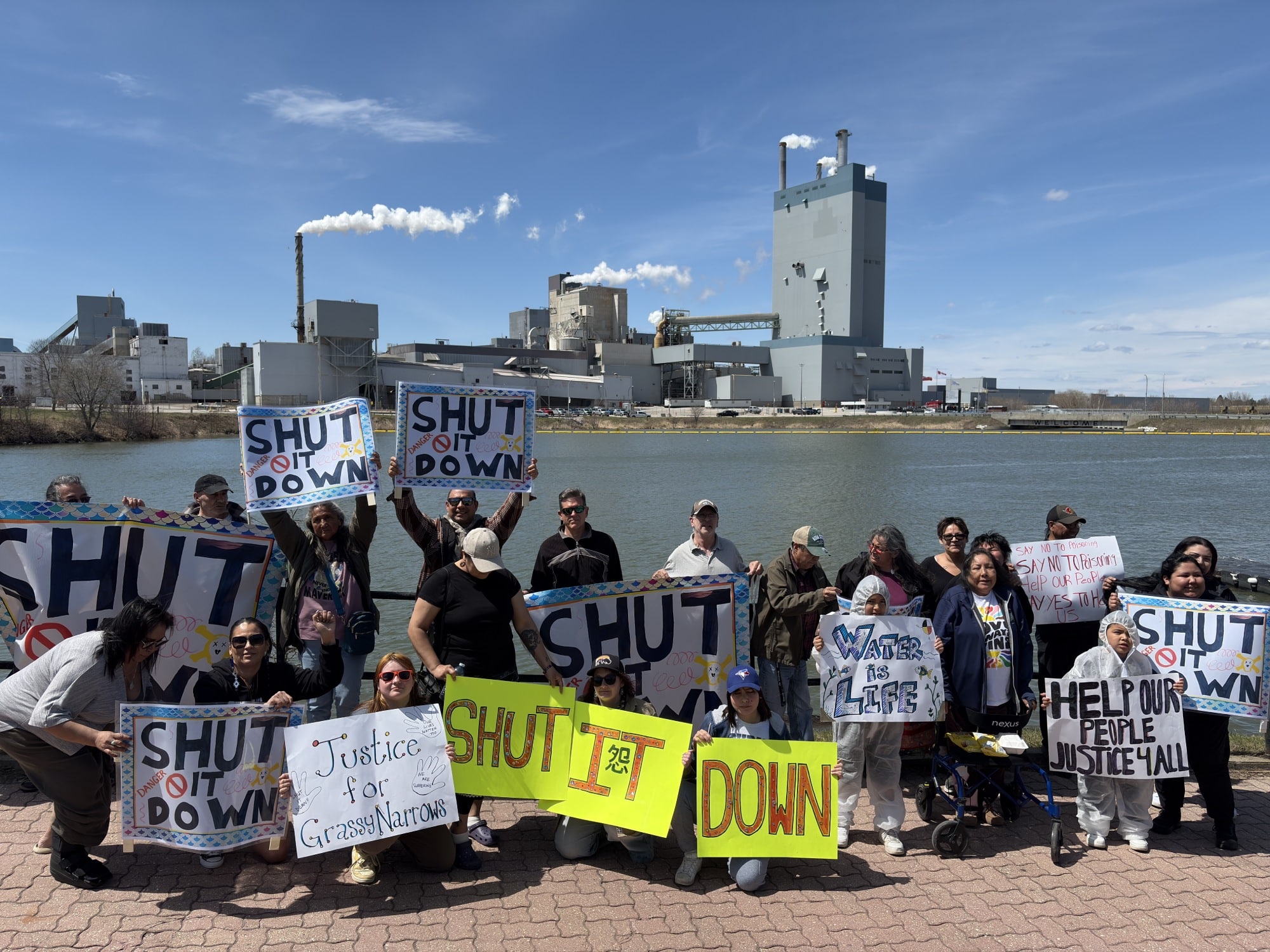
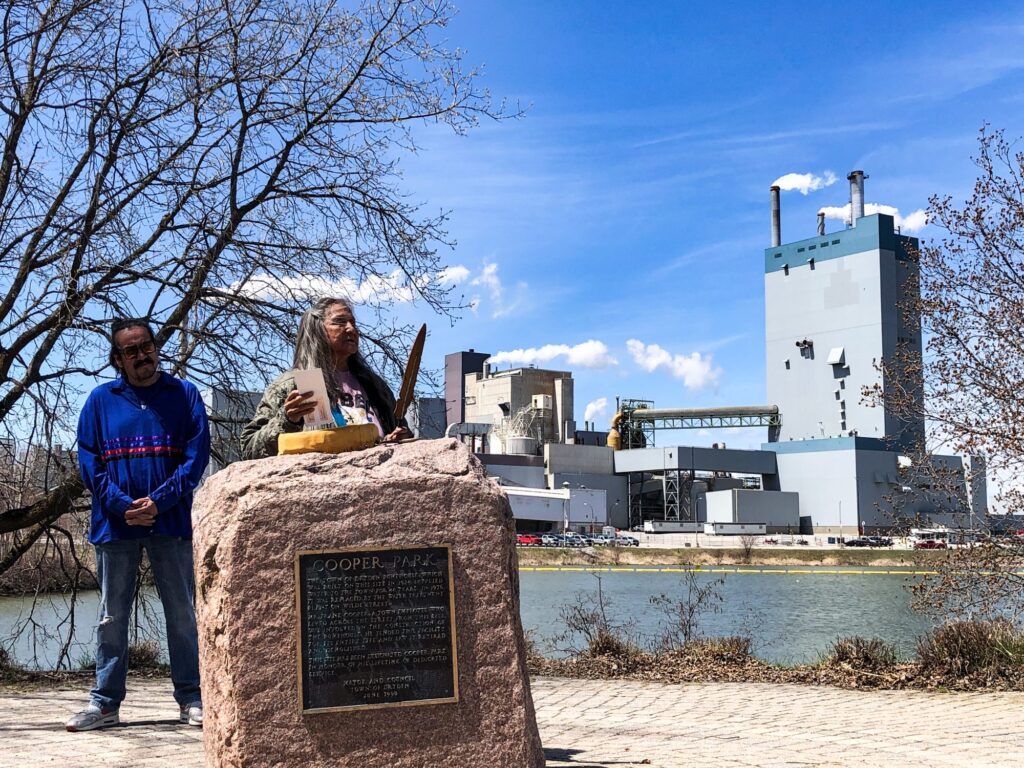
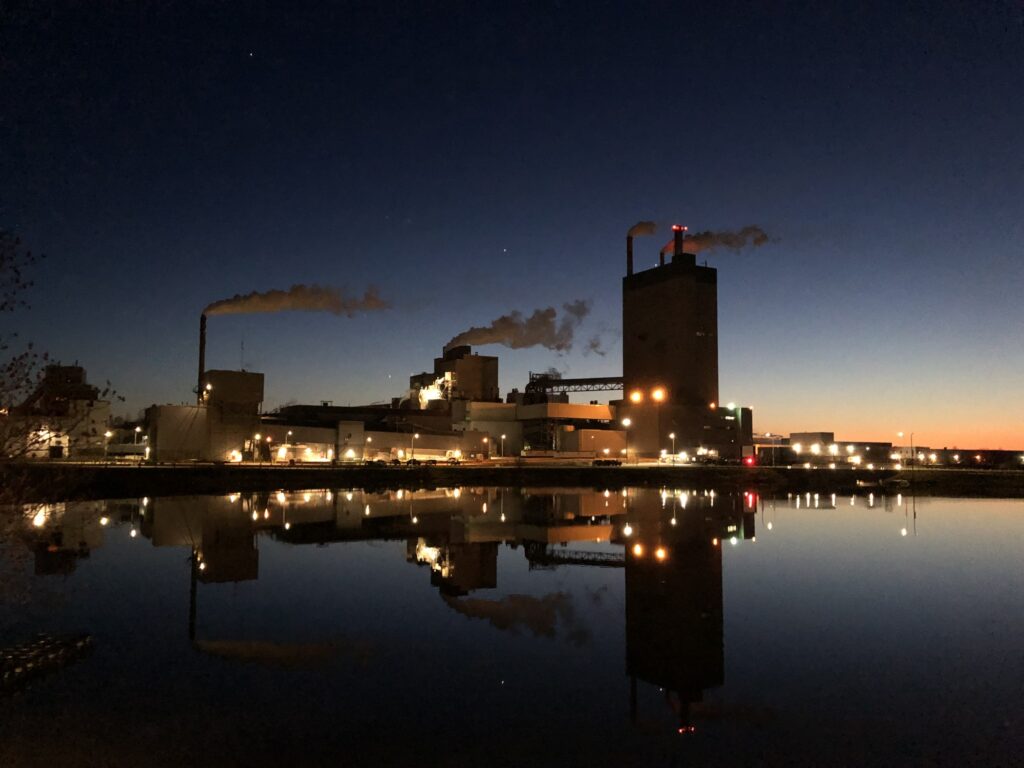
“It is time for some justice!” Clayton Thomas-Müller, prominent Cree activist and writer, called out to members of Grassy Narrows and Wabaseemoong (White Dog) First Nations protesting outside the Dryden Mill on 21 May. The Dryden Mill has been a site of trauma and oppression for these Anishinaabe communities for decades. In the 1960s and 70s the pulp and paper mill dumped over 9 tonnes of mercury into the river upstream of both communities. As a result, over 90% of the people in Grassy Narrows and Wabaseemoong live with the impacts of mercury poisoning.
The stories of these two communities are stories of environmental racism. When mercury poisoning first hit the headlines, governments denied that these communities were impacted, claiming their health concerns were due to life-style choices and not mercury poisoning. For decades the people of Grassy Narrows advocated for support, and governments claimed that cleaning the river system was impossible and they would simply have to wait for the mercury levels to diminish naturally over time. Politicians not only ignored evidence that mercury levels were not decreasing at the expected rate. It wasn’t until 2017, after decades of relentless campaigning by members of Grassy Narrows, that both the federal and the Ontario governments acknowledged the ongoing poisoning and promised to support a clean up and compensation.
At that time Glen Murray, the Minister of the Environment and Climate Change, promised $85 million for the remediation of the English-Wabigoon River system and said:
“Mercury contamination has had a profound impact on the people of Grassy Narrows First Nation and Wabaseemoong (Whitedog) Independent Nations, and has to be properly addressed. In February 2017, on behalf of the Ontario government, Minister Zimmer and I made a commitment to the First Nations to take action on remediation of mercury contamination in the English-Wabigoon River system. This commitment involves working with First Nations and partners to first identify all potentially contaminated sites, and then create and implement a comprehensive remediation action plan for the river system.”
While promises and financial commitments were made, a clean up has not yet begun. The environmental damage is now being exacerbated by the 2023 re-opening of the mill, closed since 2005, by Dryden Fibre Canada. While the mill is not dumping mercury into the river, a 2024 study carried out by Western University found that the discharge of wastewater from the mill included sulfates which feed bacteria that increase the toxicity of the mercury in the river system. The mill is once again dumping toxins into the river resulting in the poisoning of Indigenous communities.
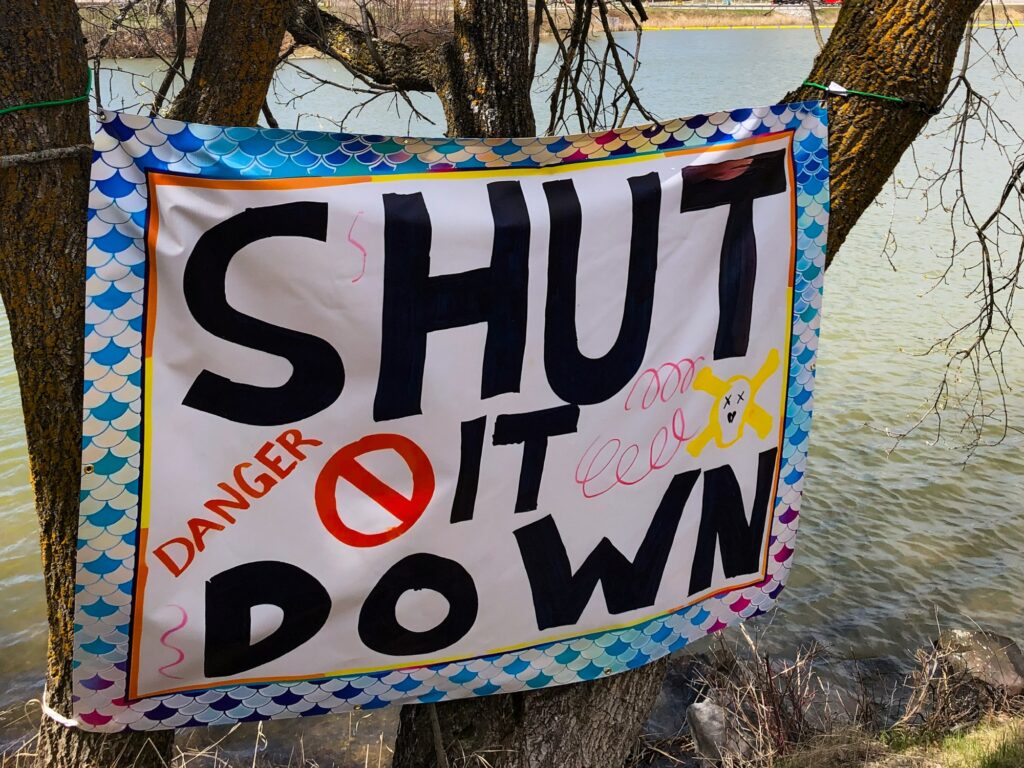
Members of Grassy Narrows and Wabaseemoong are demanding the Ford government shut down the mill. In a press release, Glenn Cameron, a council member from Wabaseemoong, said, “For decades, our people have lived with the effects of mercury poisoning. We are here because the pollution is still harming our river, our fish, and our families. Premier Ford must shut the mill so our people and our river can begin to heal.”
Yet provincial and federal governments haven’t just remained quiet about the mill, the federal government has been financially supporting Dryden Fibre through grants. In December 2025 the federal government, through the Federal Economic Development Agency for Northern Ontario, provided Dryden Fibre Canada with a $1 million grant to help them weather US tariffs as part of an “elbows up” economic policy. To our knowledge this grant was not tied to any commitments or environmental restrictions. So while the federal and provincial governments have committed $85 million to clean up the river, the federal government is also funding the mill that continues to pollute it, poisoning Grassy Narrows and Wabaseemoong. Judy DaSilva, a long-time organizer and Water Protector from Grassy Narrows and close friend of CPT says: “The children don’t have a choice [to live with mercury poisoning]. Industry has a choice and they choose money over lives everytime.”
“Environmental racism” describes how polluting and hazardous industrial projects are strategically located in areas where state-targeted local populations – often Black and Indigenous communities – are presumed to lack the political power to stop them. While terms like “environmental racism” are important to use, it is also important that we realize the severity of such state sanctioned policies and practices. Environmental racism and the continued poisoning of Grassy Narrows and Waabseemong cannot be seen as an accident, but an intentional act of genocide. Dryden Fibre is contributing to toxins in the river that amplify the mercury and subsequent poisoning of two First Nations – the government knows this and not only do they allow for it, they are funding it. The continued operation of the mill exposes government agendas of building economic stability and expansion at the expense of Indigenous lives. ‘Business as usual,’ in the North American context, rests on genocide and settler domination.
On 21 May, dozens of people from Grassy Narrows and Wabaseemoong rallied in Dryden to demand that the mill close. CPT was honoured to be invited to join them. We invite our constituency, as people of conscience, to join in the struggle. We cannot stay silent or complicit as this genocide unfolds. As people of conscience, take action!
- Write to Canadian federal and provincial political representatives and demand that the Dryden mill be closed.
- Sign the petition for mercury justice.
- Attend the River Run rally on September 23.