U.S./MEXICO BORDERLANDS: A migrant shelter, a feast, and a Great Light

Facebook
Twitter
Email
WhatsApp
Print


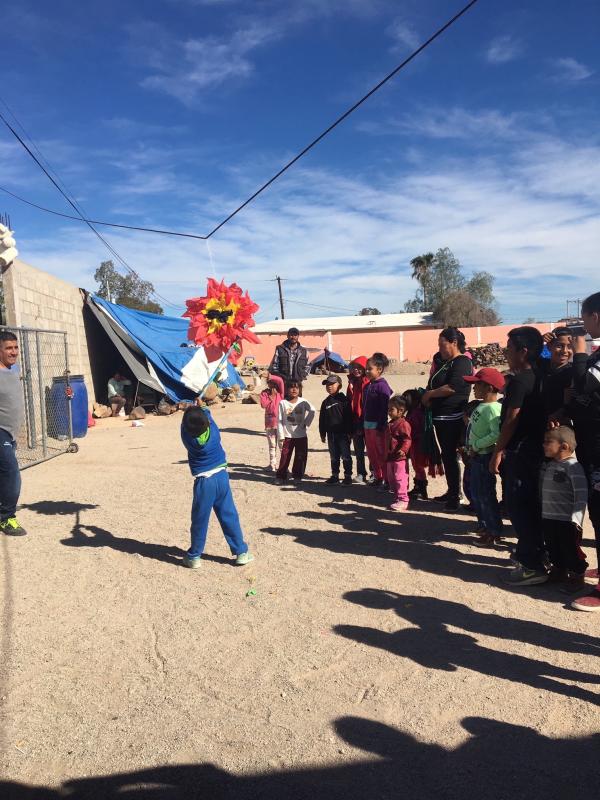
Children at the San Pedro shelter celebrate the Feast with a piñata.  Photo: Judy Bourg

“The people who have walked in darkness have seen a great light; upon those who have dwelt in the land of dark death a light has shone.” Is 9:2

The heart of Advent is laid bare in immigrant shelters along the U.S.-Mexico border. These communities expose the gritty side of Advent hope. The guests reside in a transitional space between a home they can no longer live in and a country that refuses to accept them. Between laughter and fear. Between tears and hope. In the rain. In the chill of night. In tents. In bunks or just under blankets. Their hope is palpable despite the facts. Their patience expectant. Their faith more durable than the nearby, new 30-foot wall and the fear that builds it. Theirs is not a cheap hope. They are the Light of which Isaiah wrote.

On 12 December, the Feast of the Virgin of Guadalupe, I witnessed this spectacle alive and well at San Pedro Shelter in Sonoyta, Sonora where over one hundred people celebrated the holy day of the patroness of Latin America. Piñatas and prayer, posole, chocoflan and laughter marked the moment. From the lens of Advent, hope is ultimately a decision, a Biblical one, which is to say a radical one. Our neighbors held a light and by turns offered it to us as gift across the walls we have built.

“For still the vision awaits its time: it hurries to its end and will not prove false. Though it seems slow, wait for it; it will surely come, it will not be late.”

Habakkuk 2:3

john heid, reservist CPT
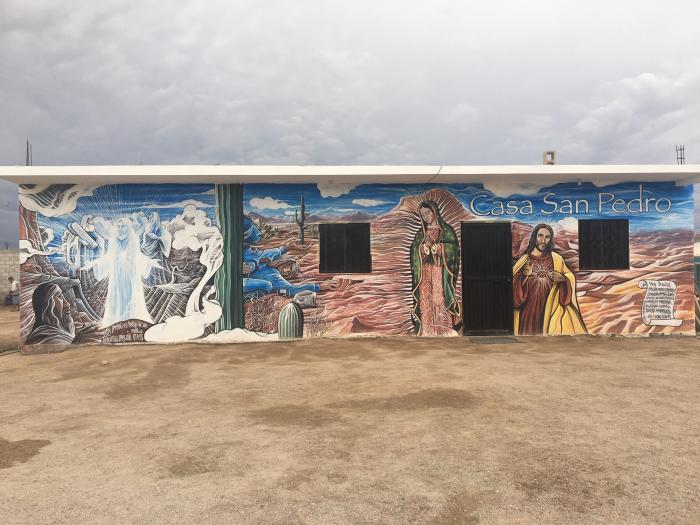
Photo: Judy Bourg
Subscribe to the Friday Bulletin

Get Ryan’s thoughts and the entire bulletin every Friday in your inbox, and don’t miss out on news from the teams, a list of what we’re reading and information on ways to take action.

This site is protected by reCAPTCHA and the Google Privacy Policy and Terms of Service apply.

Read More Stories

An image from inside a vehicle, looking out the windshield into the green hills of Northeast Antioquia. The dirver and steering wheel are visible on the left and on the right a leg hangs down from someone sitting on the roof. A truck is a few meters ahead, laden with cargo and a person hangs off the back of the truck.

Measuring change

How do we measure the impact of peace work? It’s not always an easy thing to do. Change comes slowly, and it’s rarely spectacular. Sometimes,

Image of the Grassy Nations community members leading the River Run march in 2024. Signs read “Shut it down”, and “Justice for Grassy Narrows.”

Settler colonialism will never win: the resistance of Grassy Narrows First Nation

Jenny, an organizer with SURJ and the Grassy Narrows Solidarity Group, joined a CPT delegation to Turtle Island three years ago. Since then, she has found ways to continue to support the people of Grassy Narrows. Here she reflects on lessons she learned and ways settlers can get involved in dismantling settler colonialism.

landscape of northeast antioquia at sunset

The longer view

In the aftermath of the election, CPT Colombia has been meeting with the community of El Guayabo to assess what the result means for them

Skip to content