CPTnet
27 May 2013
AL-KHALIL (HEBRON) REFLECTION: Trapping
children
Because of the dire economic
situation in the Old City in Hebron every day children go to the Ibrahimi Mosque
soup-kitchen to get food. Walking out through the mosque checkpoint shortly
after noon on Sunday 26 May, I was surprised by the number of people standing at
the other end of the checkpoint.
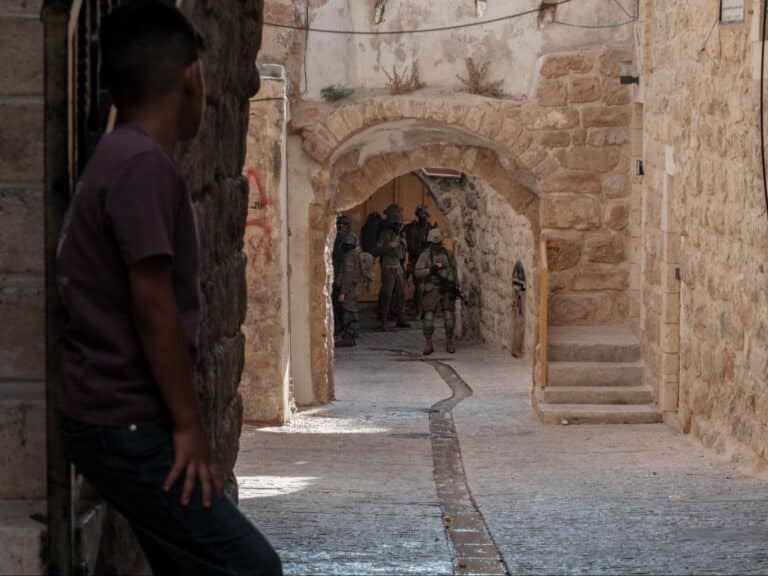
Upon passing out through the checkpoint I realized that the turnstile to enter the mosque area was closed and nobody was being allowed through. A dozen young boys held plastic tubs of soup they had collected at the soup kitchen. They told us they had been waiting for around half an hour. As the queue of people wanting to get through increased, so did the boys’ frustration. They started ramming the turnstile and shouting to be let through. The Border Police ignored them. Women with babies lengthened the queue.
 |
A man said the turnstiles
had lost electricity. This seemed highly unlikely to me, though, as the lights
were still on in the tunnel above the turnstile and I am sure there must be a backup
in case of fire or other emergency. My suspicion was confirmed when Border Police
allowed some of the young boys through only to turn the turnstiles off again
and trap the boys in the middle between the two turnstiles. The Border Police
repeated this twice, trapping young boys and women in a fenced corridor between
the two turnstiles.
For me this highlights how
vulnerable people are here. The Border Police won’t let members of Christian Peacemaker
Teams through the checkpoint unless we take off our CPT hats. I find this very
frustrating, but imagine visiting a soup kitchen and being stopped on your way
back home by a young Border Policeman who doesn’t want to let you through the
turnstile. A day can quickly turn from positive to negative. Nothing happened
today, but one day it might. Imagine day after day being stopped and reminded
how susceptible you are to the whims of another person literally preventing you
from returning home.
The power imbalance between
the children trying to get through the checkpoint and the Border Police
stopping them is huge. The Border Policeman has the whole weight of the
occupation behind him. Border Police officers do not make mistakes. If they
shoot a youth they are praised, such as when the female Border Police officer
shot 17-year-old Mohammed Salayme in Hebron in December 2012. If they arrest children
and break international law, no one will penalize them.
As Gideon Levy explained
in a 23 May Haaretz opinion piece, Border Police learn to behave rudely and to
solve problems with weapons, and they are rewarded for doing so. But if Palestinian children get too rowdy at the checkpoint or respond in any way,
they could easily end up in Israeli prisons, after enduring hours of
interrogation with no lawyer, parent or guardian present.