AL-KHALIL (HEBRON): Settlers attempt construction of new access path at Tel Rumeida

Facebook
Twitter
Email
WhatsApp
Print

CPTnet
27 March 2014
AL-KHALIL (HEBRON): Settlers attempt
construction of new access path at Tel Rumeida
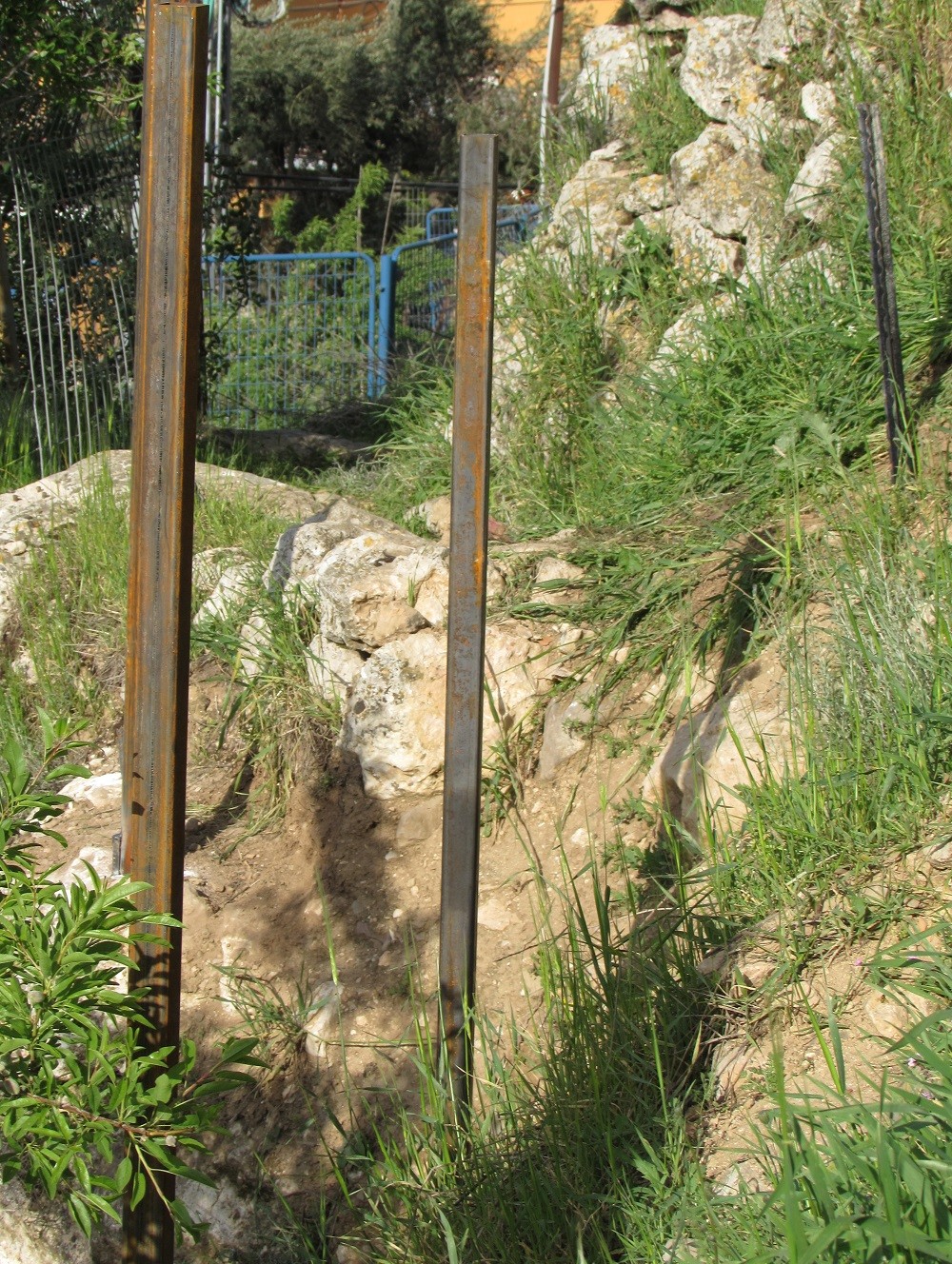
Attempt by settlers to begin
construction of walking path on Tel Rumeida.  The blue fence is on the
settlement, and the new stake on
right is in a washed out area that would link the settler path to
an existing
path along the outside of the fence surrounding the settler archaeological dig.

On 24 March 2014, settlers attempted to
begin construction of a walking path outside the fenced “archaeological” dig
near the Abu Haikal home on Tel Rumeida.  The settlers pounded in
metal stakes in an area just below the fence erected by Israelis around what
was once the orchard of the Abu Haikal family, and is now an archaeological
site to which Palestinians, including Palestinian archaeological experts, are
denied access.  The stakes are a first step in an apparent attempt to
link the settlement of Tel Rumeida to the fenced area of the archaeological
dig.

Palestinians living in the building
adjacent to the land on which the settlers were trespassing called the police, who
ordered the settlers to stop. 
However, the following day, 25 March, soldiers arrived at the home of
the Abu Haikal family and threatened them with arrest.

 Feryal Abu Haikal had just
finished hosting a group of neighbors, along with the Palestinian Liaison
Officer and an officer from the Hebron Governor’s office, when soldiers arrived
at her home and began to dispute the ownership of some of the land on Tel Rumeida,
showing her a map that contained false information.  The soldiers
told Feryal Abu Haikal that no visitors are allowed on the land surrounding her
home, and threatened to arrest and deport any internationals there, including
members of the Abu Haikal family.

For background on the settler
archaeological dig on Tel Rumeida click here 

To see a map of multiple land-grab
efforts by settlers in Hebron click here.

Subscribe to the Friday Bulletin

Get Ryan’s thoughts and the entire bulletin every Friday in your inbox, and don’t miss out on news from the teams, a list of what we’re reading and information on ways to take action.

This site is protected by reCAPTCHA and the Google Privacy Policy and Terms of Service apply.

Read More Stories

An image from inside a vehicle, looking out the windshield into the green hills of Northeast Antioquia. The dirver and steering wheel are visible on the left and on the right a leg hangs down from someone sitting on the roof. A truck is a few meters ahead, laden with cargo and a person hangs off the back of the truck.

Measuring change

How do we measure the impact of peace work? It’s not always an easy thing to do. Change comes slowly, and it’s rarely spectacular. Sometimes,

Image of the Grassy Nations community members leading the River Run march in 2024. Signs read “Shut it down”, and “Justice for Grassy Narrows.”

Settler colonialism will never win: the resistance of Grassy Narrows First Nation

Jenny, an organizer with SURJ and the Grassy Narrows Solidarity Group, joined a CPT delegation to Turtle Island three years ago. Since then, she has found ways to continue to support the people of Grassy Narrows. Here she reflects on lessons she learned and ways settlers can get involved in dismantling settler colonialism.

landscape of northeast antioquia at sunset

The longer view

In the aftermath of the election, CPT Colombia has been meeting with the community of El Guayabo to assess what the result means for them

Skip to content