U.S. /MEXICO BORDERLANDS: Prayers for Peacemakers 11 March 2020

Facebook
Twitter
Email
WhatsApp
Print


Pray with those in Douglas, Arizona who hold a vigil every Tuesday for migrants who have died in Cochise county trying to cross the U.S.-Mexico Border.

In Cochise County alone, over 300 migrants have died in the last 20 years. Across Arizona, over 3000 have died. Spanning the U.S.-Mexico border, over 7000 migrants have died.

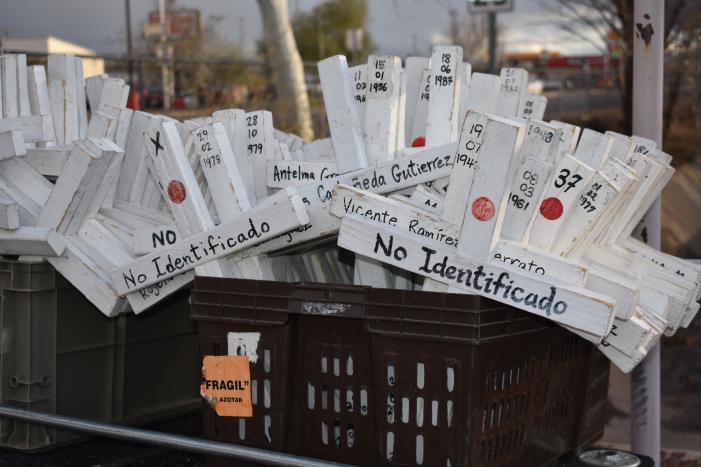
At the vigil, participants raise crosses with the names of the dead and yell out the names as the attendees yell, “Presente!”  For those who did not have identification on them when they died, “No Indentificado” is written on the cross. Then the crosses are laid on the side of the road in remembrance. At the vigil, hundreds of crosses line the street that leads to the U.S.-Mexico border.

The US policy to stop migrants has been prevention via deterrence. Around cities along the border, the U.S. has built the wall and increased border patrol; outside of the cities, the wall is incomplete and border patrol is sparser. U.S. policy has not deterred migrants, rather it has pushed migrants into the hands of smugglers and further into arid deserts and rougher terrain. U.S. policy has not deterred migrants; it has killed migrants.

Therefore we pray. We pray for those who have died. We pray for the family members grieving their lost loved ones. We pray for the migrants who are taking the perilous journey across the border. We pray they arrive to a place of safety. We pray that the U.S. opens its heart and borders to those in need. We pray for peace, so that people no longer have to flee.

Subscribe to the Friday Bulletin

Get Ryan’s thoughts and the entire bulletin every Friday in your inbox, and don’t miss out on news from the teams, a list of what we’re reading and information on ways to take action.

This site is protected by reCAPTCHA and the Google Privacy Policy and Terms of Service apply.

Read More Stories

An image from inside a vehicle, looking out the windshield into the green hills of Northeast Antioquia. The dirver and steering wheel are visible on the left and on the right a leg hangs down from someone sitting on the roof. A truck is a few meters ahead, laden with cargo and a person hangs off the back of the truck.

Measuring change

How do we measure the impact of peace work? It’s not always an easy thing to do. Change comes slowly, and it’s rarely spectacular. Sometimes,

Image of the Grassy Nations community members leading the River Run march in 2024. Signs read “Shut it down”, and “Justice for Grassy Narrows.”

Settler colonialism will never win: the resistance of Grassy Narrows First Nation

Jenny, an organizer with SURJ and the Grassy Narrows Solidarity Group, joined a CPT delegation to Turtle Island three years ago. Since then, she has found ways to continue to support the people of Grassy Narrows. Here she reflects on lessons she learned and ways settlers can get involved in dismantling settler colonialism.

landscape of northeast antioquia at sunset

The longer view

In the aftermath of the election, CPT Colombia has been meeting with the community of El Guayabo to assess what the result means for them

Skip to content