
You may have heard Adriana’s name before, and that’s because Adriana is not new to CPT— she has served in several capacities with CPT over the past decade. So what brought Adriana to this work, and what brought her back after all these years?
It was as a Divinity student at Earlham School of Religion in Richmond, Indiana, that Adriana first heard of CPT. A fellow classmate was part of the CPT Steering Committee and would encourage Adriana to get involved with the work. But it would be a number of years later, after graduating from Earlham, working at a Quaker House in Boston and returning to her home country of Colombia, that Adriana would start to think about why this classmate had thought her a good fit for CPT.
So in 2009 Adriana decided to join a CPT delegation to Colombia—taking the opportunity to get reacquainted with the country and what was happening politically and socially. Adriana loved the work CPT was doing and upon her return, applied to do the CPT training, which she completed in 2010.
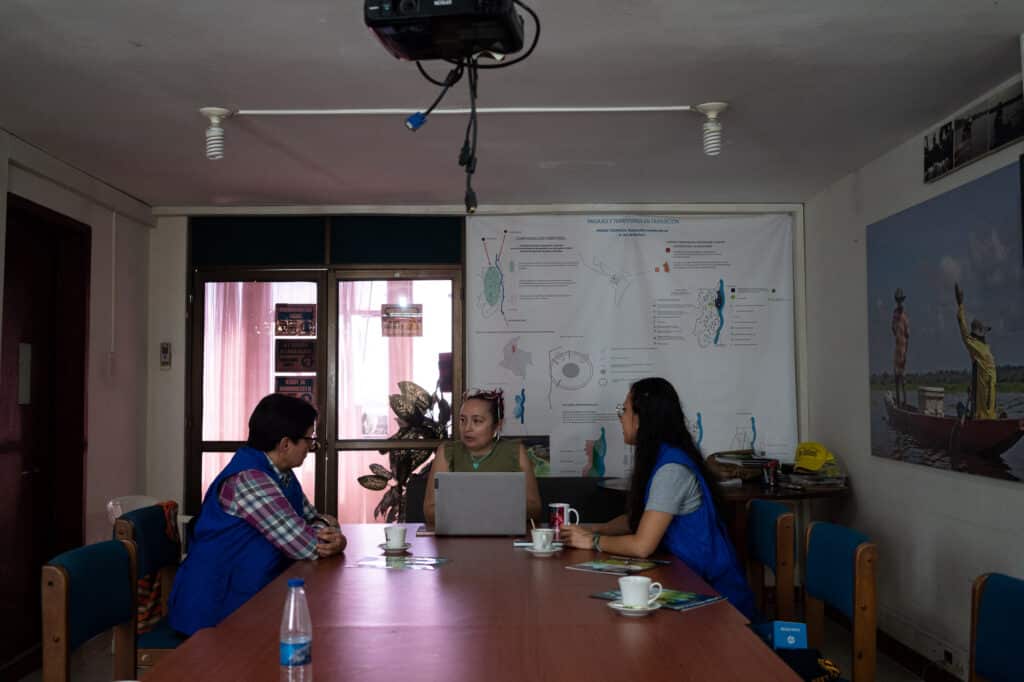
Adriana’s wish was to join the CPT Colombia team, but unfortunately there were no openings. Months passed, and Adriana focused her attention on other work, until she found out that someone had nominated her to be part of the CPT Steering Committee. That ‘someone’ remains a mystery, but their nomination sparked the next chapter of Adriana’s relationship with CPT.
Twice a year, the CPT Steering Committee would meet in the US. It was on this second visit that Adriana was told by then Director, Carol Rose, that there was soon to be an opening for Personnel Coordinator and she thought Adriana should apply. And so she did, filling the position in March 2011.
The next few years saw Adriana traveling back and forth between the US and Colombia a fair bit. Adriana was now married and the travel was becoming difficult to sustain. She decided it would be best to resign her position and take the opportunity to focus on other projects.
After resigning her position with CPT, Adriana and Chivi moved to a small cabin in the rural town of Paipa, just north of Bogota. Paipa is an area that a lot of bicyclists frequent and upon their arrival, Adriana and Chivi noticed that the majority of these bicyclists were men and it got them thinking. They decided to use the bicycle as a tool to empower women and began to build their own NGO around this idea.
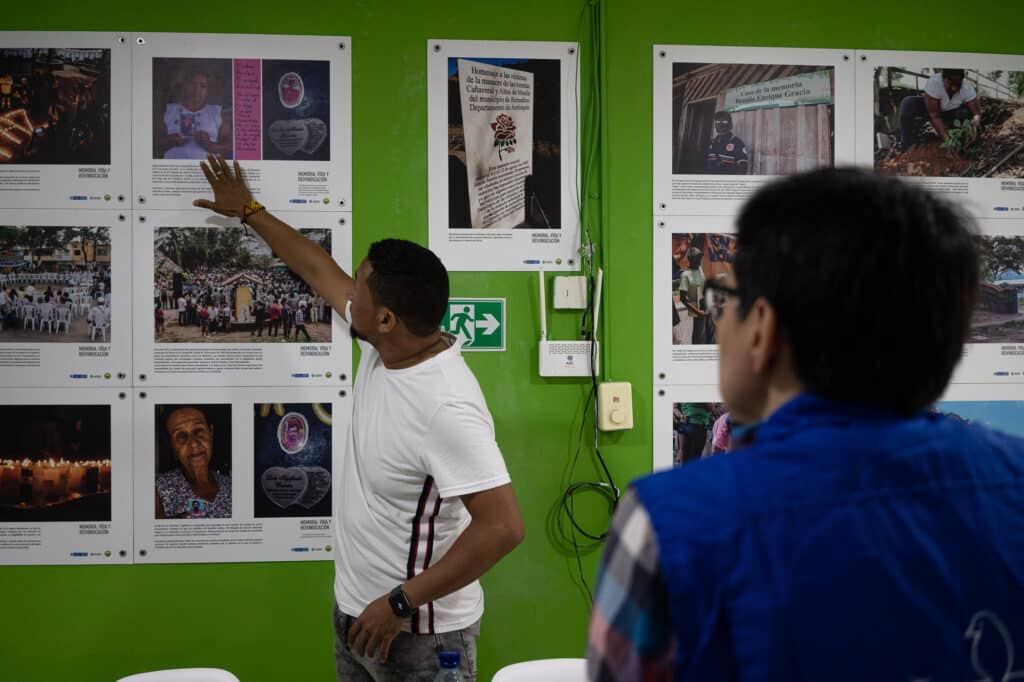
It was now 2020, the year of the pandemic, when Adriana was dealt a massive blow—her wife Chivi died suddenly from a stroke. Adriana tried to continue the work they had started together, but found it unbearable to do without her. And so She made the difficult decision to close the project.
Adriana asked herself the question, “what now?” and decided to approach CPT as a translator. Some months passed, when a wish Adriana had all those years ago—to work with the CPT Colombia team—could finally be realized. A position opened up for the role of Program Support Coordinator (PSC) for the CPT Colombia team and Adriana knew this was the opportunity she had waited for. CPT welcomed Adriana as the new PSC for the Colombia team in September.
Adriana’s story is a reminder of how our own stories and unique experiences serve to enrich this work. While we are all on our own life journey, it is this CPT community and the pursuit of justice and collective liberation that brings us together.