CPTnet
24 September 2013
AL-KHALIL (HEBRON): Settlers re-occupy Abu Rajib house
On 23 September 2013, in response to the death of Israeli
soldier Staff Sgt. Gal Kobi, Prime Minister Benjamin Netanyahu called for
illegal  settlement expansion in the Old City of Hebron.
At 1:00 a.m. on Tuesday 24 September, the Christian Peacemaker Team in Hebron
received reports from the Hebron Rehabilitation Committee that Israeli settlers
had re-occupied the Abu Rajib house west of the Tomb of the Patriarchs. Settlers had been evicted from the
building in April of 2012.
The resettlement of the Abu Rajib house is a direct and significant
risk to the community of Hebron, international law, and human rights, as
settlements are illegal under international law and impede the ongoing peace
process.
In addition to the illegality of the settlement, the location of Abu Rajib will
constitute a severe threat to the freedom of movement for Palestinians. The house sits between two Palestinian
Schools and Israeli military checkpoint 209, which CPT monitors every morning
as part of its school patrol. If
the settlement remains, it will be in the middle of an area hundreds of
Palestinian children must pass each morning to attend classes.
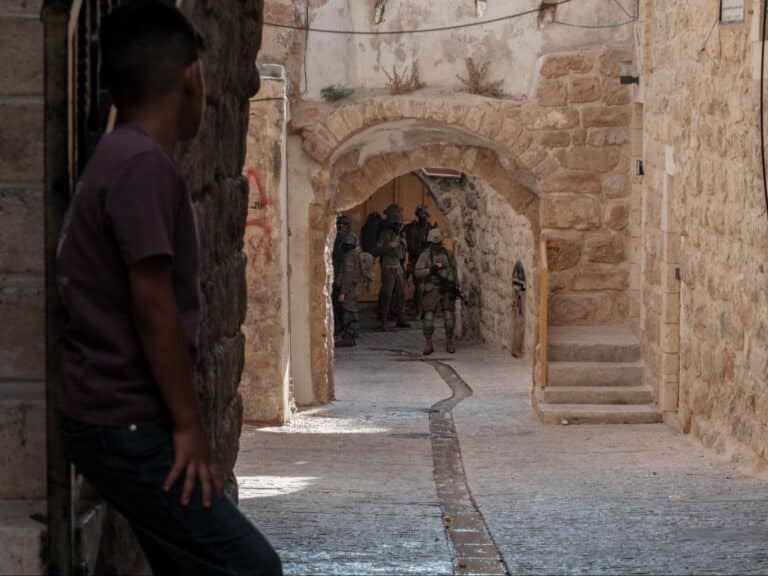
Over the past week of the Jewish holiday of Sukkoth, the Israeli military has
increased its presence with additional soldiers on the ground, occupying
Palestinian homes and turning them into military outposts in and around the
area of the Abu Rajib house. As a result, school attendance at Al-Faihaa girl’s
school and Al-Ibrahimmiye has dropped.
On Monday, 23 September, the Al-Faihaa girl’s school was shut down completely
since so few students were able to attend classes. The added Israeli military presence installed around the
settlement will continue this trend.
Israeli settlement expansion has led to several cases of violence between
Palestinians and Israelis, including near the settlement of Tel Rumeida.
“For the residents of Tel Rumeida, living next to settlers means living
under constant threat of attack,” said a representative from the human
rights observer organization, the International Solidarity Movement (ISM). “The
Abu Shamsiyeh family who live in Tel Rumeida is particularly vulnerable to
attacks, as settlers and Jewish tourists tend to enter their roof and even
invade their garden without permission. Most use this private Palestinian roof to enjoy the view of
the city, but incidents have occurred where settlers threw stones and garbage
down at the family, urinating into their garden and verbally harassing the
family.
“Last month, settler youth entered the family’s garden, threw stones at them,
and beat their thirteen-year old son. When Abu Shamsiyeh asked the soldier stationed outside their
house for help, he came down and watched as settlers kicked Abu Shamsiyeh, and
another soldier pushed his wife, who was videoing the incident, to the ground.”
If the Abu Rajib settlement is allowed to stay, in breach of international law
and during the ongoing peace negotiations, the rise in settler violence against
Palestinian youth and adults will escalate.