Prayers for Peacemakers 28 February 2018 Palestine

Facebook
Twitter
Email
WhatsApp
Print

Prayers for Peacemakers 28 February 2018   Palestine
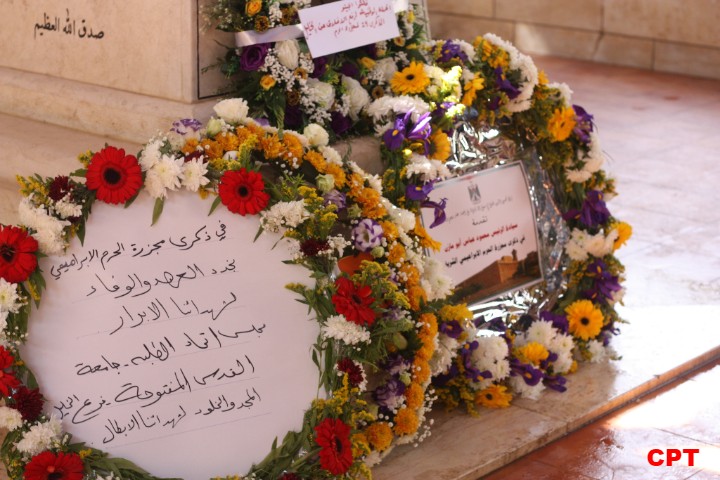
 

Pray for the people of Hebron who are remembering the mass
shooting in the Il Ibrahimi mosque by settler Baruch Goldstein this week. 
Twenty-four years after he sprayed men and
boys at prayer with automatic weapons fire, the people of Hebron’s Old City, who
had loved ones murdered on that day and family members permanently disabled,
have seen their home increasingly turned into a prison by the Israeli
authorities.  These apartheid
restrictions show the children of Hebron’s Old City every day that settler lives
are worthy of protection and Palestinian lives are disposable.

Check out CPT-Palestine’s school
semester report
August 2017-January 2018, for more insight into the lives
of children in Hebron’s Old City.

Subscribe to the Friday Bulletin

Get Ryan’s thoughts and the entire bulletin every Friday in your inbox, and don’t miss out on news from the teams, a list of what we’re reading and information on ways to take action.

This site is protected by reCAPTCHA and the Google Privacy Policy and Terms of Service apply.

Read More Stories

The war for Iran

The USA is gearing up for war with Iran. I’ve anticipated this war all my life, but I didn’t expect to feel quite so disoriented

A man is handcuffed and blindfolded and a woman carries two backpacks

When a witness becomes a victim

In an age in which the act of bearing witness carries heightened risk, accompaniment comes with an increased personal toll. Here, two members of CPT Palestine reflect on a particularly tense morning.

A gate blocking access to a road

The gates at the entrances of West Bank cities: division and daily hardship

Across the occupied West Bank including major cities like Hebron (Al-Khalil), Nablus, Ramallah, and many towns and villages, Israeli forces have significantly increased the installation of heavy metal gates and military checkpoints at entrances to Palestinian communities. These gates have become symbols of fragmentation, control, and hardship in the lives of ordinary Palestinians. 

Skip to content